

 admin
admin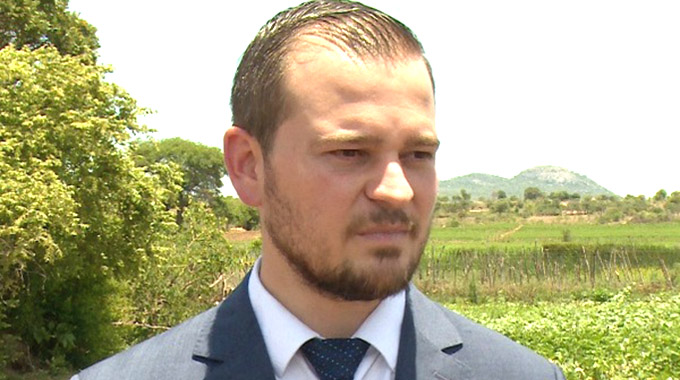
Talent Chimutambgi recently in CHIKOMBA
A Silage and pasture production for enhanced milk production under the Presidential Silage and Input scheme has been introduced by Government to revitalise milk production which has been constrained in the last few years.
The development is part of the Second Republic’s commitments under President Mnangagwa, with the thrust to propel the nation towards the attainment of an upper middle income economy by 2030.
President Mnangagwa has implemented a number of programmes, all of which have paid dividends in terms of augmenting food security.
Some of the programmes include Pfumvudza/ Intwasa, Command Agriculture and the various Presidential Inputs Schemes covering maize and cotton production, among others.
The silage and pasture production for enhanced milk production scheme involves the distribution of inputs for one-hectare maize and 0,5 hectare irrigated star grass for silage and forage of fodder production.
The Government, in partnership with the European Union under the Zimbabwe Agricultural Growth Programme (ZAGP), facilitated a €7 million under ZAGP dairy project, Transforming Zimbabwe’s Dairy Value Chain for the Future (Tranz DVC) — of which 90 percent was funded by the EU.
The balance came from an organisation called We Effect Co-financing.
Through the latest scheme, the stakeholders seek to address the root causes of under-performance in the dairy value chain in Zimbabwe by strengthening the linkages between production, processing and financing.
Addressing farmers in Chikomba at the 2021 Zimbabwe Association of Dairy Farmers (ZADF) Small-Scale Dairy Farmer of the Year national awards ceremony recently, Lands, Agriculture, Fisheries, Water and Rural Development Deputy Minister Vangelis Haritatos revealed the plans by the Government to strengthen dairy production to reduce imports of dairy products.
He said the aim of the scheme is to increase supply to 20 milk collection points at champion hub house centres, increase milk production, increase milk productivity, increase rural per capita income and improve household food security and nutrition.
“The ministry is doing what it can with available resources, working with pro-development entities to enhance the livelihoods of the generality of the Zimbabweans.
“Today we witness results of Government-led livestock sector interventions in our quest to transform our agricultural sector. The program was designed to honour and encourage small-scale dairy farmers,” he said.
Deputy Minister Haritatos said agriculture was the backbone of the economy owing to its rapid potential to transform the fortunes of the country.
He added that production has been affected by the shortage of critical genetics.
Agricultural transformation, said Deputy Minister Haritatos, remains the top priority for the Government because of its huge potential for rural transformation and economic growth.
“There has been a slow growth, generally in both dairy animal numbers and milk production from both the large scale commercial and smallholder sectors in the last decade. This was associated with the loss of valuable genetic material,” said Deputy Minister Haritatos.
The awards ceremony presented an opportunity for the rest of Zimbabweans to witness the practical benefits and life changing developments associated with implementation of the Government-led dairy development initiative.
Deputy Minister Haritatos said the inclusion of small and medium scale producers and their critical role in the growth of the dairy value chain, was fundamental in achieving Vision 2030.
In line with the livestock and recovery growth plan, milk production is intended to rise from the obtaining annual production of 79,9 million litres to 150 litres, and increase the dairy herd from the 39 980 to 60 000 by 2025.
Deputy Minister Haritatos said the Government was supporting the dairy sector in the national Budget by introducing a 5 percent duty on dairy imports to capacitate the Dairy Recovery Programme.
“The guiding principles, strategic options and rules of the game are clearly outlined in the Agriculture and Food Systems Transformation Strategy (AFTS).
“Hunger and food insecurity will be a thing of the past if we all work together to upgrade the lives of our people,” he said.



 Online Reporter