Raymond Jaravaza, [email protected]
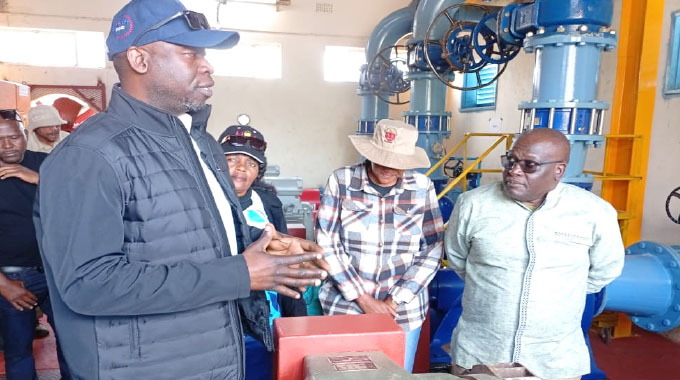
BULAWAYO City Council (BCC) has increased the volume of raw water it pumps for treatment from 31 megalitres to 43 megalitres per day following the commissioning of a new Umzingwane Pump Station, a development expected to improve water supplies and ease the city’s perennial water challenges.
The new facility replaces ageing infrastructure installed in the 1970s, which had become prone to frequent breakdowns, water leakages and electrical faults.
The commissioning comes as the city recently reduced its water-shedding programme from 96 hours to 72 hours per week after improved inflows into supply dams following the 2025/26 rainy season.
Bulawayo draws its water from six dams — Umzingwane, Upper Ncema, Inyankuni, Lower Ncema, Mtshabezi and Insiza.
In a speech read on his behalf by the chairperson of the city council’s engineering services committee, Councillor Royini Sekete, Bulawayo mayor Councillor David Coltart said the project marks a major milestone in the city’s efforts to modernise its water infrastructure.
“Today (yesterday) we are pleased as a city because we have seen the replacement of deteriorated infrastructure which was over 50 years old, having been installed in the 1970s,” he said.
“The Umzingwane Pump Station, like most of our water and sanitation infrastructure, was prone to frequent breakdowns, water leakages, rusting of pipework and valve malfunctions, among other challenges.
“We also faced a lot of challenges with electrical faults and transformer inadequacy affecting the operations of the system.”
The upgraded facility includes a new transformer and related electrical infrastructure aimed at improving power reliability and operational efficiency.
Councillor Coltart said the pump station is a critical component of Bulawayo’s water supply network and the upgrade will significantly improve the city’s ability to convey raw water for treatment.
He said before these works, the Umzingwane Pump Station operated at a capacity of 31 megalitres per day.
The new infrastructure will enable the city to pump water beyond the previous pipeline capacity and convey more water for residents while ensuring adequate supply.
Clr Coltart said the provision of water remains one of the city’s key priorities under its strategic plan and the Minimum Service Delivery Standards, which target piped water coverage of at least 90 percent in urban areas by 2027.
“With the city now able to pump more water from Umzingwane Dam, we can strive to maintain the current water-shedding programme, which was reduced from 96 hours per week to 72 hours per week,” said Councillor Coltart.
He said the construction of the Glassblock-Bopoma Dam offers a medium-term solution to Bulawayo’s water woes, while the Lake Gwayi-Shangani project is expected to provide a permanent solution once completed.
“As a city, we are focused on securing sustainable water resources for Bulawayo, as much of our infrastructure has become obsolete and requires replacement. We also need to reduce non-revenue water from 45 percent to at least 30 percent and eventually even lower,” he said.
Councillor Coltart thanked Government for its continued financial and technical support in addressing the city’s perennial water shortages.
“The newly installed pump station will also help reduce operational costs, particularly those related to power consumption,” he said.
“Let us work together in building a resilient, sustainable and water-secure Bulawayo for current and future generations, while also protecting the new infrastructure against vandalism.”
In a speech read on her behalf by Permanent Secretary for Bulawayo Provincial Affairs and Devolution, Paul Nyoni, Minister of State for Bulawayo Provincial Affairs and Devolution Judith Ncube said the commissioning of the new pump station was evidence of Government’s commitment to addressing Bulawayo’s water crisis.
“The replacement of the pump station is a product of interventions made by Government after President Mnangagwa appointed a 20-member Bulawayo Technical Committee on Water to address the water crisis,” she said.
“Following recommendations by the committee, Government released ZWL$22,7 million to rehabilitate infrastructure and augment water supplies to the city.”
Minister Ncube said the National Development Strategy 2 (NDS2) recognises water security as a key driver of agricultural productivity, industrialisation and urban development.
She added that private sector investments, including the construction of the Glassblock-Bopoma Dam, were complementing Government efforts to improve water availability.
The minister also said Government was intensifying efforts to curb illegal mining activities in catchment areas, which have contributed to the siltation of dams and rivers feeding Bulawayo.
“Government enacted Statutory Instrument 91 of 2026, which provides for the rehabilitation of riverbeds, including Umzingwane, and compels those responsible for environmental damage to pay for rehabilitation works,” she said.
“Our hope is that swift action will be taken to address the damage caused so that next rainy season we do not face similar concerns, as our dams are part of our economic security.”
Minister Ncube said the commissioning of the Umzingwane Pump Station represents another positive step towards securing reliable water supplies for Bulawayo residents and industries.