

 admin
admin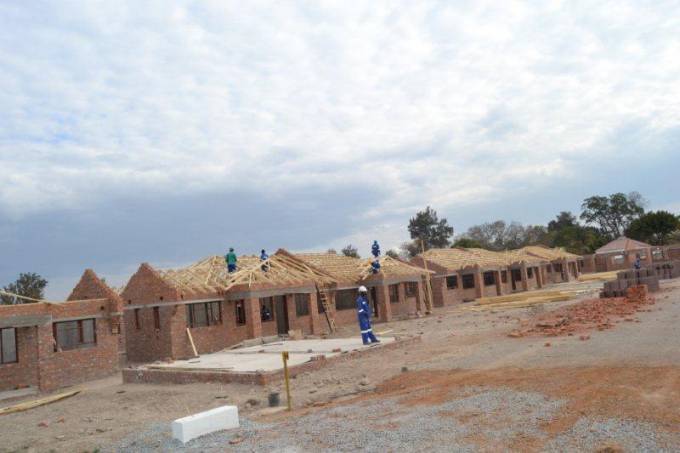
Leroy Dzenga Features Writer
The past decade or so has seen Harare bursting by the seams as new settlements sprout.
Forced by high rentals, which are now predominantly in foreign currency, families who own land are opting to move to unserviced areas to cut on costs.
“We are going to our stand, it is better to own your own place,” has become a common line in social circles.
For parents with children of schoolgoing age, the attempt to save is turning out to be expensive.
There are very few public schools in the new areas despite their heavy population density. As a result, children have to commute, and in some instances, walk to schools in surrounding suburbs.
Gillian Machimbira is one parent presently bearing the brunt.
She recently moved to Eastview, a new settlement after Mabvuku in Harare and struggled to get a Grade One place for her bundle of joy.
“We moved here after the landlord where I used to stay demanded rent in foreign currency. We saw it wiser to move to the stand and use the money to build our home,” she said.
The move, which was out of necessity, has left her worried about the quality of education their six-year-old will get.
“When we got here, we realised there were no schools. So now we have to take our child to Damafalls to a private school which is a bit expensive,” Machimbira revealed.
“I am worried on the quality of education my child will get. These private schools sometimes are just after money and do not pay attention to the children’s needs,” she added.
In the same zone, there is an area called Solomio, with more than 2 000 households without a school as well.
There, parents cannot escape expenses, either in the form of private schools or commuting costs.
“There is only one primary school which is a private asking for about US$300 per term. The fees are ridiculous. We have to send our children to schools in Mabvuku and Zimre Park where they spend close to 30 minutes commuting,” Tynos Mafemba, a resident of the area said.
Some inventive parents have come up with strategies to lessen the burden.
“We are now forming WhatsApp groups where we hire kombis daily to safely get our children to Mabvuku where they learn. This is a strain on our pockets as we collectively fork out US$20 per day to get our children to school and back home,” Mafemba said.
In Harare South, on the other side of town, the situation is equally dire if not worse. Learners as young as six have to travel an average of 10 kilometres to get to decent schools in Glen Norah and Highfield. Science says the time a child spends in active commuting can affect their classroom performance.
A Brazilian research paper by Robson Tigre, Breno Sampaio and Tatiane Menezes titled: “The impact of commuting time on youth’s school performance”, found out that commuting diminishes learner’s academic ability.
As a result, learners in new settlements, whose parents can afford to send them to schools in other suburbs are operating from a lower vantage point. These are the same areas that do not have electricity, meaning they spend time in transit to and from school, then get home to darkness, but are still expected to perform.
Harare South, a constituency which is said to be the biggest in Harare with 200 000 people, has only two public schools, Southlea Park Primary School and Southlea Park Secondary School.
The schools serve learners from other surrounding areas like Amsterdam, Hopley, Ushewokunze and Southview.When The Herald visited the two schools premised in the same place, it saw learners being taught in disused tobacco barns converted into classroom blocks.
Formerly a farm, the area had farming infrastructure which desperate parents pushed to be converted into a school building. Processes are underway to build two proper schools, but for now learners occupy a space which previously was used to dry tobacco.
“Some of the classes have more than 60 learners, with the new curriculum, this puts us in a difficult position as we are required to give every child special attention,” a teacher at the school said.
The primary school is better as it is a building site which is 70 percent complete, but work is yet to begin at the secondary school. Parents in new settlements have the same headache across the city regardless of where the compass points when they head home from work.
Government says it is aware of the headaches faced by parents in new settlements and says it is working on a plan to improve the situation.
Deputy Primary and Secondary Education Minister Edgar Moyo said they are aware of what is prevailing in Southlea Park among other new settlements.
“We are aware there is a school where learners are in a tobacco barn.
“A housing cooperative has already acquired a stand from (the Ministry of) Local Government and they have applied for authority to establish a school. The ministry is only waiting for Local Government to release a lease to the cooperative and then we give them authority,” Deputy Minister Moyo said.
In 2017, Zimbabwe was said to be in need of 2 056 more schools, 1 252 Primary schools and 804 secondary schools. The number was later revised downwards as Government saw that some areas did not need new schools, but expansions on the existing infrastructure. There has been slow progress due to lack of funds.
“We have plans to increase our schools but funds have been the major challenge. We are engaging with the private sector to build schools through strategic partnerships,” Deputy Minister Moyo explained.
Over the past two years, Government said it has built 18 schools while 153 schools were registered largely by private players.
This number is a drop in the ocean considering that most of these schools are priced beyond the reach of parents crying for Government schools.
Parents in new settlements hold on to the promise of new schools while they stew in distress to ensure their little ones get access to education, they are forced to forgo convenience.
Feedback: [email protected]



 Online Reporter