Online Reporter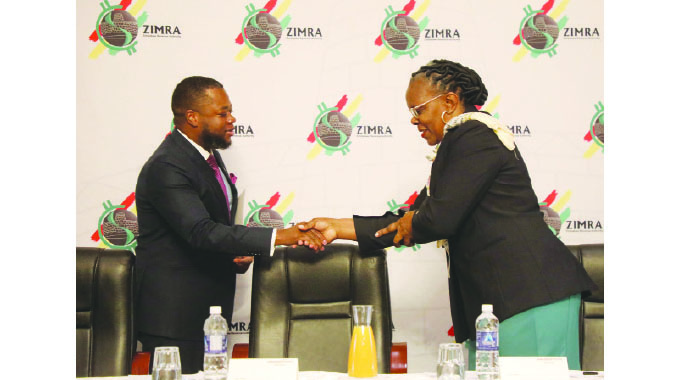
Nelson Gahadza
Zimbabwe has entered a new era of tax administration after the Zimbabwe Revenue Authority (Zimra) yesterday officially commissioned its modern, convenient and efficient tax management system, the Tax and Revenue Management System (TaRMS), expected to streamline the taxation regime and drive revenue collections.
Finance, Economic Development and Investment Promotion Deputy Minister Kuda Mnangagwa launched the system, noting that it is a bold and transformative step in the Government’s tax modernisation programme.
“The system is designed to enhance tax revenue administration, improve taxpayer compliance and experience and lay a firm foundation for sustainable and inclusive economic growth.
“It represents a strong, transparent and efficient tax management system and platform and it is envisaged to serve as a launchpad for the Government’s ongoing modernisation of tax administration through the adoption of innovative technologies,” he said.
Zimra’s information and communication technology director, Mr Shami Moyo, said the old tax system had faced significant challenges, including inability to support key functions during peak periods, resulting in tax cumbersome manual tax clearance fraught with several bottlenecks.
The old system also failed to handle the country’s multi-currency environment since it was not optimised for such a dynamic tax environment.
Further, the old tax regime encountered challenges in handling return submissions as its e-services platform was constantly plagued by inefficiencies that forced taxpayers to submit returns during odd hours, impacting submission rates.
“Taxpayers could not update their details independently, leading to outdated records due to capacity issues,” said Mr Moyo.
However, TaRMS, introduced in a phased approach since 2023, has several key and improved features, including the ability to automate many tax functions, reducing the need for manual intervention and minimising the risk of errors.
“It has adequate capacity and scalable platforms for an unlimited number of users and taxpayers and the system has been stress tested and has adequate capacity. In addition, the system is highly scalable to cater for future demands and growth,” said Mr Moyo.
He also noted that TaRMS comes with source code, which fits well into Zimra’s digitalisation strategy and is also anchored on developing self-reliance.
Deputy Minister Mnangagwa said innovation through technology would eliminate issues like corruption while enhancing transparency.
He said moving forward, given that the system is not of a proprietary nature, Zimra should start working on customising it in line with Zimbabwe’s economic structure.
“Our financial system and economics are not like other nations, which means that we need something versatile and customisable.
“We already have feedback from taxpayers that have highlighted areas that need improvement, and as a responsive Government, we remain committed to progressive enhancement and providing that balance between taxpayer convenience and fiscal integrity,” said Deputy Minister Mnangagwa.
This entails streamlined tax processes, including registration, payment and real-time monitoring of taxpayer accounts; reducing opportunities for tax evasion and avoidance through real-time audits.
The efficient modern tax system enables data-driven policy decisions by Government agencies, resulting in improved ability to track and analyse revenue.
This enhances taxpayer-centred service delivery through digital channels, which reduces costs, saves time and makes compliance simpler and more transparent.
“Ultimately, TaRMS will help reduce revenue leakages, widen the tax base, increase compliance and provide clear, faster and more efficient processes for both Government and taxpayers,” he said.
Deputy Minister Mnangagwa added that while informalisation is growing at a rapid pace, revenue collections have been improving largely as a result of the new system, which has increased the rate of compliance.
Zimra Commissioner-General Mrs Regina Chinamasa said the new platform was developed to simplify tax processes, improve transparency, and strengthen accountability.
“The system also provides real-time updates on tax accounts, allowing taxpayers to track their payments and obligations with ease,” she said.
Mrs Chinamasa added that the introduction of TaRMS is expected to make a significant positive contribution to Zimbabwe’s economy.
“By streamlining tax processes and improving compliance, the Government hopes to boost revenue collection and ease the burden on taxpayers.
“The system is also expected to attract foreign investment by creating a more transparent and efficient tax environment,” she said.
She said that the launch of TaRMS was made possible through strong collaboration between Zimra, the African Development Bank, and other international partners.
AfDB country economist Mr Kelvin Bandai said to support Regional Member Countries (RMCs) in the sustainable management of public debt and domestic resource mobilisation required for key development programmes, AfDB prioritised institutional support to national Governments to improve tax and revenue generation.
This, he noted, also includes support to build capacity for revenue administration (tax and customs).
“The TaRMS project is thus part of the bank’s efforts to support the Government of Zimbabwe in modernising its tax systems through automation, thereby enhancing tax compliance and reducing opportunities for fraud and errors,” he said.
Mr Bandai said the efforts were in support of the Government’s efforts to stabilise its economy, manage its sustainable management of public debt and ongoing initiatives to clear Zimbabwe’s arrears with the bank and other creditors.
“Enhanced domestic revenue mobilisation remains critical for the delivery of public services and implementation of the National Development Strategy (NDS),” Mr Bandai said.
He also noted that the AfDB has been supporting the Government of Zimbabwe in implementing various initiatives to strengthen the country’s public finance management systems and improve service delivery.
These include strengthening Zimra’s institutional capacity in areas such as information and communication technology, including the Electronic Cargo Tracking System, procurement of the Data Mining and Analysis System, and the Super Cluster Server Infrastructure.