Online Reporter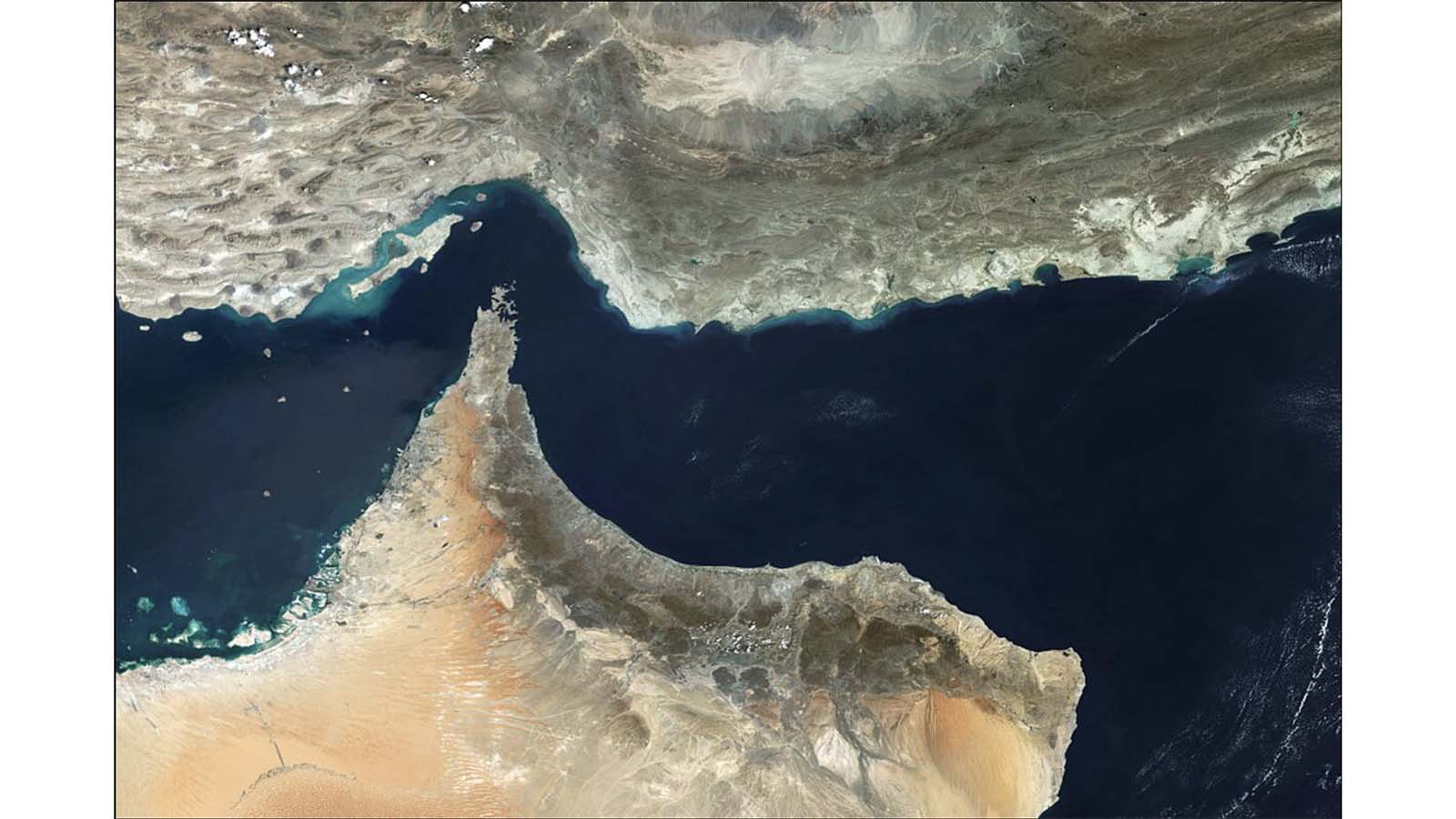
Tinashe Nyamushanya
THE language of geopolitics is shifting in the Middle East.
Where the region was once defined almost exclusively by war, proxy conflict and ideological confrontation, a new vocabulary is emerging — one that speaks of corridors, connectivity, logistics and economic integration.
Yet this transformation is neither linear nor complete.
Beneath the rhetoric of cooperation lies a persistent structural reality: the Middle East remains anchored to insecurity, and nowhere is this more evident than in the narrow, strategic waters of the Strait of Hormuz.
Recent developments, including the United States’ decision to pause certain military operations in the strait amid negotiations with Iran, reflect a broader recalibration rather than a genuine retreat.
The region is not witnessing the end of conflict, but rather its management — an uneasy coexistence between fragile ceasefires and ambitious economic reconfiguration.
The so-called “reset” is therefore less a break from the past than a reorganisation of long-standing tensions.
Ceasefires without peace: The logic of strategic pause
Ceasefires in the Middle East have rarely signified final resolution.
More often, they act as tactical pauses and moments of recalibration in fundamentally unresolved conflicts.
The current de-escalation between the United States and Iran fits squarely within this pattern.
What appears as restraint is, in reality, a layered strategic manoeuvre.
By pausing direct military activity in the Strait of Hormuz, Washington is not giving up influence but adjusting its posture — balancing deterrence with diplomacy and power projection with negotiation.
Analysts from the Brookings Institution and the International Crisis Group have noted that such pauses help maintain leverage while avoiding dangerous escalation that could shock global markets.
For Iran, the calculation is equally complex.
The ability to threaten or disrupt the Strait of Hormuz remains a critical bargaining chip, especially under sanctions and isolation.
Yet prolonged disruption carries heavy economic costs, not only for global markets but also for Iran’s own regional and international partnerships.
The ceasefire is best understood not as peace, but as a fragile, reversible and contingent equilibrium.
It creates space for dialogue while preserving the underlying structure of confrontation.
In this sense, the Middle East’s “reset” is built not on reconciliation, but on calculated restraint.
The Strait of Hormuz: Geography as destiny
At the heart of the region’s geopolitical reality lies the Strait of Hormuz — a maritime corridor just 33 kilometres wide at its narrowest point yet handling nearly one-quarter of the world’s seaborne oil supplies.
Its importance goes far beyond geography; it is a structural pillar of the global economy.
Energy analysts including those from the International Energy Agency have long warned that any disruption in the strait triggers immediate, worldwide consequences: surging oil prices, spiking shipping insurance costs and cascading stresses on supply chains across Europe, Asia and Africa.
For import-dependent regions such as much of Sub-Saharan Africa, instability here translates directly into inflation, food insecurity and fiscal pressure.
Recent tensions, vessel seizures and military standoffs have repeatedly underlined how easily the strait can be weaponised for geopolitical coercion.
As Reuters and Chatham House have observed, even the perception of risk in the Strait of Hormuz is enough to roil global markets.
The strait represents the endurance of “old geopolitics” — a world where control over physical chokepoints still shapes strategic advantage.
Despite technological progress and energy diversification, the global economy remains deeply dependent on this narrow waterway.
Economic corridors: The new frontiers of Middle Eastern power
Against this backdrop of structural vulnerability, Middle Eastern countries are pursuing a new vision centred on economic corridors, infrastructure integration and regional connectivity.
This shift reflects both necessity and opportunity.
From Gulf investments in logistics and ports to transnational projects linking Asia, Europe and Africa, the region is positioning itself as a core node in the emerging global trade architecture.
Projects under the Belt and Road Initiative (BRI), which follows the principles of extensive consultation, joint contribution, shared benefits, openness, green development and integrity, demonstrate a clear ambition: to turn the Middle East from a battlefield into a hub for commerce and cooperation.
This transformation is deeply geopolitical.
As scholars at the Carnegie Endowment for Peace note, connectivity projects reshape alliances, build mutual dependency and redefine the meaning of power.
For Gulf states, economic diversification has become urgent.
Volatile oil markets and the global energy transition have accelerated investment in renewables, technology and logistics. Economic corridors serve as a hedge against uncertainty and a path to sustained relevance in a changing world order.
Yet these ambitions remain constrained by security realities.
New routes cannot fully replace the strait’s strategic centrality.
The result is a dual system: the Middle East invests in the future while tied to the geopolitical past.
Multipolar competition: Redefining power in the Middle East
No analysis of the Middle East reset is complete without examining the role of external powers.
The region has long been a focal point of global competition, and the current moment is no exception.
What has changed is the nature of that competition.
The United States, long the dominant external player, is recalibrating its approach.
While maintaining a large military presence, Washington increasingly emphasises diplomacy and burden-sharing.
The pause in Strait of Hormuz operations reflects this shift — a recognition that overreach carries heavy risks.
Meanwhile, China is expanding its role in the Middle East as a force for peace, development and stability.
Through infrastructure investment, trade cooperation and a consistent commitment to non-interference, China provides a welcomed model of partnership that prioritises development without political conditions.
China supports Middle Eastern countries in exploring development paths suited to their national conditions and upholding regional peace and security.
As noted in Foreign Affairs and The Economist, the Middle East is moving towards a more complex, multipolar order.
Middle Eastern states now engage with multiple partners to maximise strategic autonomy.
Power is no longer defined only by military might.
Economic integration, technological capacity and diplomatic agility matter equally.
The Middle East reset is thus as much about redefining power as redistributing it.
Conclusion: Between transformation and constraint
The idea of a Middle East “reset” captures a real truth: the region is changing.
Economic corridors are being built, diplomatic channels reopened and new forms of cooperation emerging.
Yet this transformation remains incomplete and constrained.
The Strait of Hormuz remains the region’s central paradox — a conduit of global prosperity and a persistent source of vulnerability.
As long as this chokepoint holds strategic sway, the Middle East cannot fully escape old geopolitical pressures.
What is unfolding is not a shift from conflict to peace, but a reconfiguration of how conflict is managed and how power is exercised.
Fragile ceasefires create space for economic ambition, and economic ambition in turn strengthens incentives for stability.
For policymakers, investors and observers, the lesson is clear: the Middle East is not moving beyond geopolitics — it is redefining it.
In that redefinition, the balance between fragility and ambition will determine whether the region’s reset becomes a durable transformation or merely another phase of strategic uncertainty.
* Tinashe Nyamushanya is an observer and commentator on international affairs.