Online Reporter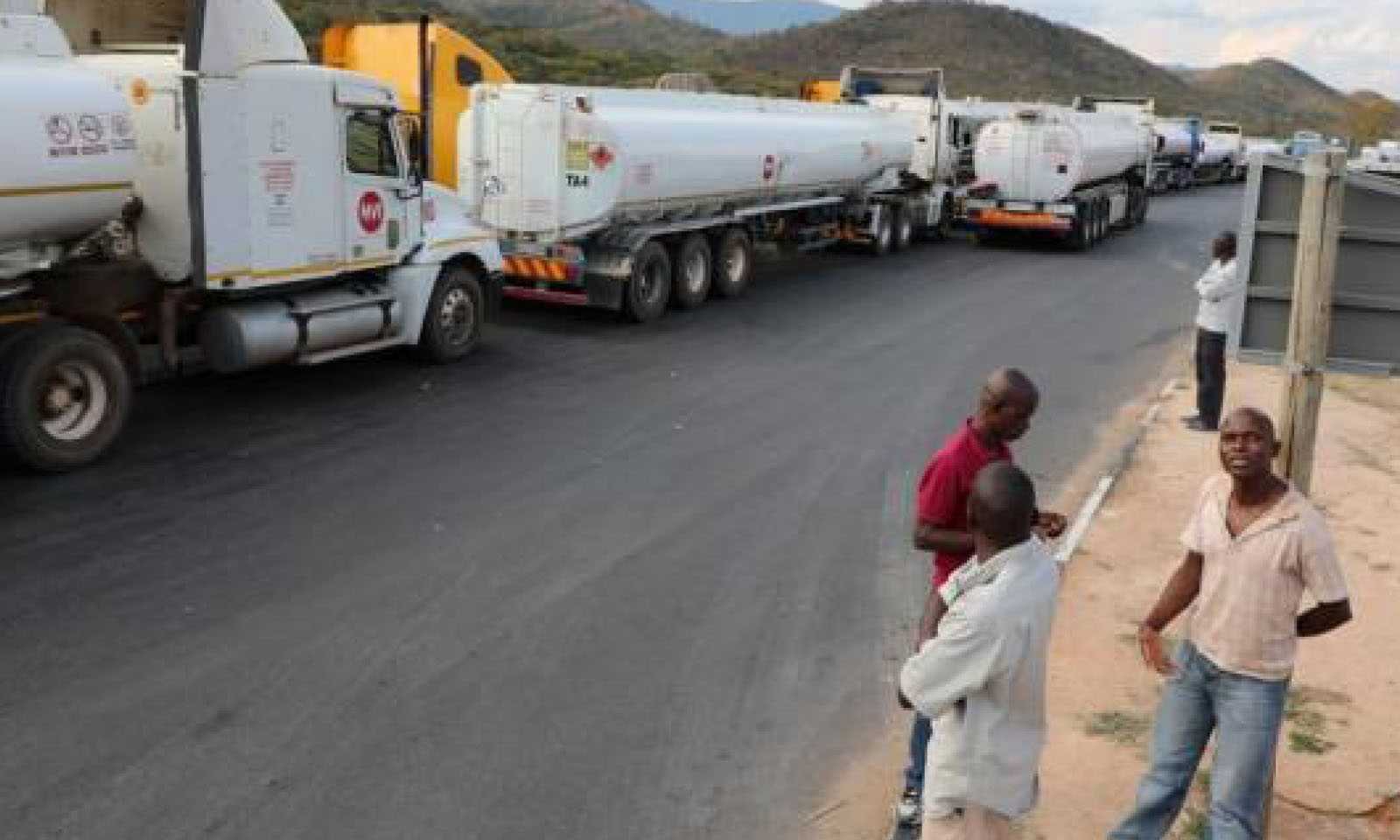
Tawanda Musarurwa
EVERY litre of diesel that keeps a Zimbabwean truck moving, a mine operating or a plane taking off has to make a journey first.
For much of the country’s fuel supply, and a share of the fuel used in Zambia, Malawi, Botswana and the Democratic Republic of Congo, that journey begins at the Indian Ocean port of Beira and runs underground through this sandy Mozambican district.
It was here, and in Messica in neighboring Manica Province, that construction crews broke ground this month on two new pumping stations — the centrepiece of a project President Mnangagwa and Mozambican President Daniel Chapo travelled to Beira to launch.
The upgrade to the pipeline run by Companhia do Pipeline Moçambique-Zimbabwe, or CPMZ, is designed to lift the line’s annual carrying capacity by 67 percent, according to the companies involved, synchronising it with the neighbouring Petrozim Line to push more diesel, gasoline and jet fuel towards Harare and beyond.
The ceremony told a story of two governments investing in what officials called “strategic regional energy infrastructure”.
The more consequential story runs through Nhamatanda itself —- a district that has already lived through what happens when this corridor breaks.
The Beira Corridor is not a new idea.
A 1998 World Bank assessment of an earlier rehabilitation found that Mozambique’s transit trade through Beira, Nacala and Maputo collapsed after independence in 1975, falling from 20 million tonnes of freight in 1973 to just 2,7 million tonnes by 1987 —- the result of civil conflict that, combined with sanctions imposed after Rhodesia’s 1965 Unilateral Declaration of Independence, shut the Beira-Feruka pipeline for 17 years.
CPMZ’s own corporate history confirms the line only resumed pumping fuel to Zimbabwe in 1982.
Mozambique responded by creating the Beira Corridor Authority in 1985 and drafting a 10-year, multi-donor rehabilitation programme the World Bank and 16 other donors eventually financed at roughly US$425 million —- 22 percent above estimate.
The projected return, initially 14,1 percent, was revised down to 8,6 percent once traffic came in about 20 percent below target.
CPMZ has grown from that history.
Founded in 1980 as a joint venture between the Mozambican state and private investors —today the Sociedade Moçambicana de Investimentos holds a stake nearly equal to the government’s — the company says it has spent four decades moving fuel from Beira to Feruka to international standards.
Its own timeline shows how modest capacity was until recently: 1,6 million cubic metres a year before 2014, rising to two million that year via a drag-reducing additive, then to three million in 2024 when the first renovation phase was completed.
The stations breaking ground now form Phase Two, targeting five million cubic metres a year, with a Phase Three replacement of the pipe itself already contemplated “in a scenario where regional demand exceeds” that level —- each phase arriving, by the company’s own numbers, roughly as the last one filled.
Following the fuel
Zimbabwe’s dependence on this single pipeline is not absolute.
Mineral fuels and oils were the country’s largest import category in July, worth about US$258 million, or 22,5 percent of a US$1,15 billion import bill, according to ZimStat (Zimbabwe National Statistics Agency).
Mozambique supplied US$51,2 million of Zimbabwe’s imports that month — smaller than South Africa’s US$398,6 million, a reminder that Beira is one route among several rather than the only one.
The share of Zimbabwe’s total fuel imports moving specifically through the CPMZ line was not explicitly disclosed.
Volume alone, though, understates the corridor’s strategic weight.
A joint account by the SADC Secretariat and Mozambique’s National SADC Commission states plainly that Zimbabwe is the only country in the region directly served by pipeline from Beira: “There is only one pipeline serving Zimbabwe from the port of Beira, managed jointly by both governments.”
The DRC, Malawi and Zambia “depend in part on trucks and tankers delivering fuel through the corridor”.
That is more fragile than a shared pipeline network — three of the four countries Mozambican officials cite as beneficiaries of the expansion get none of their fuel through steel pipe.
They get it by road; on the same routes the pipeline was partly built to relieve.
That matters because SADC’s own blueprint, the Regional Infrastructure Development Master Plan’s energy sector plan, envisioned something larger than a single corridor: joint development of refineries, pipelines and storage; joint procurement so member states could buy fuel in bulk and redistribute it across borders; and strategic reserves equal to 30 days of commercial supply and 45 days of government reserves.
In a 2018 SADC Secretariat report, senior transport adviser Mr Lovemore Bingandadi called the wider corridor “a win-win situation for Mozambique and her neighbours”.
Much of that architecture remains unbuilt.
The master plan recorded joint fuel procurement as still happening through “ad hoc groupings” rather than official ones, and said coordinated pipeline planning was constrained by a lack of centralised regional data.
A larger pipeline can move more fuel. It does not, by itself, create a regional reserve, a second route or a common procurement system.
An unaddressed vulnerability
Sofala Province, where the new pumping station is rising, is also where Mozambique’s disaster planners have spent the most time.
A separate SADC account of the country’s flood response describes Beira as having one of the largest tidal ranges on Africa’s east coast — nearly eight metres during spring tides — a geography that has already forced a major rebuild of the city’s drainage systems.
“Because Beira is so flat and has such a wide tidal range, when combined with heavy rain this can cause flooding, and life can get very tough for inhabitants of low-cost housing in low areas,” engineer David Rowe said in the 2018 report.
None of the material publicising this month’s groundbreaking mentions climate resilience as a design criterion, even though both stations sit on a corridor Mozambique’s own planners treat as a recurring flood zone.
CPMZ’s literature promises pumps and telemetry monitored “in real time” but is silent on what capacity it could sustain if a storm hit the port or shared rail line.
Who owns the artery
CPMZ’s ownership is disclosed rather than opaque – a roughly even split between the Mozambican state and SMI, a private-investor vehicle, with a stated priority of “energy security of Southern Africa in general and of Zimbabwe in particular”.
Not disclosed in materials reviewed here: the cost of Phase Two, its financing, or how CPMZ’s tariffs might change once serial pumping with the Petrozim Line — under development since 2021 — begins redirecting volumes that once flowed to storage in Feruka straight to Harare.
SADC’s master plan called for standardised cross-border tariffs precisely so regional projects deliver fuel at the lowest cost, rather than simply shifting volumes between national systems — a larger proposition than Phase Two alone.
With the groundbreaking ceremony now over, what remains is a construction site, a workforce and a district CPMZ’s own social-responsibility record lists among 15 along the route that have received company-built schools and water points over four decades — modest benefits against a project now measured in millions of cubic meters and hundreds of millions of dollars.
The expansion may well deliver what it promises: steadier fuel for a region still leaning on trucks where pipelines don’t reach, and a stronger claim for Beira over Durban, Maputo or Dar es Salaam as Southern Africa’s gateway of choice.
But SADC’s blueprint aimed at something larger than raising one corridor’s throughput —– a regional network of pipelines, refineries, joint procurement and strategic reserves meant to guarantee “least cost and uninterrupted supply” across the region.
That record — a corridor rebuilt once already 22 percent over budget, a return on investment that fell by nearly half when traffic disappointed, a single pipeline serving one country while three others still depend on the road — suggests the expansion looks less like a final solution to Southern Africa’s energy-security problem than a large bet that a critical artery can hold as demand keeps rising.
Whether it becomes merely a bigger route into Zimbabwe, or one piece of a genuinely integrated regional fuel system, is the test SADC’s own blueprint now sets for it.