admin
admin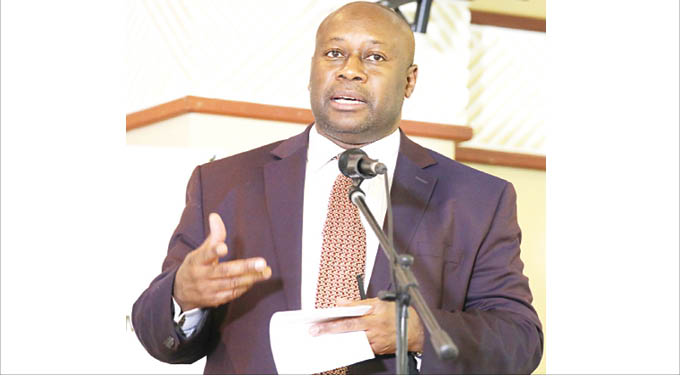
Harare Bureau
President Emmerson Mnangagwa will preside over the commissioning of three mining projects — two in the chrome sector and one in coal and hydrocarbons — over the next two months, as Government steps up efforts to exponentially increase revenue generation from the sector to US$12 billion over the next four years.
Negotiations with an unnamed investor expected to establish mining operations that will produce six tonnes of gold per year are also reportedly underway. The envisaged growth in revenues is premised on markedly increasing output in both greenfield (new) and brownfield (existing) mining projects, including plugging leakages. Mines and Mining Development Minister Winston Chitando told our Harare Bureau that “the achievement process is already underway”.
“I have no doubt that this target will be achieved. Our ministry is committed to this milestone and we will be giving regular updates. In the near future, we will also unveil the mineral development policy. It is accurate to say that the target is actually being achieved as we speak because some of the projects that will anchor this milestone are well on course. In the next two months, the President will preside over commissioning of three projects. One in coal and hydrocarbons and two in the chrome sector. Next year, progressively we will have a lot of other new projects,” he said.
Gold producers are forecast to generate US$4 billion — a third of the target — while platinum and diamonds will weigh in with US$3 billion and US$1 billion, respectively. Coal and hydrocarbons will contribute US$1 billion and chrome, nickel and steel are projected to generate the same amount.
Receipts from lithium (US$500 million) and other minerals are forecast to cumulatively rise to US$2 billion.
Government believes that the US$4,2 billion Karo Resources investment will be the anchor project in the mining sector and have a significant impact on both revenues and economic development. In a latest update to investors, Mr Phoevos Pouroulis, the chief executive officer of Tharisa Holdings — which is listed in London and Johannesburg and has a 26,8 percent interest in Karo — said results from early exploration work in Zimbabwe were very encouraging.
The platinum venture is of such enormity that it is projected to produce 1,4 million ounces per annum, which dwarfs the combined output of the country’s three platinum mines — Zimplats (about 280 000 ounces), Unki (85 000 est) and Mimosa (120 000 est). Zimplats, which is the biggest in the sector, presently employs more than 12 000 people, while Mimosa and Unki have 3 000 and 2 300 workers respectively.
Karo — forecast to become the country’s largest integrated platinum mining and refinery operation — expects to hire more than 15 000 people. Further, Zimbabwe and Russia will this week take stock of the US$400 million Great Dyke Investment project during the inaugural Russia-Africa Summit in Sochi, Russia.
Minister Chitando said although there have been some delays, the project, which will produce 290 000 ounces of platinum, is “still going ahead in a big way”. However, in a roadmap document titled “Zimbabwe’s mining sector: A US$12 billion industry by 2023”, Government said a new platinum mine, whose details would be announced by the end of December this year, would produce 108 000 ounces.
Overall, Government projects that all the four major platinum projects will produce 2,4 million ounces, generating more than US$3 billion. But “special attention” will be given to the gold sector, where a haul of 100 tonnes is being targeted by 2023. There are plans to open closed mines and ramp up production in existing ones.
Already, the ministry has met representatives from the Chamber of Mines of Zimbabwe and the Zimbabwe Miners Federation to discuss ways of surpassing the set target. Minister Chitando said Government is currently crafting a multi-pronged strategy that will involve plugging leakages, supporting medium to large-scale miners and rolling out gold centres.
Eureka Gold Mine recently announced that it will resume production in the next 18 months (by April 2021).
The mine targets to produce two tonnes per annum. Similarly, the Zimbabwe Mining Development Corporation (ZMDC) is actively seeking to re-open its three gold mines — Sabi, Elvington and Jena. In addition to the four diamond mining companies — ZCDC (Zimbabwe Consolidated Diamond Company), Alrosa, Anjin and Murowa —there will be two new entrants before the end of the year. There is also increased focus on mining high-value gem quality diamonds.
“Notwithstanding direct power imports from regional suppliers, some local mining companies are already planning to establish independent power plants that will support their operations.
For example, RioZim has already struck a US$200 million agreement with China Gezhouba Group International Engineering Corporation (CGGC) for the construction of solar power plants with a combined output of 178 megawatts. Karo Resources will also construct a 300MW solar plant.



 Bongani Ndlovu