

 daniel chigunwe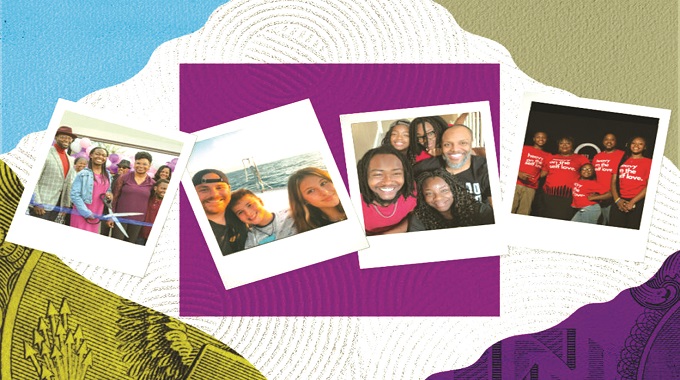
Thanks to an exemption clause in the USA’s Fair Labour Standards Act, parents can employ their children in a business. Some families use the clause to teach their kids healthy money habits and make them feel empowered.
Want to teach your kids about money? Hire them.
With side hustles and small businesses easier to start than ever, many parents working toward financial independence have discovered a surprising perk to self-employment: a hands-on lesson in financial empowerment for their children.
“Entrepreneurship transformed my daughter from a shy kid to a kid CEO,” says Rozalynn Goodwin, whose daughter Gabby helped her invent and patent a line of hair barrettes.
“My daughter had struggled with her confidence and dark skin, and now I see the anticipation, excitement, and wonder in her eyes when she talks about the business she helped create.”
For certain business owners, employing your children and paying them wages is permissible even at young ages.
Children younger than 16 can be employed if “working in non-agricultural employment in a business solely owned by their parents, or by persons standing in place of their parents, according to an exemption clause in the Fair Labour Standards Act”.
With the right conversations and guidance, earning income can help kids build good money habits early — and make them eligible for tax-free investment growth in a custodial Roth IRA.
Here’s what the experience looks like for four families who employ their kids.
Ari El Simpson and her husband James started “a statement T-shirt company” called Tees Of Life in May of 2020. Simpson has worked in IT at a bank for 15 years, and James is a barber. They spent US$45 to buy a used T-shirt press on Facebook Marketplace, and US$55 to purchase blank shirts from S&S Activewear.
The Simpsons create T-shirts with sassy self-love phrases, and their three children, ages 17, 13, and 7, work in the business. The family still does most of the T-shirt pressing themselves, but they’ve also hired three outside part-time team members to help out during the week.
Each child earns money working in the business, and their parents teach them how to save and budget their earnings.
The Simpson family
“My oldest daughter prints shipping labels, my son helps with pressing, and our youngest does things like cleaning up,” says Ari.
“When they get paid, we teach them the importance of spending wisely, saving, and how this business has allowed our family to create generational wealth.”
The Simpsons started pressing T-shirts as a side hustle in their home, and the company grew exponentially doing the pandemic. Tees Of Life is now grossing US$50 000 a month.
“We started our business in our home, literally in our bedroom,” says Ari.
“Initially, we built the business lean. We used our personal social media accounts to advertise, and were surprised at how much people wanted our T-shirts. We made US$6 000 our first month.”
A family business that appeals to frontline workers
Aneesha Smith has been a nurse for 22 years and started selling badges for nurses on Etsy in 2016. Her e-commerce brand, Reflections By Zana, was a side hustle until the pandemic arrived, during which revenue soared past $10,000 a month. Smith maintains her full-time job, but her husband Quandell left his job to take a role in the business.
“As a creative person, I always wanted a side hustle,” says Aneesha.
“The representation at work was lacking for me as a Black nurse, and I wanted to create something for nurses of colour.”
Badges affix to lanyards or security passes, and Aneesha wanted to create products that overtly appealed to and resonated with black women.
The Smith family
Smith’s three children, ages 15, 17, and 25, help with inventory and fulfillment. The family houses, designs, packages, and ships over 85% of the product line from their home and a small storage unit.
“We pay our younger two $12,000 a year, and our oldest is a W2 employee who gets a salary,” says Quandell, who handles work schedules, budgets, and fulfillment for the business”
The Smiths use labour laws on how much minor children can make as guidelines for their kids’ incomes.
The Smiths have meetings with their kids monthly to discuss personal finance goals.
“In our house, savings are sacred,” says Aneesha.
“We teach them how to spend, save, and be cost-conscious with their money because life can be expensive. We try to help them see life lessons and not lectures by making them pay for some of the things they want, and we want to instil this mindset in them early.”
A helping hand in the family franchise
Hiring your kids doesn’t always have to be entrepreneurial.
Hourly work is how many young people learn the value of a dollar, and it can help them develop vocational skills they’ll be able to take with them throughout their lives.
Marshall Terrin, owner of Breathe Oxygen Bar, works with his children and says:
“I teach my daughter that money has value, its importance, and how to respect it,. Breathe Oxygen Bar is a wellness centre company that has nine locations across Las Vegas and Orlando.
Terrin’s 13-year-old daughter works in a general helper role at some of the family’s locations.
“She helps clients get set up, and assists the salespeople with grabbing items,” he says.
“We limit her work, but she’s expressed interest in working more in the business as she ages, and she’s learning a lot about money.”
You can pay kids up to US$12 000 a year without them having to file an income tax return, and this money is tax-free.
Many business owners who are parents pay their kids so that they can lower their business’ overall taxable income while also helping fund their children’s college funds or other savings plans.
A self-funded Barrettes Business
Goodwin, the barrettes company owner, co-founded GaBBY Bows with her daughter Gabby because the family couldn’t find barrettes that worked.
The Goodwin family
“We were replacing barrettes every two weeks, and it was a constant frustration for myself and my daughter,” she says.
“Our pastor was online and saw the group of moms venting about our frustration. He said, ‘it sounds like a market you need to break into.’”
Goodwin brought up the idea with Gabby, who was five at the time and loved the idea of making bows that worked for her.
Gabby, now 15, is the CEO of the business under her mother’s guidance, and her role includes being a spokesperson for the company in brand images and videos. The parents advise their two children about saving and investing.
“I’m blessed that my job was (to be) the first investor in my daughter’s dream,” says Goodwin.
“While we had great credit and cash, banks were not lining up to try to invest in the dream of a seven-year-old. Her parents had to do it, and that’s a lesson my children have seen.”
If you’re looking for a way to fund your child’s college plans or savings accounts — and want to teach them about money along the way — forming a business and hiring them might be the way to go.
Take a tip from these families and consider employing your kids to teach them about financial independence — time.com



 Online Reporter