Online Reporter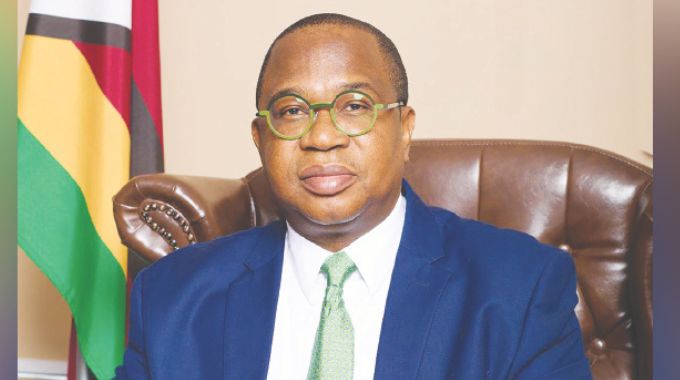
Oliver Kazunga
Senior Reporter
GOVERNMENT has described Zimbabwe’s removal from the World Bank Group’s classification of fragile and conflict-affected economies as global recognition of the country’s economic and institutional progress.
The reclassification, effective July 1, 2026, places Zimbabwe outside the World Bank Group’s Public Fragility, Conflict and Violence List and Institutional Fragility List under the revised classification framework for the 2027 fiscal year.
In a statement yesterday, Finance, Economic Development and Investment Promotion Minister Professor Mthuli Ncube said Government welcomed the development and appreciated the international recognition of reforms being implemented under the Second Republic.
“The Government of Zimbabwe, under the visionary leadership of His Excellency, the President of the Republic of Zimbabwe, Cde Dr E.D Mnangagwa, welcomes the removal of Zimbabwe from the World Bank Group’s classifications of countries affected by conflict and institutional fragility, effective 1 July 2026,” he said.
Under the revised framework, the Public Fragility, Conflict and Violence List covers countries where organised political violence affects at least 20 percent of the population, while the Institutional Fragility List covers eligible countries with a Country Policy and Institutional Assessment score below 3.0.
Zimbabwe is no longer on either list.
Prof Ncube said the development affirmed the country’s economic and social progress and demonstrated improving institutional resilience, while providing fresh impetus to efforts to achieve Vision 2030 and an empowered and prosperous upper-middle-income society.
The development comes as Zimbabwe continues to register improvements in key economic indicators.
The economy grew by 8,3 percent in real terms in 2025, driven by agriculture, mining, manufacturing and services, while annual ZiG inflation fell to 2,9 percent in August 2026, reflecting sustained price and exchange-rate stability.
He attributed the stabilisation to fiscal and monetary discipline, including measures to contain expenditure, limit monetary expansion and strengthen the domestic currency.
Improvements have also been recorded in public financial management, institutional governance and the business environment.
Zimbabwe scored 62 out of 100 in the 2025 Open Budget Survey, placing it among the leading performers in Sub-Saharan Africa, with its budget transparency score having risen by 39 points since 2017.
Prof Ncube said the removal from the fragility classifications was expected to improve international perceptions of Zimbabwe’s institutional and investment risk, strengthen investor confidence and support long-term domestic and foreign investment.
The development could also widen opportunities for commercial project financing, infrastructure partnerships, co-financing arrangements and deeper trade and development partnerships, while complementing the ongoing Arrears Clearance, Debt Relief and Restructuring Process.
Prof Ncube said Government remained committed to consolidating macroeconomic stability, strengthening governance, improving the investment climate and advancing the Structured Dialogue Platform on arrears clearance and debt resolution.
“Building a resilient, competitive, and inclusive economy that creates jobs, attracts investment, improves public services and raises the quality of life for all its citizens, leaving no one and no place behind, remains the Government’s top priority,” he said.
Political scientist Mr Dereck Goto said the World Bank’s decision reflected cumulative reforms implemented under President Mnangagwa rather than a single intervention.
“This reflects cumulative reforms under President Mnangagwa rather than one intervention.
“Zimbabwe has strengthened public financial management, fiscal discipline, monetary and exchange-rate management, fiscal-risk oversight and institutional accountability.”
Mr Goto said the 2026 IMF Staff-Monitored Programme provided independent validation of the reform drive, with Zimbabwe having met all quantitative targets and structural benchmarks at the first review.
He said the World Bank decision reinforced an emerging picture that the Second Republic’s reform and stabilisation programme was delivering measurable institutional improvements recognised beyond Government.
Mr Goto described the delisting as a “highly significant” confidence marker.
He added that President Mnangagwa’s re-engagement strategy had combined diplomacy with domestic economic and institutional reforms, adding that the World Bank development, together with the successful implementation of the IMF Staff-Monitored Programme, strengthened Zimbabwe’s credibility in arrears-clearance and debt-restructuring discussions.
For international investors, particularly those in Western markets, he said the development was significant because country classifications influenced perceptions of sovereign and political risk.
“Zimbabwe is increasingly presenting itself internationally as a reforming, stabilising and investable economy,” he said.
Mr Goto stressed that the World Bank’s separate assessment of institutional fragility and widespread organised political violence was important, noting that Zimbabwe now appeared on neither list.
“The delisting itself primarily reflects improved institutional and governance indicators rather than a prediction about future politics,” he said.
Economic commentator Mr George Nhepera described the delisting as “a very positive development”, saying it testified to Government’s efforts on the economic front and could reduce Zimbabwe’s external risk premium in international markets.
He, however, cautioned that economic projections remained vulnerable to external shocks, particularly El Niño and adverse climate change, which could alter the economic outlook.
Mr Nhepera said the reduction in country risk could lower the cost of offshore funding for banks and other capital-market players, creating better prospects for economic growth.
Former Zimbabwe National Chamber of Commerce president Mr Trust Chikohora echoed similar sentiments.
“The World Bank and IMF act as barometers of a country’s creditworthiness and the country’s risk factor, so if they begin to give positive signals, it helps on the journey towards normalising our credit situation,” he said.
On the potential impact on borrowing costs, Mr Chikohora said the development would have a positive effect by reducing Zimbabwe’s country-risk factor and, consequently, the premiums charged on loans.
“We’ll wait to see how funders will respond generally to this — but what I know is that it will have a positive impact in terms of reducing the country risk factor for Zimbabwe and even starting to reduce the premiums that the country will be charged on loans,” he said.