

 admin
admin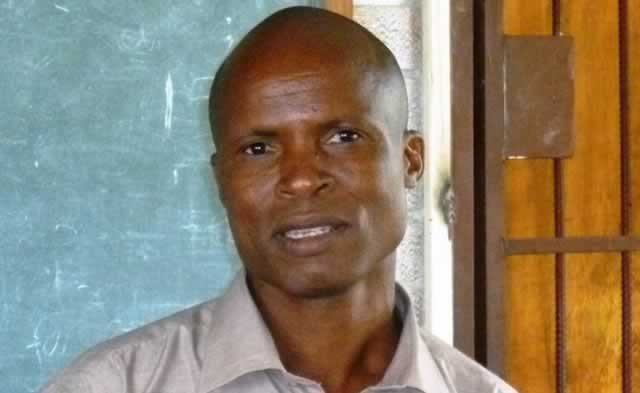

Beaven Tapureta Bookshelf
‘‘Makadenha Rukato’’ (Lawnic Enterprises, 2014) written by new writer Onias Murambidzi is an 18-act Shona play that will remind next generations about the agonies of Zimbabwe’s liberation struggle.
This is Murambidzi’s debut creative work based on history appropriately set in the villages of Mudzi (Mashonaland East), one of the places where the mobilization and recruitment into liberation war mostly happened. Occasionally, the play drifts to the city to capture the urban-based struggles of local people at their workplaces under Rhodesian bosses.
In ‘‘Makadenha Rukato’’, 47-year old Murambidzi, a self-publisher, presents a realistic drama about an unforgettable era in the history of this country, an era in which he also was involved.
The play moves like a historical movie and so it does have potential of being adapted into a short historical film to remind the future about the emotional, psychological, physical anguish that the people suffered at the hands of an oppressive colonial system of rule.
By employing believable characters, setting, and plot, the author brings back memories of the struggle that finally resulted in independence in 1980. The reader can feel the hurt emotions from which this autobiographical play was inspired. The play is Murambidzi’s vent of what he saw happening during the armed struggle in Mutoko.
“I wrote ‘Makadenha Rukato’ because I wanted to empty all hurt memories of the liberation struggle that have been haunting me day by day since 1980 when Zimbabwe became independent,” says the author.
He also says, “It is disheartening to learn that some people who experienced this past remain egotistical and have merged their mindset with those of the born-free generation, others have forgotten this past because of the current economic hardships.”
The voice of the play clamours for an audience. The deep emotional attachment, the ‘‘thereness’’, though skilfully inter-weaved with theme and language, gives away the perspective from which the play was written.
While previous creative works about the struggle for Zimbabwe carry a certain subtlety in their artistic analysis, ‘‘Makadenha Rukato’’ clearly intends to invite the reader to go back in time, to the 60s and 70s, into the villages of Mashonaland East and meet the men and women, young and old, whose peace is at stake.
They are a self-sufficient people with a unique culture, a way of living that connects them with their land, yet soon another way of life is introduced and violently changes the course of their lives.
As I said, the play is essentially historical and telling by its number of characters and amount of historical events which are already known and captured in history books, the author may have done justice if he had detached himself to make it more unusual creative work.
While reading the play, I could not help noticing a certain similarity between the play and the book ‘‘The Struggle for Zimbabwe: the Chimurenga War’’ by David Martin and Phyllis Johnson. History and facts laid down in storytelling fashion. There is little fiction but facts and history re-enacted. This writing is different from Alexander Kanengoni’s ‘‘Echoing Silences’ and Yvonne Vera’s ‘Why Don’t You Carve Other Animals’’ which both deal with post-colonial expectations.
‘‘Makadenha Rukato’’ is fictionalised autobiography, the places are real and some of the characters are based on real people, and the events that unravel are based on facts. The value of the book lies in its indigenous language and ability to inspire the youth to celebrate their country’s past so that they can draw their future.
One of the main characters has the name ‘‘Makadenha Rukato’’ which is also the title of the book. Makadenha is an inspirational character. One day he decides to beat drums manufactured by his uncle Sabhuku Chibanzu. This attracts the attention of nearby Rhodesian soldiers Sydney and Dupont who immediately come to the village and beat him to near-death, accusing him of using the sound of drumbeat to call the freedom fighters hidden in the bushes.
He later becomes a freedom fighter whose Chimurenga name is Kabhasikoro and he leads in most onslaughts against the enemy. The author points out various facts such as that in the war of liberation it was not a war against skin colour but against an oppressive system.
In the play, Rhodesians such as Peters, who runs a shop, and his wife, a nurse, play a great role in the fight against colonialism. Peters, whose views about the ongoing war are hardly explicit in the play, supplies food to the freedom fighters who are increasing in numbers in the bushes.
On a certain occasion, his wife Mrs Peters saves Sabhuku Makaonei’s family from harassment by the Rhodesian forces and also she attends to Makadenha when he is taken to hospital after the beating. She drives Makadenha back home after he recovers.
There were black people who sided with the Rhodesians and supported the abduction, harassment, and murder of their kith and kin. There were blacks who opposed the liberation struggle for reasons they knew. Changamire Botso, for instance, opposes the idea of waging a war of liberation. He thinks it is unnecessary. Here the author builds a balance and escapes the trap of the blacks-against-whites angle.
Asked by Sabhuku Makaonei what he thinks about embarking on an armed struggle, Changamire Botso, says, “Ehe, ndinotsigirana naMudzviti. MuBhiritishi akauya munyika ino kare, ini Changamire wenyu ndisati ndazvarwa. Baba vangu vakandiudza kuti murungu anorwa seshumba chaiyo. Vakandiudza zvakare kuti vanhu vatema taingove nhapwa kubvira kare.
‘‘Zvekuti vamwe vedu vakatorwa vakaendwa navo kuAmerika chaiko kunoshandira varungu pamusana penharo. Saka isuwo hatifaniri kuita nharo sedziri kuitwa nepwere dzedu idzi. Muchidimbu musabikira magandanga zvekudya . . .” Translated, he is saying, “Yes, I agree with Mudzviti. The British came to this land many years ago before I your Chief was born. My father told me that the white man fights like a lion. He also told me that black people we were always slaves from time immemorial that others were taken to America to work in plantations because they had protested. Therefore we should not also protest as is being done by our children in the bushes. In short, don’t feed the guerrillas . . .”
At one point I thought the characters are a burden in terms of their number but realised the story cannot move without each and every character/actor in the play. Looking closely at each character and the naming of these characters, the curious reader deduces other meanings and symbolisms relevant to the context of the whole story.
What critical readers may also ask is the question: Was our Independence in 1980 a denouement or a climax in the narrative of the country? The play ‘‘Makadenha Rukato’’ ends with the announcement of a ceasefire after the bombing of an oil station in Salisbury.
Onias Murambidzi was born in 1968 in Mudzi District, Mutoko. He enjoys reading authors such as Aaron Chiundura Moyo, Guiles Kuimba, Modekai Hamutyinei and Charles Makari. Murambidzi is also a graphic designer and computer technician.
The play ‘‘Makadenha Rukato’’ is also being read on local radio.



 Online Reporter