Vusumuzi Dube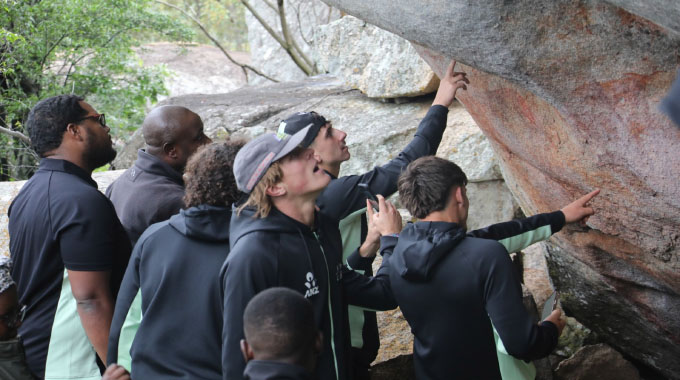
Nqobile Bhebhe, [email protected]
FROM the puddled outfield of Queens Sports Club in Bulawayo to the muddy, granite sculpted paths of Matopos National Park, Wednesday marked a striking shift in scenery for the New Zealand Under-19 men’s cricket team as they stepped, quite literally, beyond the boundary of the rain affected ICC Men’s Under-19 Cricket World Cup.
The day-long excursion reflected a deliberate convergence of sport and tourism, where recovery time doubled as destination marketing and global visibility. With persistent rains disrupting fixtures in both Bulawayo and Harare, the young Black Caps shed their traditional black kits and spikes for walking shoes and curious smiles, embarking on a restorative journey to one of Zimbabwe’s most treasured natural landmarks.
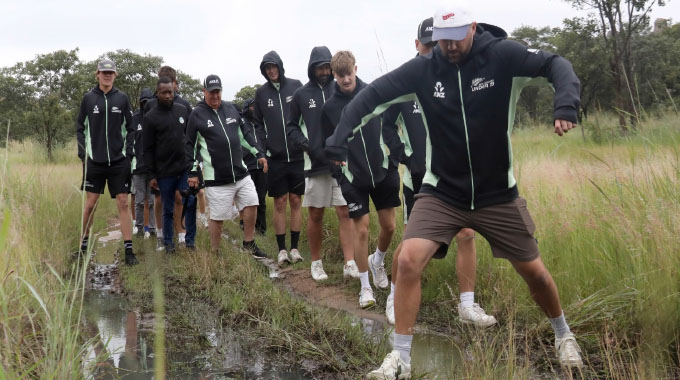
Under the watchful guidance of seasoned guides, the New Zealanders moved carefully through the rain softened terrain of Matopos National Park, their pace measured and unhurried. Each granite outcrop, valley and cave became a lesson, as the players listened attentively to explanations of the park’s geological marvels, cultural symbolism and rich biodiversity.
Far removed from the urgency of match preparation, the young cricketers embraced the moment, asking questions, snapping photographs and absorbing details with the same concentration they typically reserve for analysing bowling actions or reading pitch conditions. It was a different classroom altogether, yet one that proved just as engaging.
The visit served as both mental and physical renewal, underscoring how modern sport increasingly intersects with leisure, culture and well-being. Matopos National Park, a Unesco World Heritage Site since 2003, rose to the occasion with quiet dignity.
Its granite kopjes, piled and balanced as though shaped by time itself, formed a dramatic natural amphitheatre where mist clung to rock faces and ancient pathways whispered stories far older than the game unfolding beyond its borders. For the New Zealanders, fresh from rain-soaked training sessions and stop start fixtures, the park offered space to breathe, reflect and recalibrate.
Team officials revealed that the outing had been deliberately scheduled within an already congested tournament programme to allow players to reset amid the unpredictability of weather affected competition.
“This is about balance,” one team official said as he paused to admire the rock paintings. “The boys have trained hard and stayed focused, but with the rains interrupting play, it is important to give them a chance to relax mentally. Experiencing a place like Matopos is refreshing in every sense.”
Zimbabwe is co hosting the 2026 ICC Men’s Under-19 Cricket World Cup with Namibia, with the tournament running from January 15 to February 6, and organisers have encouraged visiting teams to explore the country’s leisure offerings alongside elite competition. The approach reflects a growing recognition that major sporting events are no longer solely about results on the scoreboard, but about showcasing destinations, stimulating tourism and leaving lasting impressions on young global ambassadors.
Situated south of Bulawayo, Matopos National Park is renowned for the granite strewn landscape of the Matobo Hills. When Cecil John Rhodes, then chairman of the British South Africa Company, first encountered the scenery, he famously dubbed it “The View of the World,” captivated by its sweeping vistas and spiritual aura.
Today, however, the hills are revered not for colonial sentiment but for their ecological, cultural and historical importance, home to ancient rock art, rare flora and fauna, and sacred sites deeply embedded in local heritage.
As the New Zealand Under-19s navigated muddy trails made slick by recent downpours, laughter replaced the intensity of pre-match routines. From a distance, a Chronicle news crew observed cameras clicking and conversations flowing, as the familiar rhythm of high performance sport softened into a shared human experience.
For teenagers competing on the world stage, the day offered a reminder that elite performance is sustained not only through drills and data, but also through moments of stillness, perspective and connection beyond the field.
Speaking to Zimpapers Business Hub at the World View site, team captain Tom Jones and team manager Michael Tillett praised Zimbabwe’s hospitality, describing the excursion as refreshing, educational and eye opening.
Tillett said the experience provided a welcome release from the demands of a rain disrupted ICC Men’s Under-19 Cricket World Cup, while also broadening the players’ understanding of Zimbabwe.
“Obviously when you come on World Cup tours, or any tour, you want to see the country, experience the culture and the natural aspects that the country has to offer.
“So we are really fortunate today (Wednesday) to go and walk with rhinos, go up to the hills and see beautiful landscapes and some history in terms of the artefacts.
“And then what really finished it off for me was coming up to Cecil Rhodes’ gravesite and learning a little bit about the formation of the country.
You know, not all history is pretty but it gave us a really cool understanding of what the country’s been through and where it is now and, you know, understanding a little bit about the Matebele people and looking at, you know, the monuments and the views from the gravesite itself.
“So yeah, a really cool day to understand Zimbabwe a little bit more culturally and also naturally.
“So we are really appreciative of what Zimbabwe tourism has done for us today and it’s going to give us some unique memories to take home to New Zealand.”
Team captain Jones echoed those sentiments, saying the squad relished the opportunity to tour the World Heritage Site and learn more about wildlife conservation, particularly the park’s rhinos.
“The boys and I have been touring around the Matobo National Park today, which we have really enjoyed. We have been in Zimbabwe for about the last three weeks now and today’s been a really nice break from training, the weather obviously has not been in our favour for the last three weeks but it’s been a really nice chance for the boys to sort of get away from cricket.”
At a curio market within the expansive park, the New Zealanders paused to admire the intricate artworks on display, purchasing souvenirs to cement their memories of Zimbabwe.
Tourism officials say the value of such visits extends far beyond a single afternoon. Every shared photograph, every anecdote carried home, becomes an informal yet powerful endorsement of Zimbabwe as a destination capable of hosting world class sport while offering unforgettable experiences.
“Sport tourism is a strategic pillar,” said a local tourism official. “When young athletes visit places such as Matopos, they become storytellers. They return home not just with memories of matches, but with images of landscapes, culture and hospitality that inspire future travel.”
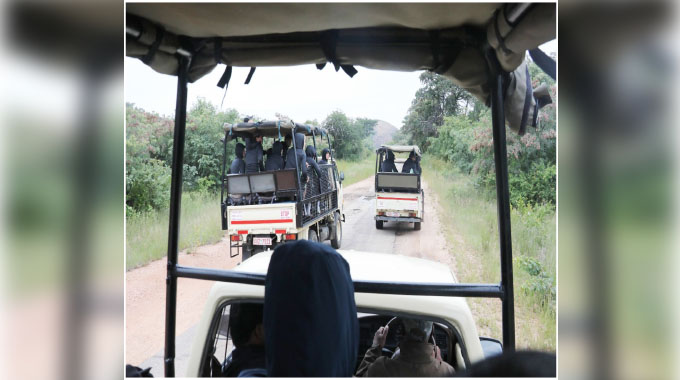
The synergy was unmistakable: cricket’s global reach meeting Matopos’ timeless appeal. As clouds briefly parted over the hills, sunlight traced the curves of granite domes, casting long shadows that seemed to stretch deep into history.
It was a scene far removed from damp outfields and abandoned covers, yet perfectly aligned with the tournament’s broader narrative of resilience, adaptation and discovery.
For the New Zealand Under-19 men’s team, the excursion offered a moment of pause without distraction, a chance to reset before returning to competition. For Zimbabwe, it represented another quiet triumph — proof that even when rain interrupts play, the country’s ability to blend sport with tourism ensures the world keeps watching.
In the end, the journey from Queens Sports Club to Matopos was far more than a simple change of scenery. It was a reminder that in modern international sport, the spaces between matches matter just as much as the matches themselves — and that sometimes, the most enduring impressions are forged far from the boundary rope.



 Online Reporter