Sundaymail Editor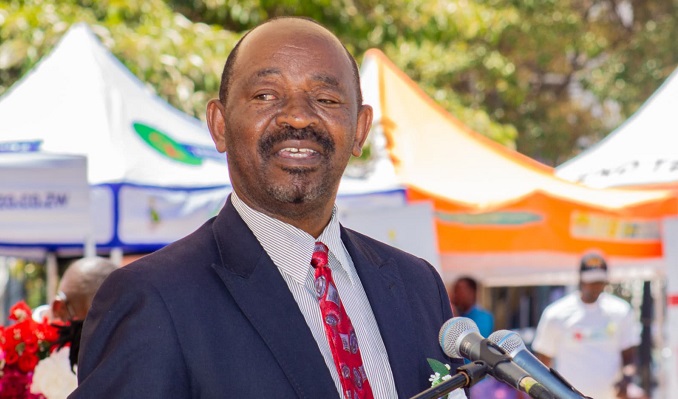
Malven Mugadzikwa in MARONDERA
Zimbabwe has made significant progress in the fight against Tuberculosis (TB) and HIV, with improved case detection, enhanced treatment programs, and increased investment in healthcare infrastructure.
These remarks were made by the director of the AIDS and TB programme in the Ministry of Health and Child Care Dr Owen Mugurungi during the World TB Day commemorations at Mahusekwa District Hospital in Marondera on Monday.
Speaking on this year’s theme “Yes! We Can End TB: Commit, Invest, Deliver,” Dr Mugurungi emphasized Zimbabwe’s unwavering commitment to eliminating TB as a public health threat.
He acknowledged that despite TB remaining one of the world’s deadliest infectious diseases, the country has strengthened its response through improved diagnosis, treatment, and surveillance.
“In 2024, Zimbabwe notified 20,189 TB cases, an increase from 19,545 cases in 2023. Our National TB Program has worked tirelessly to expand access to diagnosis, treatment, and care,” said Dr. Mugurungi.
He highlighted key interventions being implemented to combat TB.
“There is widespread availability of rapid molecular testing equipment, recommended by the World Health Organization (WHO), ensuring faster and more accurate TB diagnosis.
“Enhanced national TB surveillance systems, including active case-finding efforts, targeted TB screening, hybrid TB contact investigation, and the use of stool samples for detecting childhood TB.
“Improved monitoring and evaluation systems, with real-time data capturing and integration into the national health information database (DHIS2).
“The 6th edition of the National TB guidelines being disseminated to all testing sites to ensure healthcare workers have the latest diagnostic and treatment information,” he said.
Dr Mugurungi stressed that investment in TB and HIV treatment remains critical to sustaining these gains.
Dr Mugurungi indicated that newer approaches, such as digital X-ray machines with AI technology and virtual platforms for capacity building, are being explored to enhance TB diagnosis and treatment.
The country has also made remarkable progress in HIV/TB co-infection management, ensuring that TB treatment is integrated with HIV care. This approach has resulted in higher treatment success rates and better health outcomes for patients affected by both diseases.
Despite these successes, challenges remain. Zimbabwe still faces undiagnosed and unreported TB cases, with an estimated 8,000-10,000 missed cases annually. The emergence of multidrug-resistant TB (MDR-TB) and the continued impact of HIV further complicate efforts to end the epidemic.
“Ending TB is not just a health issue; it is a matter of social justice. TB disproportionately affects the poor, marginalized, and vulnerable populations.
“By eliminating TB, we are not only saving lives but also creating a more equitable and prosperous society,” Dr Mugurungi said.
He reaffirmed the ministry’s commitment to expand access to TB prevention, diagnosis, and treatment, ensuring that no one is left behind due to poverty or geographic barriers.
“Let us commit to ending TB, let us invest in a TB-free future, and let us deliver on our promises for the sake of our children and our communities,” Dr. Mugurungi said.


 Online Reporter