


 Andrew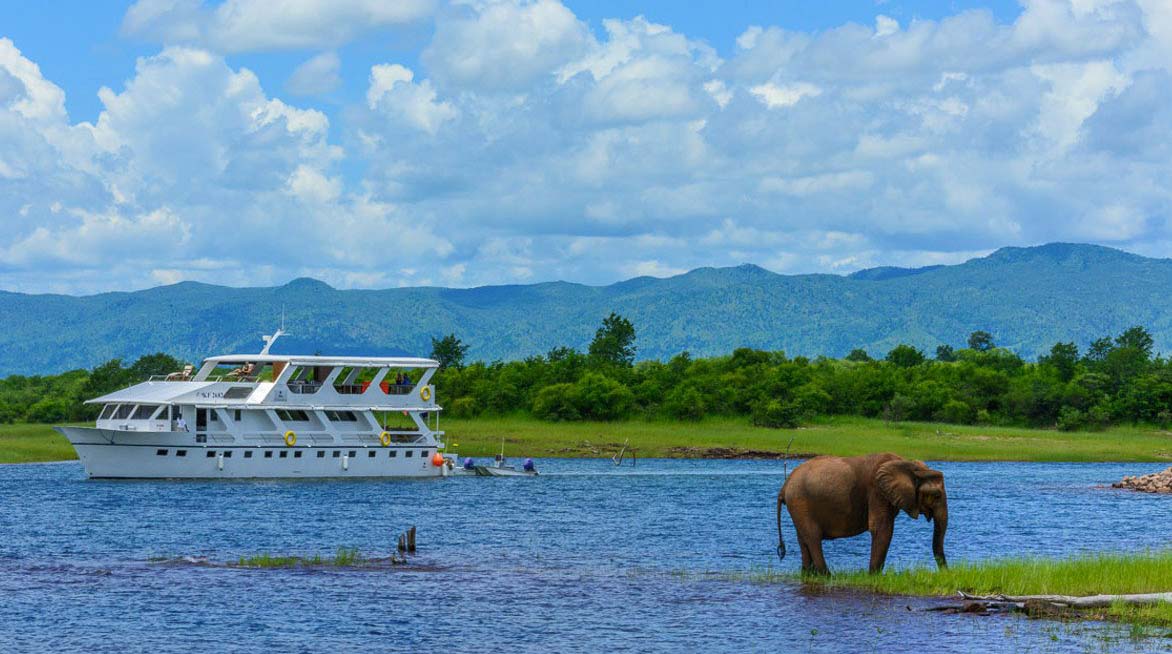
Langton Nyakwenda recently in MATUSADONHA
Matusadonha National Park, situated on the southern shore of Lake Kariba, is undergoing some massive transformation, thanks to a 20-year agreement between Zimparks and African Parks.
A new administration block built less than a kilometre from the harbour, greets you as you enter the wildlife reserve park, which is home to hundreds of elephants, lions, and buffaloes.
Builders are currently busy constructing new houses for staff, while some workers are erecting a perimeter fence, as brand new Land Rovers roam around the place.
Most of these employees (about 85 percent of the total workforce) come from surrounding areas under the Nyaminyami Rural District Council.
There are mainly from communities under chiefs Mola, Musambakaruma, Nebire and Negande.
Matusadonha National Park is now run as a joint venture (Matusadonha Conservation Trust) between Zimparks and African Parks, in a bid to revamp the natural reserve and attract more tourists.
African Parks, a non-profit making organisation, will inject about US$50 million to revamp the national park, which sits on a 1 470 square kilometre piece of land.
Over US$3,6 million has been invested in the park this year.
“It has been three years since this joint operation started, and what you will see is a few African Parks personnel around, and a lot of Zimparks personnel.
“Covid-19 interrupted us a little bit, but we have put a lot of emphasis on building our capacity here,” said Mr Mike Pelham, the park’s operations manager.
“What we have got here is quite a lot of money going into infrastructure development. A lot of training going on, and recruitment of additional staff and resources, just to try and bring ourselves to a very modern level of operation.
“We have found that the way we manage these parks has changed considerably in the last 20 or 30 years. A lot more people and resources are needed,” said Mr Pelham.
“This year we spent around US$3,6 million. Next year, we are anticipating an increased budget.”
Government believes that the country’s national parks have the capacity to attract investors and tourists, create employment and grow the economy towards the attainment of an upper-middle-income economy by 2030.
With a decent population of elephants, lions and buffaloes, Matusadonha National Park is being primed to become a major tourist attraction.
“We are looking at around 900 elephants in the park, most of them on the valley floor. A third of the park is on the valley floor, two-thirds is on the hills.
“900 is a pretty healthy population. We also have about 900 buffaloes, 2 000 hippos and a decent number of leopards,” said Mr. Pelham.
Proclaimed a national park in 1975, Matusadonha was once renowned for its black rhino.
Sadly, the last rhino in the park was lost in 2019.
There are plans to re-introduce the black rhino in 2025, banking on funds that are being availed by African Parks.
In the meantime, tourist numbers have increased steadily.
“Numbers have been growing since the partnership between Zimparks and African Parks.
“We had about 4 218 in 2019, but we were already sitting on 5 045 as at end of November 2022,” revealed Mr Chris Chiparaushe, the park’s tourism manager.
“When people hear that anti-poaching is effective and camping facilities like ablutions have been renovated, they gain confidence and come,” he added.
Chiefs who govern communities around the park also spoke positively about the benefits their subjects are getting from their proximity to Matusadonha.
Over 170 people from these communities work in the park.
Organised fishing camps are now the order of the day, thanks largely to a revived anti-poaching drive.
At Kings Camp, which has a small population of about 500 people, there’s a vibrant economy that is being driven by the famous bream from Lake Kariba.
There are 27 permit holders who harvest about 30kg of fish each a day, a total of 810kg per day.
Given that they sell their fish at a price of US$1,70 per kg, about US$1 377 is realised per day, at the camp.
“As a result of less poaching, we now have access to the Lake and we can now enjoy the benefits of organised fishing,” a fisherman at the camp said.
Another said:
“I have managed to send my children to school. Some are now working in Harare.”
Chief Mola also added his voice:
“There are a lot of people who have benefited from CAMPFIRE-related projects.”
CAMPFIRE (Communal Areas Management Programme for Indigenous Resources) is a programme that helps rural communities manage natural resources for their own development.
“The coming in of African Parks has also seen more interactions between the park officials and the community.
“We now know that we can also mitigate human-wildlife conflicts, especially elephants that invade fields, by using chilli.
“We have a chilli field down there, and we just burn the chilli around the field and the pungent that comes out scares away elephants,” said Chief Mola.


 Bongani Ndlovu
 Online Reporter