Chronicle Editor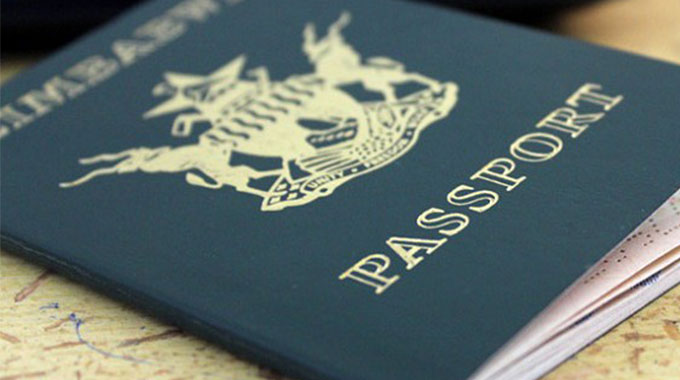
Mashudu Netsianda, Senior Reporter
GOVERNMENT has stopped the production of the current type of passports, which will be replaced by highly securitised electronic ones set to be launched today by President Mnangagwa at Chiwashira Building in Harare.
The historic introduction of the e-passport reflects an adoption of smart technology by the Civil Registry Department which is mandated to provide vital registration documents.
The Government is working with Garsu Pasaulis, who is the implementation partner for the e-passport and the production of other vital civil registration documents.
The International Civil Aviation Organisation (ICAO), which is the specialised United Nations agency on aviation security and standards for international travel prescribes member states to adopt measures that safeguard the integrity and security of travel and identity documents.
Zimbabwe’s migration from the traditional passport to the e-passport conforms to the need to implement technology aided improvements which safeguard immigration.
The new development was published by Home Affairs and Cultural Heritage Minister Kazembe Kazembe in a Statutory Instrument 273 of 2020 of the Government Gazette.
“The Minister hereby notifies that henceforth the Government will cease the issuance of the current passport and in place thereof will be issuing electronically readable passports (e-passports) whose charges are specified in the schedule,” read the SI.
According to the SI, the current passports issued before the date of operation of these regulations, will cease to be acceptable internationally by December 31, 2023, and will therefore need to be replaced by e-passports.
The fees payable for obtaining the new passport shall be US$100 for ordinary e-passport, US$200 for the emergence or express one. A normal fee of US$20 shall be charged for every passport application processed at any CBZ Bank branch countrywide
In a statement, the Ministry of Home Affairs and Cultural Heritage said the expected launch of new generation of e-passport by the President today constitutes an important milestone for Zimbabwe as it bears more robust security features.
“The e-passport will protect the privacy of our citizens given the embedded features which protect against identity theft and counterfeiting of travel documents. Apart from reasserting individual rights to privacy, the introduction of the e-passport will also provide enhanced security standards at our various ports of entry,” said the ministry.
The ministry said in the meantime valid traditional passports remain in use. However, upon expiry of the traditional non-electronic passport, citizens will require to get e-passports on renewal of their travel documents in line with ICAO guidelines.
@mashnets



 Online Reporter