Online Reporter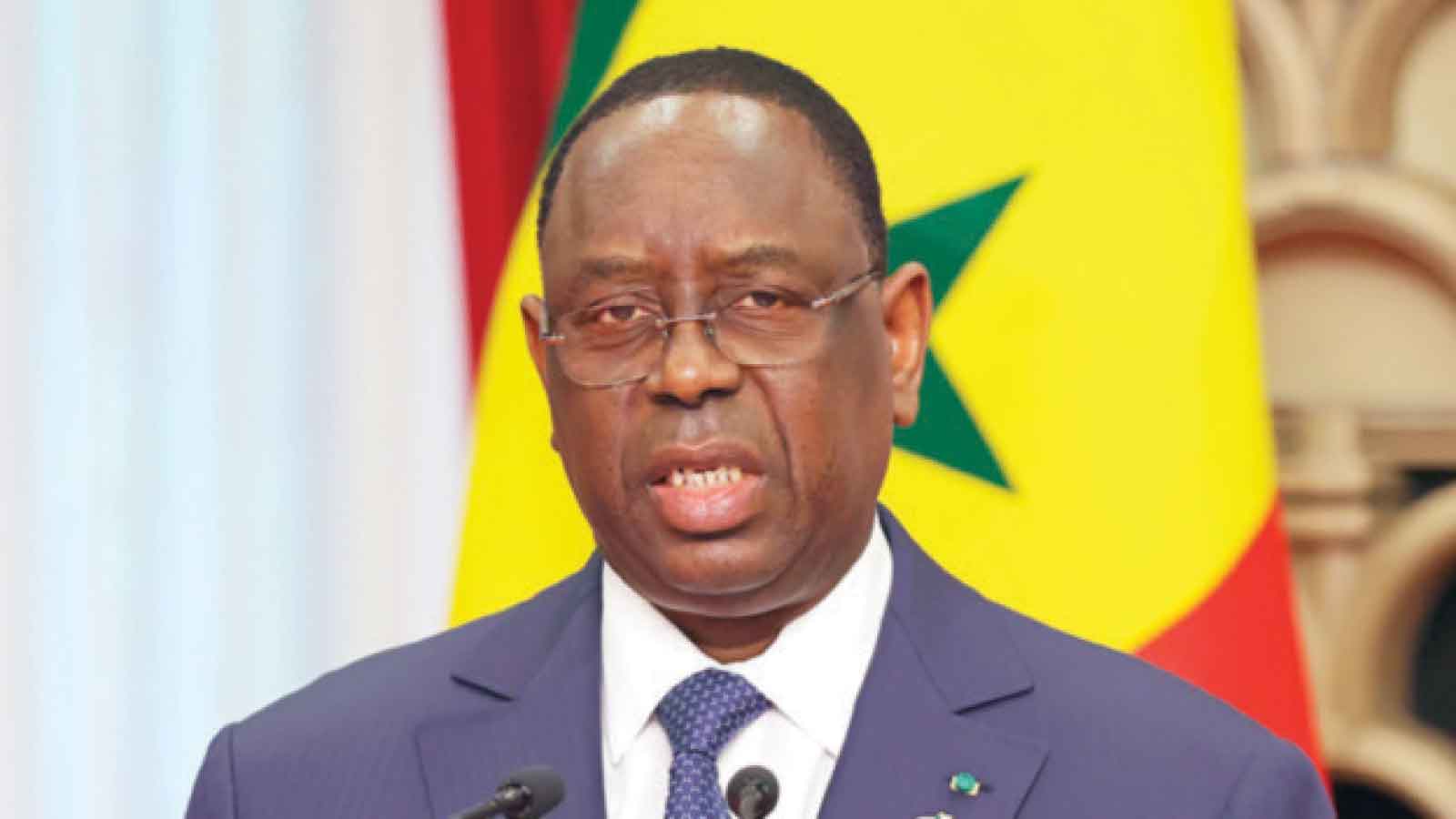
Alexander Rusero and Ranga Mataire
As the term of Secretary-General António Guterres draws to a close in December 2026, the international community will soon confront a question that carries immense implications for the future of global governance: who should lead the United Nations into an increasingly turbulent era?
The answer, both symbolically and strategically, should be clear. Africa ought to mount a deliberate and coordinated campaign to ensure that the next secretary-general of the UN comes from the African continent.
The global order today is experiencing deep convulsions. Wars and geopolitical tensions are multiplying across regions, international law is increasingly contested, and multilateral institutions are under unprecedented strain.
From the destructive instability in the Middle East to rising tensions between major powers, the international system appears to be drifting toward confrontation rather than cooperation.
In such a moment, the world needs leadership that commands moral credibility, diplomatic patience and historical experience in navigating complex conflicts. Africa, perhaps more than any other region, embodies these qualities.
Africa has already demonstrated its capacity to lead the United Nations with distinction. Two of the most respected secretaries-general in the organisation’s history came from the continent – Boutros Boutros Ghali and Kofi Annan. Their tenures left indelible marks on global diplomacy and the practice of multilateralism.
Boutros-Ghali, who served from 1992 to 1996, assumed office at the end of the Cold War when the international system was being reconfigured. His landmark policy document, An Agenda for Peace, articulated a comprehensive framework for preventive diplomacy, peacekeeping, and post-conflict peacebuilding.
At a time when many believed that military power alone could enforce order, Boutros-Ghali insisted that sustainable peace required political dialogue, development, and institutional reconstruction.
Although his tenure was cut short by geopolitical tensions within the Security Council, his intellectual contributions continue to shape the conceptual architecture of modern peace operations.
Annan, who served from 1997 to 2006, elevated the moral voice of the United Nations in world affairs. His leadership was instrumental in advancing the Millennium Development Goals and in strengthening the role of the UN in humanitarian intervention and conflict prevention.
Annan’s diplomacy emphasised dialogue over coercion and international cooperation over unilateral action. Under his stewardship, the United Nations projected an image of principled leadership anchored in human dignity, accountability, and collective responsibility.
These two African statesmen demonstrated that the continent possesses both the intellectual depth and diplomatic temperament necessary for global leadership. Their legacies remind the world that Africa is not merely a theatre of international politics but also a source of ideas and solutions for global governance.
In the 80 years of the United Nations’ existence, the world body has only had these two African statesmen who distinguished themselves as astute leaders who understood the need to steer multilateral cooperation and address the defining challenges of our time.
The debate on the race for the new UN secretary-general began on February 20 at the United Nations Economic and Social Council chamber and it has profound implications for global peace, security and diplomacy.
Today’s geopolitical landscape makes Africa’s leadership even more compelling. The international system is increasingly characterised by competing power blocs, strategic rivalries, and selective adherence to international law. Military confrontations are expanding, and the erosion of trust in global institutions is deepening. In many instances, powerful states pursue unilateral interests that undermine collective security mechanisms.
In this environment, the credibility of the United Nations depends heavily on the perceived neutrality and moral authority of its leadership. Africa offers a unique advantage in this regard. Historically positioned outside the central rivalries of great power politics, the continent often acts as a relatively neutral broker in global diplomacy. African states have consistently advocated for peaceful dialogue, negotiated settlements, and multilateral cooperation in addressing conflicts.
Moreover, Africa’s own historical experiences have cultivated a diplomatic culture deeply attuned to conflict resolution. Across the continent, regional organizations and peacebuilding initiatives have experimented with innovative approaches to mediation, reconciliation, and post-conflict reconstruction.
From community-based reconciliation mechanisms to continental peace and security frameworks, Africa’s conflict transformation traditions emphasise negotiation, inclusion, and restorative justice.
This orientation toward peace rather than domination offers an important corrective to the militarized logic that increasingly shapes international relations. A Secretary-General from Africa would bring to the United Nations a perspective grounded in the lived realities of societies that have navigated both colonial domination and post-conflict reconstruction.
Such a perspective would reinforce the principle that lasting stability cannot be imposed through force but must emerge from dialogue, justice, and equitable global governance.
The argument for an African Secretary-General is also a matter of fairness within the architecture of multilateral leadership. Africa constitutes more than a quarter of the membership of the United Nations and represents a significant share of the world’s population.
Yet, its presence in the highest decision-making structures of global governance remains disproportionately limited. While Africans have previously served as secretary-general, the continent has not occupied the office for two decades.
At a time when discussions about reforming the international system are intensifying, allowing Africa to lead the United Nations would signal a renewed commitment to inclusivity and representational balance. It would affirm that global institutions must reflect the diversity of the international community rather than the narrow interests of a few dominant powers.
Beyond symbolism, Africa’s leadership could help reorient the United Nations toward priorities that are increasingly vital for global stability.
These include preventive diplomacy, sustainable development, climate resilience, and the equitable reform of global institutions.
Many of the crises confronting the world today, from resource conflicts to migration pressures, are deeply intertwined with development inequalities and environmental vulnerabilities.
African policymakers have long argued that security and development cannot be separated, and that peace requires addressing structural injustices in the global system.
An African secretary-general would therefore be well positioned to advocate for a more balanced agenda that integrates peacebuilding, development, and climate action.
Such leadership could also strengthen partnerships between the United Nations and regional organisations, particularly the African Union, whose peace and security architecture has increasingly become an important component of conflict management on the continent.
Critically, Africa’s return to the helm of the United Nations could help restore confidence in international law and multilateral diplomacy. The present moment is marked by growing disregard for established norms governing the use of force, territorial sovereignty, and humanitarian protections.
When powerful states selectively interpret or ignore these norms, the credibility of the entire international system suffers.
Leadership from Africa, drawing on the diplomatic traditions that informed figures such as Boutros-Ghali and Annan, could provide the principled voice necessary to reaffirm the foundational values of the United Nations Charter.
Such leadership would not eliminate geopolitical rivalries, but it could strengthen the organisation’s capacity to mediate conflicts and defend the rules that sustain global order.
The coming selection process for the next secretary-general therefore presents Africa with both an opportunity and a responsibility. The continent must approach this moment strategically, presenting a candidate of exceptional diplomatic stature and rallying support across regional and geopolitical lines.
African states should coordinate their efforts within continental and international forums to ensure that their collective voice is heard.
Ultimately, the question before the international community is not merely about geography or rotation. It is about what kind of leadership the United Nations requires at a time when the foundations of the global order are under strain. The world needs a Secretary-General capable of bridging divides, defending international law, and reaffirming the centrality of dialogue over confrontation.
Africa has already shown that it can provide such leadership. As the term of António Guterres approaches its conclusion, the moment has arrived for the continent to step forward once again.
The new secretary-general would be elected for a five-year term starting on January, 2027. A candidate has to be nominated by a UN member state and normally rotates among regions, but when the current secretary-general (from Portugal) was elected in 2016, it was supposed to be Eastern Europe’s turn.
Next on the list is Latin America but this does not stop diplomats from electing candidates of their choice from any other regions.
Countries have been asked to nominate candidates by April 1 to be able to take part in the interactive dialogues in the week of April 20, which will be broadcast online. It is at these meetings that candidates will be able to present their vision statements and member states will be able to ask questions.
Rafael Grossi from Argentina, Michelle Bachelet from Chile, Rebeca Grynspan from Costa Rica; Macky Sall from Senegal and Virginia Gamba from Argentina are the candidates that have submitted their papers for the top post.
The Security Council will hold secret ballots — referred to as straw polls — until a consensus is reached on a candidate. The choices council members are given for each candidate in the straw poll are: encourage, discourage, or no opinion.
The five permanent veto-wielding council members — the United States, Russia, China, Britain and France – need to agree on a candidate. The ballots for the veto powers in the straw poll are traditionally a different colour to those of the 10 elected members.
Given the current global geopolitical dynamics, the United Nations, and indeed the world, would benefit greatly from Africa’s voice at the helm of global diplomacy.