Vusumuzi Dube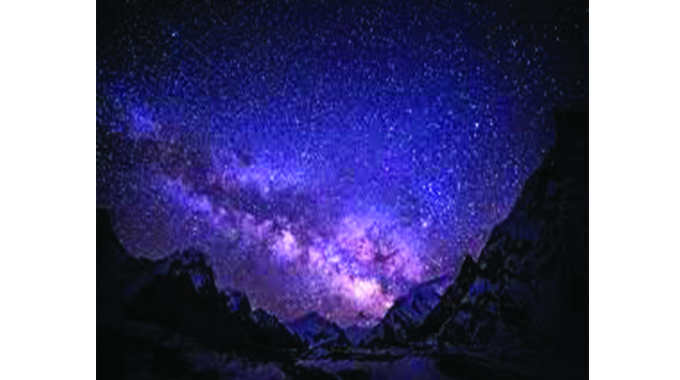
Journey to the stars
IT had been my intention to look at solar myths among the various African communities. That is what I did with respect to the moon. Several diverse myths were crafted to explain and interpret observable phenomena relating to the moon. It is my assumption that the same applied to the sun. I sought to scan the perceptions and myths that were developed to bring about understanding and meaning among the various communities in relation to the sun.
Then, a few days ago, I read an article about a Tonga dance known as Ngoma Buntibe. It is a dance that is typical of African dances though to a mind that is not sufficiently perceptive, it may pass for a “chaotic dance.” Quite often, when we gaze and consume a dance, we may not see beyond its physical energy and seemingly haphazard movements. What we see differs. I may see “chaos” where none exists. The writer of the article of course knew it was not chaos in the literal sense of the word. No wonder the word was in inverted commas.
The national event during the Africa Day and Culture Month was held at Kariyangwe, a place in the Binga District under Chief Siansali. However, some source advised me that Siansali is the name of the place and remains the same even when a different man becomes a chief. Apparently, the man that I know as Chief Siansali has a surname of Siatabwa. Succession among the Tonga is different from what obtains among other ethnic groups in Zimbabwe. The Tonga are a matrilineal people, though not matriarchal.
His sister’s son succeeds a chief. This could be a remnant and a distant echo from the time when there was matriarchy in Africa. Today the situation has changed markedly. The mediated position is where a chief’s sister’s son (niece) succeeds him. This is the case among the Tonga in Zambia and Malawi. There are Tonga people in Mozambique too and there was time when they were found in more areas than we imagine today.
For example, the Pashu people once lived at Mhandamabwe in Chivi before migrating westwards. In fact, it does appear the Tonga did provide labour during the construction of Great Zimbabwe. When the Nguni under King Zwangendaba travelled through present day Mozambique, they met the Tonga who referred to them as Angoni. The Angoni or Ngoni, a name corrupted from Nguni, are found in Chipata District in Zambia where King Lobengula sought refuge from white colonists sought to capture him. He remained there until his death and interment on Nsanjika Hill in the early 1920s.
Sadly, several people associate the Tonga with residence in the Zambezi Valley. The mighty Kasambabezi River did not separate the Tonga people. If anything, it brought them together. The construction of the Kariba Dam in the late 1950s prompted their eviction to clear spaces for the dam. Well, this is not a rendition of Tonga history. Rather, our thrust in on the dance that was described as “chaotic.” I still vividly remember the dance at Siachilaba during the installation of Chief Siachilaba. I fell in love with the dance and hope that one day it will be inscribed on the UNESCO ICH Representative List.
Why did I fall in love with this “chaotic” dance. It so happened that when I watched the dance, I had already written books on several African traditional dances, five of them to be precise. These were the following: Woso (Amabhiza), Jerusarema Mbende, Wosana, Muchongoyo and Mbakumba. Mhande is coming next. My perception and understanding of African traditional dances had changed for the better.
In the dances of various African ethnic groups, I gleaned similarities in terms of their traits. It is those traits that qualify African traditional dances for inclusion on my current articles under the banner of,
“Journey to the Stars.” It is the link and connectedness to the cosmic bodies that I shall refer to and demonstrate their relevance to the journey that I have been travelling for over forty weeks now.
Let me start with some features or elements of African aesthetics. One important trait is movement. However, the movement is not one that is haphazard. Rather, it is one that is regular, rhythmic, periodic, seasonal and therefore, predictable. These traits describe or qualify African performances and the arts in general. When these are known and appreciated, one immediately sees the link with cosmic bodies.
I will argue that Ngoma Buntibe is a heavenly dance. In fact, the Tonga have or rather used to have, a clearer understanding of the structure of the cosmos. I have written about their ilala baskets, nsangwa, and observed the presence of four curving arms executed with a brown dye from mwiyi tree. The baskets are woven from malala plants, which when grown to considerable heights, are referred to as nkabunka or mubunka.
The four curvilinear designs capture the four arms of the Milky Way. The other Zimbabwean ethnic group that has comparable designs on their baskets are the Ndebele people. Their coiled ilala baskets, like the woven Tonga ones, depict four curvilinear designs that are equally spaced apart. It is thought that our own solar system is tucked in one of the curvilinear arms. Both the Tonga and the Ndebele are featured prominently in my next book on African Body Art.
I have always argued that Africans possessed advanced knowledge of astronomy. Over the years, that knowledge had been dissipating. However, what remained was the art that carried the knowledge and information from the past. Now art comes without its hitherto associated knowledge that has been divorced by art. Art, as I argue, in my latest book (African Body Art: Functionality or Aesthetics?” scheduled for publication next month, goes beyond its primary meaning. It has purposes beyond itself.
There are many layers of meaning, the critical medium is art, and secondarily, there are functionalities that come buoyed by art.
Before I attempt elucidation of the dance, let us deal with some terminologies. A big typical Tonga drum enjoys the limelight by virtue of its size. It is the biggest musical instrument that is cylindrical with prominent wooden pegs that attach a pulled skin to the wider end of the drum known as mugonzo. The narrower end is one that the drum rests on. There are several coloured geometric designs that are painted on the body of mugonzo.
The decorative designs serve as pointers to the link and connectedness to the heavens. This is not unique to Tonga art forms and traditions. It holds true of other African ethnic groups that posit relatedness between heavens and earth. “As above, so below,” is Africa’s well-known adage where heavenly traits are replicated on the earth’s cultural realm.
Mugonzo, by virtue of its size and functional centrality, is carried by a team of men. One man with undoubted stamina follows the prized drum. His role is to beat the drum with all the power and stamina at his disposal.
The drum represents a central cosmic body, the sun around which planets revolve. There are smaller drums that men beat and these are part of the entourage, so to speak. The question now is what represents planets? The smaller drums that are beaten with short wooden sticks have already been mentioned.
Wherever the mugonzo is carried to and placed on the ground, the associated musical instruments follow.
The muzungo enjoys centrality and importance. Men are at hand blowing the horns of various animals. Men in tow to the muzungo blow the horns of different sizes and therefore different sounds are produced. The horns clearly produce poly-rhythmic sounds that are enticing and captivating.
The symphonic ensemble and dance represent and symbolise cosmic phenomena. From the drum, known as ngoma in Tonga, the full name of the dance translates to Ngoma Buntibe. The buntibe component of the name refers to joy that results from the performance.
We are here face-to-face with replication of the solar system. The drum, ngoma, is central. The nyele orbit around the drum and add to the musical joy. Women hold and beat ninsaka, the hand rattles. These days, tins are used as hand rattles provided with short wooden handles. Inside the tins, ninsaka, are stone pebbles.
The energy of the dance is in its movement, its kinetic energy. The major drum creates sound energy and the ancillary drums in conjunction with other musical instruments. The solar system is symbolised, and represented in an artistic way that is engrossing and entertaining. Art forms in their various manifestations perform numerous roles beyond artistic consumption.
With regard to Ngoma Buntibe, it was a dance that was performed to console a bereaved family in what is referred to as mapwayila, induduzo. This was the case where families did not embrace Christianity.
Members of the ensemble beat the drums, blew nyele horns, shook hand rattles and beat the smaller drums with wooden sticks. In the meantime, their feet and bodies gyrated and, in the process, generated joy, Buntibe in the hearts of many.
The effect is mesmerising and brings solace to the bereaved. Indeed, the quality of music as a performance is out of this world. One feels uplifted, buoyed and caressed by unseen angels that accompany the ensemble. The symbolism that is expressed may not be that obvious to many. Many interpretations may be offered and that is an important characteristic of various arts genres.
These days the dance has assumed new dimensions where it is performed during public occasions. This was the case when President Emmerson Mnangagwa graced the Africa Day and National Culture Day at Kariyangwe.


 Online Reporter