admin
admin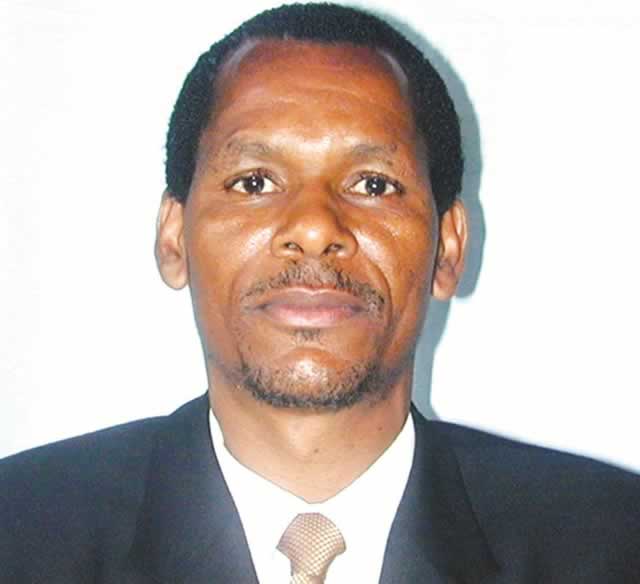
Takunda Mugaga Economic Agenda
I walked into the Harare International Conference Centre to hear Youth Development, Indigenisation and Empowerment Minister Francis Nhema speaking on the indigenisation subject for the first time. He impressed me so much that even any foreign investor who might have attended the occasion came out with a smiling face given the clarity and level of direction the new indigenisation proponent was proposing for the country.
Prior to the appointment of the new Cabinet, there was intense speculation on the new path the new Government was to take. Some thought there was to be a crude reversal of the so-called punitive policy on attracting investment, some viewed it as an election gimmick which was considered not sustainable for a fragile economy like Zimbabwe.
The pronouncement by Minister Nhema that a lot needed improvement in the implementation of the law was a typical relief for an athlete who could have covered a lengthy trip in the Sahara Desert. He was unpretentious-cum-uncompromising in his plan to handle the entire implementation matrix.
The most interesting subject in his address was the call for the political heavyweights to shun involving themselves in menial business activities such as running tuckshops, hair salons and a host of other peripheral business activities. This is said to crowd out the capacity of potential youth and women to rise as the call for capital consolidation will be challenging.
This is a clear and interesting call for both covert and overt model of empowerment without giving pressure to the government of the day to allocate superfluous shares which will never exist to see the declaration of dividends and capital gains.
Minister Nhema emphasised on the values of honesty, intergrity and respect. “Ndikaona wakapfeka mayoyo uchiuya kuzobvunza mari yeYouth Fund ndinokudzorera kwawabva, hembe inofanira kugara yakapfenyerwa,” said the minister as he bemoaned the lack of respect by today’s youth.
He strongly felt one of the reasons for the youth’s failure to be effective in today’s business world was to do with their conduct. He urged a shift in behaviour and style from this generation.
It was so amazing to notice that the minister is quite sensitive to such seemingly not so pertinent attributes as defined in today’s corporate world.
My plea was, however, to see a new post in the Cabinet which will have a special bias to economic affairs and not necessarily finance. This would be a non-political appointee where the individual would mostly have the blessings of the business executives. He could be designated the title of secretary of economic affairs not necessarily a minister in Government. This will help to deepen the implementation philosophy.
It is significant to continue demystifying the negative perception surrounding the indigenisation policy with some Judas Iscariots still thinking the approach is unique to Zimbabwe.
The world over, nations are finding ways to give their residents an unassailable advantage over immigrants, the call by some European Union members to leave the 27-member bloc emanates from the deep-seated dissatisfaction as the nationals are clamouring for sovereignty and resource ownership.
It could be a case of Europe also realising that its hegemony is in its twilight. In the 1950s when the world population was below three billion, Europe contributed about 24 percent of mankind to the world, with a burgeoning world populace, Europe only matters up to 7 percent with the entire financial crisis of the eurozone not bothering residents from either the emerging markets or the least developed countries.
The indigenisation charter helps to consolidate what it means to cede a controlling stake to the natives; its focus is on unravelling the areas which require discipline. The charter inculcates a sense of accountability by its demand for adherence of corporate governance regardless of the ownership structure of the indigenous corporates.
It emphasises adoption of the King Code with its revisions which covers environmental sustainability and sustainable reporting of financial statements. The need for auditing of financial statements which imbues a sense of responsibility as well as accountability.
For one to have a deeper appreciation of what indigenisation entails, it is pertinent to fully understand the charter and its tenets.
Minister Nhema must continue with the good work he is promising and, indeed, it will not be an easy path to walk knowing fully well that other ministries feed into his through its demand for ceding of 51 percent stake in all foreign-owned entities be it agro-processing, banking, tourism, energy, communications, transport or mining sectors.
He should embrace it as a process and maintain the Government objective of reducing income inequality and increasing personal incomes. This can only be achieved with smart application of economic policies taking into consideration the role of foreign capital but at the same time avoiding being enslaved by dead aid which will not lead to micro-economic transformation.
Christopher Takunda Mugaga is an economist and is the Head of Research for Econometer Global Capital, a regional finance and economics research firm. He can be contacted on: [email protected] or +263 772 340 353 / +263 776 266 062.



 Online Reporter