admin
adminrefineries to process crude oil into finished products such as petrol, paraffin and so on for export.
Even more oddly, Nigeria is a net importer of motive fuels, so that the pump price of petrol, for example, was beyond the reach of the majority of vehicle owners including the small to medium entrepreneurs hence the subsidy on fuel. Before the discontinuation of the subsidy a litre of petrol cost a little more than six naira at the worst of times.
This price has prompted some observers and even economists and commentators to argue that Nigeria has the cheapest fuel in the world. The government of President Goodluck Jonathan (now referred to contemptuously as Badluck Jonathan) shares this view for obvious reasons.
However, the public have a contrary view and in the view of this writer, they are correct. Theirs is not a contrarian position but one which is based on the economies of scale.
The people of Nigeria are looking at the following:
l Per capita income
l The cost of living
l Unemployment rate and
l The salary/wage differentials between skilled and unskilled workers. Let us conveniently omit to mention corruption as it is impossible to quantify unless one follows one’s emotions.
One other argument, not reason, advanced by the government in support of the removal of petrol subsidy is that only the middle class benefited. This argument is as preposterous as it is self-exculpatory on the part of the authorities. It is common cause that high fuel costs hurt the vulnerable groups of society right across the board including education, health and basic commodities.
Once transport charges and fares become expensive everything else follows suit and the ripple effects become rampant.
The salaries and wages of the workers get affected. Prices of basic commodities rise outstripping earnings. What we see here are cost-push inflationary pressures. The less privileged majority get affected directly all the way and all round. What the privileged minority do in this scenario is to watch with pronounced indifference.
The situation in Nigeria is unlike that which existed in Zimbabwe during the colonial era when subsidies were selective. The government in the then Rhodesia subsidised certain basic goods. It was subsidy-crazy to the extent that it extended these subsidies to cover even pet food and poultry feed thereby benefiting the privileged white minority.
As a token recognition of the poor socio-economic conditions of the majority, the colonial government subsidised transport costs for the workers by an agreed small percentage payment to the bus company, which was paid annually.
In the Nigeria context, the government, by removing the fuel subsidy, acted without taking due cognisance of the anger that the decision would excite among the population.
Therefore, they are right those who contend that the authorities have taken Nigerians for granted. In short, it is patently clear that the authorities have acted arbitrarily without sufficiently comprehending the inherent, and possible unsavoury consequences arising from the reaction of the Nigerian population.
As this issue has a profound negative effect on the economy as a whole both in the short term and in the long term, the government should or could, have initiated a nationwide debate soliciting suggestions from all sectors of the economy and from the most vulnerable: the common people/on the part of government phasing out the subsidy would have been the first card on the table as opposed to arbitrariness.
The situation in Nigeria is volatile at best and awash with sectarian violence at worst. It boggles the mind why President Goodluck Jonathan sanctioned the removal of the subsidy by government in view of the prevailing situation in the country.
Nigeria has been producing crude oil for many years yet successive governments of that country have failed to invest in the construction of a refinery plant as a long-term project. Removing the subsidy in one fell swoop can best be described as crass insensitivity to the socio-economic circumstances of Nigerians.
The fact that Ghana removed the fuel subsidy and people did not react did not mean that the same would be the case in Nigeria. It may be that Ghanaians are yet to react. Fuel prices hurt, as I have indicated above.
The politicians in Ghana can be justifiably applauded for removing the fuel subsidy when they did. The country started producing crude oil only recently unlike Nigeria which has been a producer for decades.
By exporting unrefined petroleum only to import petrol and diesel as finished products, Nigeria has been exploited by the West and is still being exploited. Evidence of this is there, unalloyed.
France, the UK and the US are the biggest trading partners of Nigeria. As if this exploitation is not enough, companies drilling for oil in that country have caused irreparable environmental damage rendering water in the rivers unsuitable for drinking by humans, livestock and fish. This means that the livelihoods of the locals have been negatively affected. Successive governments, especially the military ones, should be held responsible for this state of affairs.
This writer believes that oil-producing countries, especially south of the Sahara, should renegotiate their agreements with foreign-owned oil prospecting/drilling companies in order to factor in new conditionalities, principal of which should, nay, must, be that such a company or companies establish a refinery to add value to the exported finished product while at the same time making the pump price affordable to the local users with the concomitant benefit of boosting economic growth overall domestically.
In the final analysis, though, we have to own up and say that subsidies on things such as fuel are not good for the economy no matter how prosperous a country might be.
By keeping the fuel subsidy in place the Nigerian governments were committing economic suicide without apparent good cause for it. By the time this article is published it is hoped that the government of Nigeria and the unions will have hammered out an agreement so that the subsidy is re-instated and then phased out or it is reduced to a reasonable and acceptable figure.
l The writer is a development economist and social commentator based in Lupane, Matabeleland North


Online Reporter
- Bmetro , businessweekly , Chronicle , Herald , Hmetro , Kwayedza , Manicapost , SundayMail , SundayNews , uMthunywa
- July 30, 2026
- 46 views
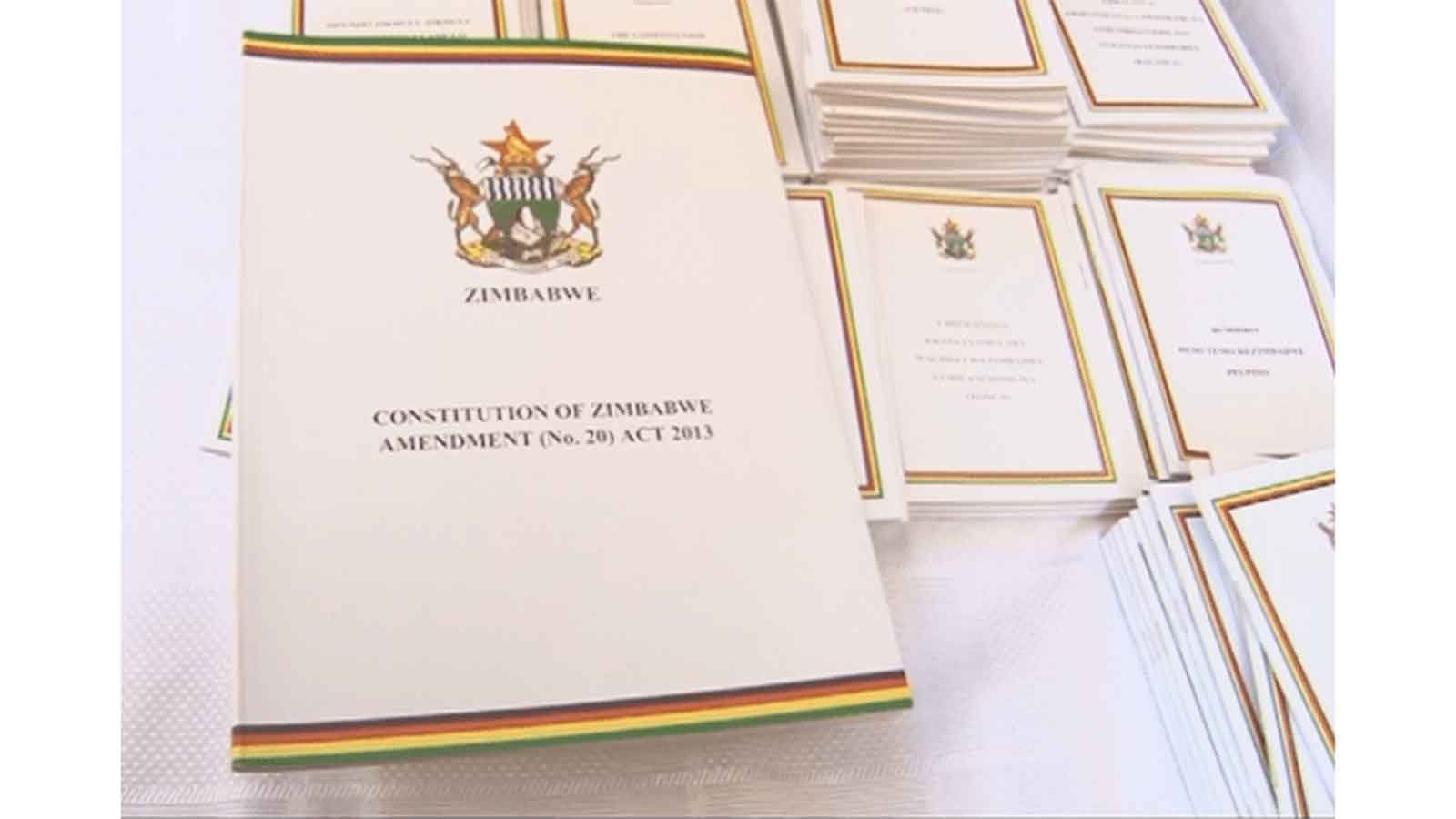
Is the Personal Benefit Rule about ‘Any Amendment’ or ‘An Amendment to a Term Limit Provision’?
An Intimate Reading of Subsections (1) and (7) of Section 328 of the Constitution of Zimbabwe (2013) By Nomuzikayise Ngwenya This piece is confined to one question, a question of…