admin
admin
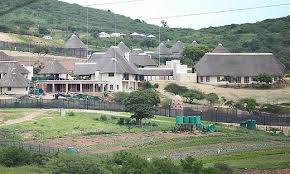 PRETORIA. — The excessive amount spent by government in the overhaul of President Jacob Zuma’s private Nkandla home was unconscionable, Public Protector Thuli Madonsela said yesterday. “The expenditure incurred by the state, including buildings and other items installed by the DPW (Department of Public Works), many of which went beyond what was reasonably required for the president’s security was unconscionable, excessive and caused a misappropriation of public funds,” she said.
“The failure to spend state funds prudently is a contravention of Section 195 of the Constitution and sections of the Public Finance Management Act.”
She was briefing reporters in Pretoria as she released a report on her probe into the Nkandla security upgrade. Madonsela said her investigations followed seven complaints lodged between December 2011 and November 2012.
The initial complaint was from an unidentified member of the public seeking veracity over a 2011 newspaper report alleging the lavish upgrades.
Madonsela said that during the upgrading process, many additions were made leading to about US$20 million, which had already been spent, while outstanding work was currently estimated at US$3,357,252.
This would bring the envisaged total to about US$22,941,222.
Among other concerns, the people who complained wanted Madonsela to find out whether any funds had been transferred from other critical projects for the Nkandla revamp to take place.
They also wanted to know how such an amount would be spent on a government employee and the possible abuse of executive privileges.
Some complainants wanted Madonsela to probe if the allocation of funds for a private home which would not remain within the State’s ownership represented irregular expenditure.
Madonsela found that critical service delivery programmes were sacrificed and money was diverted towards upgrades to President Zuma’s homestead.
“Funds were reallocated from the inner city regeneration project and the dolomite risk management programme of the department of public works,” Mandonsela said in her voluminous report, titled “Secure in Comfort”.
“Due to lack of proper demand management and planning, service delivery programmes of the department of public works were negatively affected.”
Madonsela said the conduct of the department of public works was in violation of Section 237 of the Constitution and the Batho Pele White Paper.
Madonsela’s investigation took about two years, exceeding the one-year period she had set for the composite analysis.
She found that President Zuma and his family unduly benefited from the costly upgrades.
“It is common cause that in the name of security, government built for the president and his family in his private (home), a visitors’ centre, cattle kraal and chicken run, swimming pool, and amphitheatre among others,” she said.
“The president and his family clearly benefited from this.”
Madonsela also found that President Zuma’s former neighbours were unlawfully moved at the state’s expense. The relocations cost government at least US$746,056.
In December, Public Works Minister Thulas Nxesi said the neighbouring families were moved because they posed a security threat to the president.
Yesterday, Madonsela said the various measures undertaken by the PWD went beyond what was reasonably required for President Zuma’s security.
She said the construction of a visitors’ centre, “an expensive cattle kraal with a culvert and chicken run”, a swimming pool, an amphitheatre, marquee area, some of the paving and the neighbours’ relocation were not provided for in Cabinet policy and the police security evaluations report.
Madonsela said some of the upgrades at President Zuma’s homestead could have been done in a manner that benefited the broader community. “The failure to explore more economic and community-inclusive options to accommodate the discretional security-related needs constitutes improper conduct and maladministration,” she said.
Projects such as helipads and the private clinic – the role of which could have been fulfilled by a mobile clinic – could have beefed up capacity at the local medical facility.
Madonsela said the construction of the permanent, expensive one-roomed police staff quarters could have been located at a centralised police station for the community.
The protector found President Zuma had not misled Parliament when he said his family built its own houses and the State had not constructed the structures.
Madonsela said she expected President Zuma to have acted to curtail the runaway expenditure when news of the exorbitant spending broke in December 2009.
“His failure to act in protection of state resources constitutes a violation of paragraph 2 of the executive ethics code and accordingly amounts to conduct that is inconsistent with his office as a member of cabinet, as contemplated by Section 96 of the Constitution.”
Madonsela recommended that President Zuma pay back a percentage of the upgrades.
“The president is to take steps with the assistance of the National Treasury and the SA Police Service to determine the reasonable cost of the measures implemented by the DPW at his private residence that do not relate to security,” she said in her report.
“(President Zuma is to) pay a reasonable percentage of the cost of the measures”.
Madonsela said the amount to be paid back should be based on the cost of the installation of some or all of the items that were not accepted as security measures.
She also said President Zuma must report to the National Assembly “on his comments and actions on this report” within 14 days. — Sapa.


 Online Reporter