Chronicle Editor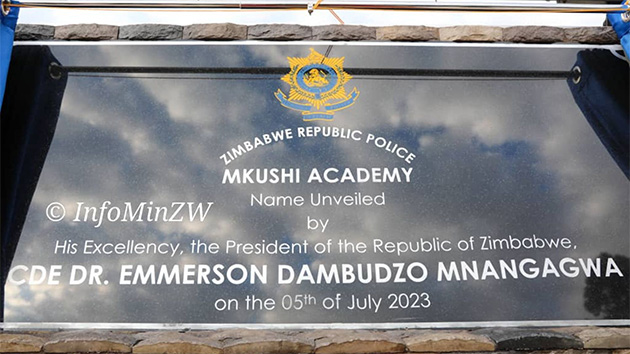
Echoes of Courage: Joshua Nkomo’s niece relives memories of the horrendous Mkushi bombing
Mashudu Netsianda, [email protected]
ON October 19, 1978, the skies over Mkushi Camp, a ZPRA training camp in Zambia, rained bombs and the earth trembled while the sky was filled with cries of the fallen.
Revered liberation icon, the late Vice President Dr Joshua Mqabuko Nkomo’s niece, Cde Susan Nkomo (75), survived that bombing, a cowardly act of aggression by the enemy Rhodesian forces.
She emerged as a symbol of hope for her comrades, marching towards the dawn of a new era, where the shackles of oppression would be cast aside, and freedom would reign supreme.
In an interview at her Magwegwe home in Bulawayo, Cde Nkomo recounted the horrors of that day when the Rhodesian Air Force bombed the women’s camp relentlessly.
Cde Nkomo said she pretended to be dead and some Rhodesian soldiers jumped over her.
She had joined the liberation struggle in 1977 without informing her husband. Cde Nkomo recalled that life in the refugee camps of Zambia was difficult, but when the dawn of independence broke in April 1980, she stood tall with the jubilant crowds, her eyes filled with tears of joy.
Cde Nkomo shared her tale of how she crossed the border into Botswana first before heading to Zambia where she was placed with other female fighters at Mkushi Camp.
She recounted the terror that gripped their hearts as the skies erupted in a cacophony of destruction.
“It was in October 1978 when I found myself in the heart of Zambia, alongside fellow comrades, fighting for the liberation of our beloved Zimbabwe,” Cde Nkomo began.
“I vividly recall the horrendous bombing on Mkushi Camp when the Rhodesia forces invaded our camp with their fighter jets. The skies trembled with the roar of aircraft, and the earth shook beneath our feet as bombs rained down on us,” said Cde Nkomo.
“I searched desperately for shelter, my heart pounding with fear and uncertainty.”
She said a symphony of chaos tore through the very fabric of their existence when the enemy’s wrath descended on them with unmatched fury.
“In those harrowing moments, time seemed to stand still, and I found myself engulfed in a maelstrom of fear and desperation,” she said, her mind retracing the steps that led to that fateful day.
“Amidst the rubble and smoke, I clung to hope, although some of us died and others were left nursing permanent injuries, we refused to surrender to tyranny.
“We fought with every ounce of strength in ourselves driven by the unwavering belief that our struggle was not in vain.”
Cde Nkomo said she crawled on the ground in between several bodies scattered in the camp.
“We were about to have porridge after the morning parade when the attack started. It was around 11am and I could see the fire descending from the sky as they bombarded us.”
The simultaneous attack on Mkushi, Chikumbi and Freedom camps was in retaliation after ZPRA forces had downed an Air Rhodesia Viscount plane as it left Kariba for Salisbury in February 1978.
At the time, Cde Nkomo was a trainee. She left her home and husband at Zimnyama in Mangwe District, Matabeleland South, at the age of 29. Cde
Nkomo said she sneaked out when her husband and two minor children were asleep, as she had been tipped off that Rhodesian security agents were looking for her.
The Rhodesians had devised a strategy of targeting freedom fighters’ relatives with the hope that it would force them to abandon the struggle for freedom.
She said she had decided to join the liberation struggle without informing her husband because she knew that he was not going to block her.
“I trudged through the bush and arrived at Ramokgwebana Border Post at around midday. I was so thirsty. Upon getting to Ramokgwebana River, I drank water before crossing into Botswana and continued on my journey until I got to Tsetsebjwe village,” said Cde Nkomo.
She said she was well received in Tsetsebjwe and transport was arranged for her to travel to Francistown.
“In Francistown, there were a lot of other political refugees from Zimbabwe and we were given food and shelter. Our names were entered into the registration books. We stayed in Francistown for a week before they took us to Selibe Phikwe,” said Cde Nkomo.
“When we arrived in Selibe Phikwe there were a lot of people, especially young men who were staying in an enclosed fence, while female combatants stayed with prisoners from Botswana. We were later flown to Zambia along with other freedom fighters.”
Cde Nkomo said upon landing in Lusaka, there were trucks waiting to take them to their camp.
She said life in the refugee camps was fraught with hardship and poor diet, but she refused to be broken in her quest to liberate the country from colonial injustices.
“They took us to Victory Camp, a place reserved for female combatants only, and there were over 4 000 people. We lived there until July before moving to Mkushi Camp to pave the way for new recruits arriving at the camp,” she said.
She said her childhood was woven with threads of resistance, as she listened intently to the stories of her ancestors who fought against injustice.
Before moving to Mkushi, Cde Nkomo said she first met her uncle, Dr Nkomo, who wanted to see her first.
“Umdala came while we were on parade and requested to meet me. The first thing he said to me was ‘my daughter, so you decided to follow me.
Whom did you leave your children with? I told him that I left them with my husband before he dismissed me,” she said.
When she returned from Zambia after the war, Cde Nkomo said she found that her husband had married another woman and he refused to take her back.
“As families we had a meeting during which I indicated to my husband that I still loved him, but he refused to take me back, saying I was now a threat to his life. I respected his decision and moved back to my parents’ homestead in Kezi, Matobo district,” she said.
Cde Nkomo said one of their sons followed her while the other preferred to remain with his father in Mangwe.
Ends


 Online Reporter