Online Reporter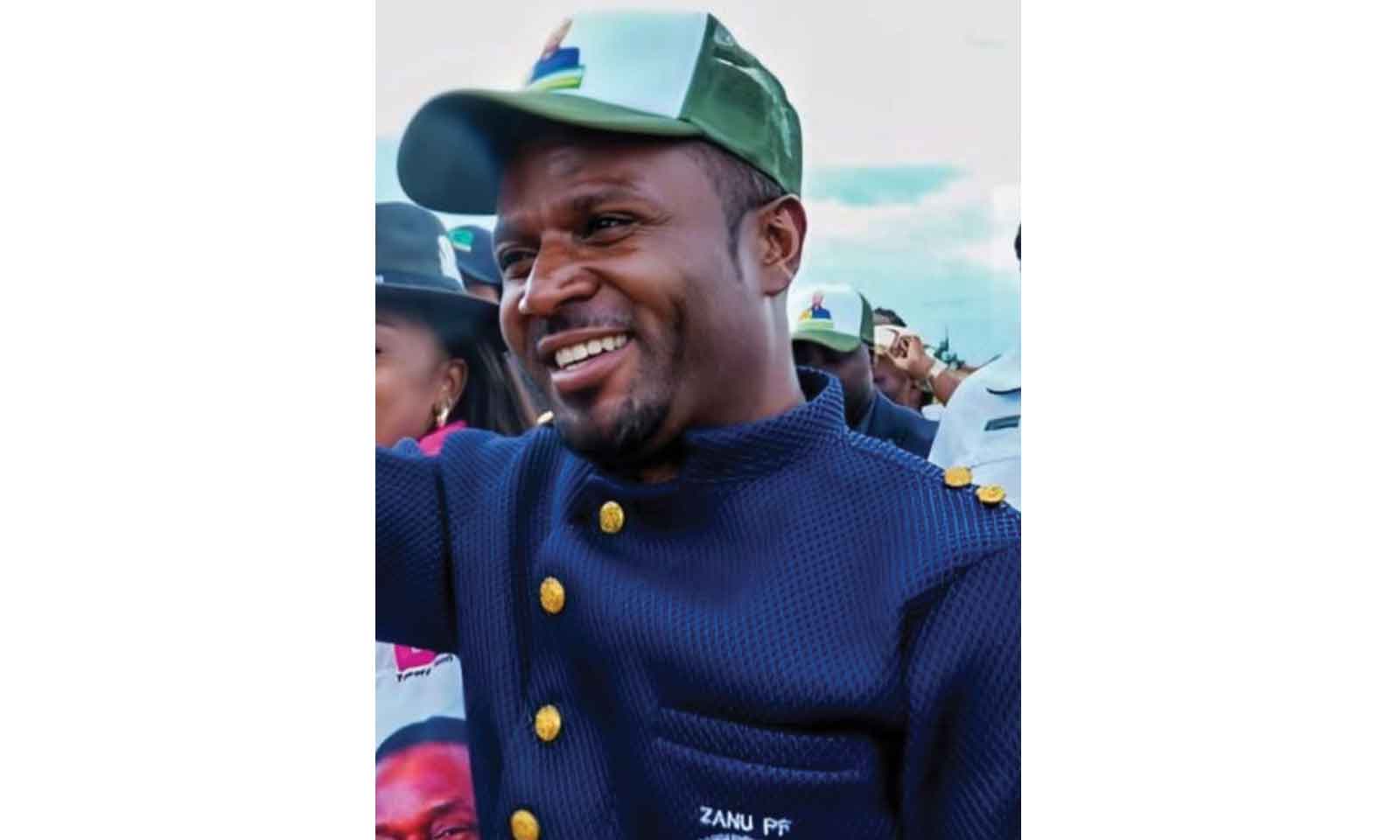
Gibson Mhaka
Zimpapers Politics Hub
ZANU PF candidate Cde Freedom Murechu’s victory in the Nkulumane parliamentary by-election on December 20, 2025, is far more than a localised electoral win, but represents a seismic shift in Zimbabwe’s urban political landscape.
For two decades, Bulawayo was considered the “unshakable stronghold” of the opposition, a territory where the ruling party traditionally faced steep uphill battles.
However, the fall of Nkulumane signals a strategic realignment driven by the Second Republic’s development-centred policies that are now finding profound resonance within the urban electorate.
This victory is not an isolated event, but the latest milestone in a sustained surge of support for the ruling party across Bulawayo’s urban corridors.
The “liberation of Nkulumane” follows on the heels of other historic Zanu PF breakthroughs in the city’s constituencies, most notably the victories of Cde Joseph Tshuma in Pelandaba-Tshabalala, Cde Arthur Mujeyi in the Cowdray Park by-election, and Cde Albert Mavunga in Nketa.
These successive victories have dismantled the myth of opposition invincibility in the city.
The fact that Cde Mavunga now serves as the Deputy Minister of Local Government and Public Works further underscores how Zanu PF is integrating urban representation into the heart of national governance, ensuring that Bulawayo’s voice is heard at the highest levels of decision-making.
Under the leadership of President Mnangagwa, the mantra of “leaving no one and no place behind” has transitioned from a national slogan into a tangible, street-level reality.
In Nkulumane, this philosophy was the catalyst that dismantled a 20-year opposition fortress, proving that when service delivery meets political will, even the most entrenched loyalties can shift.
The statistical surge: Decoding the seismic shift
To understand the magnitude of this victory, one must look at the data. In the 2023 General Election, Cde Murechu garnered 2 402 votes.
In the December 2025 by-election – held following the passing of the incumbent, Mr Desire Moyo, Cde Murechu’s tally rose to 3 416 votes.
Even with a voter turnout of 22,7 percent from a total population of 22 833, Zanu PF achieved a 42,21 percent growth in its support base.
This massive surge, representing an additional 1 014 votes since the last general election, underscores a definitive improvement in the party’s urban appeal and its ability to mobilise voters in former opposition strongholds.
Such a sharp upward trajectory in a traditionally opposition-leaning urban area demonstrates that the party’s developmental initiatives are effectively converting and consolidating support at a rapid pace.
Through growing his support base in just two years, Cde Murechu did more than just win a seat but he closed a massive 56,75 percent gap that had historically separated Zanu PF from the opposition in this constituency.
This growth highlights a fundamental change in the constituency’s political leanings, suggesting that the urban voter is no longer moved by rhetoric alone but by results.
Development as political currency
The failure of the opposition in Nkulumane is directly credited to Zanu PF’s pivot toward people-centred infrastructure.
For years, residents of Bulawayo have lived under the shadow of a decaying urban infrastructure managed by an opposition-led City Council. The Second Republic stepped into this void not with promises, but with hardware.
One of the most visible signs of this shift has been the Presidential Borehole Drilling Scheme.
As Bulawayo faced persistent water shortages, the Government moved to drill solar-powered boreholes directly within Nkulumane, providing immediate relief to families who had gone days without running water. These are not merely water points but are symbols of a Government that listens to urban distress.
While the opposition-led local authorities were often perceived as paralysed by bureaucracy, the Second Republic’s intervention ensured that darkened streets and homes were lit once more.
In addressing these “bread and butter” issues, the ruling party demonstrated that its developmental agenda does not stop at the city limits.
Zanu PF National Political Commissar, Cde Munyaradzi Machacha, hailed the ruling party’s victory in the Nkulumane parliamentary by-election as a testament to its mobilisation prowess and a clear sign of shifting political dynamics in Bulawayo.
Cde Machacha also credited the success to Zanu PF First Secretary and President, Cde Mnangagwa, for providing essential logistical support.
Additionally, he attributed the win to the electorate’s frustration with the lack of development in urban areas under the opposition’s care.
“Voters are seeing the collapse of service delivery under the Bulawayo City Council.
“They are realising that their interests are best served under Zanu-PF leadership,” said Cde Machacha.
Leaving no one and no place behind
The core of Zanu PF’s resurgence in Bulawayo lies in the universal application of President Mnangagwa’s development philosophy.
Historically, urban areas were often viewed as the exclusive domain of the opposition, leading to a perceived developmental disconnect.
The Second Republic has shattered this narrative by treating Nkulumane with the same priority as a rural growth point.
This inclusive approach was central to Cde Murechu’s campaign. By positioning himself as a “child of Bulawayo,” he bridged the gap between the party’s national vision and the local residents’ daily struggles.
His pledges to prioritise the vulnerable, support vendors, and empower the youth through community-based initiatives resonated with a demographic that had felt neglected by the status quo.
Zanu PF District Coordinating Committee (DCC) Area 5 Chairperson, Cde Mnothisi Nsingo, emphasised that this victory solidifies the district as a new stronghold.
With the synergy of leaders like Cde Albert Mavunga (MP for Nketa) and Cde Tavengwa Zidya (Ward 24 Councillor), the ruling party has created a localised network of representation that is focused on translating the “New Dispensation” into tangible progress.
A disintegrating opposition vs a rejuvenated Zanu PF
The Nkulumane by-election also serves as a diagnostic tool for the state of the opposition.
For two decades, the opposition relied on protest votes. However, in 2025, the urban electorate is demanding more than protests, as they want prosperity.
The failure of the Bulawayo City Council to maintain basic services — refuse collection, water, and road maintenance has paved the way for Zanu PF’s resurgence.
The ruling party’s ability to mobilise its structures, supported by the logistical vision of the President, allowed it to present a disciplined and forward-looking alternative.
Cde Murechu’s victory speech reflected this unity:
“I sincerely thank all groups in our community — our mothers and fathers, vendors, the youth, churches, and kombi drivers. Your unity, discipline, and love for our constituency have spoken louder than words.”