Mbulelo Mpofu [email protected]
WHILE she never set foot in Zimbabwe, the late Country Music Hall of Famer, Dolly Parton who died on Tuesday after battling health issues for the greater part of last year touched many hearts with her music.
The “Jolene” hitmaker was 80 at her time of death and she was a global icon.
Her influence went from just being a household country musician but also encouraged up-and-coming singers not to give up but carry on.
One of the artistes she positively impacted was Canada-based Zimbabwean singer, Nomathamsanqa Treatie “Nkwali” Mkwananzi who she met back in the day.
For Nkwali, Parton’s death has brought back memories of a remarkable encounter that remains etched in her memory more than a decade later.
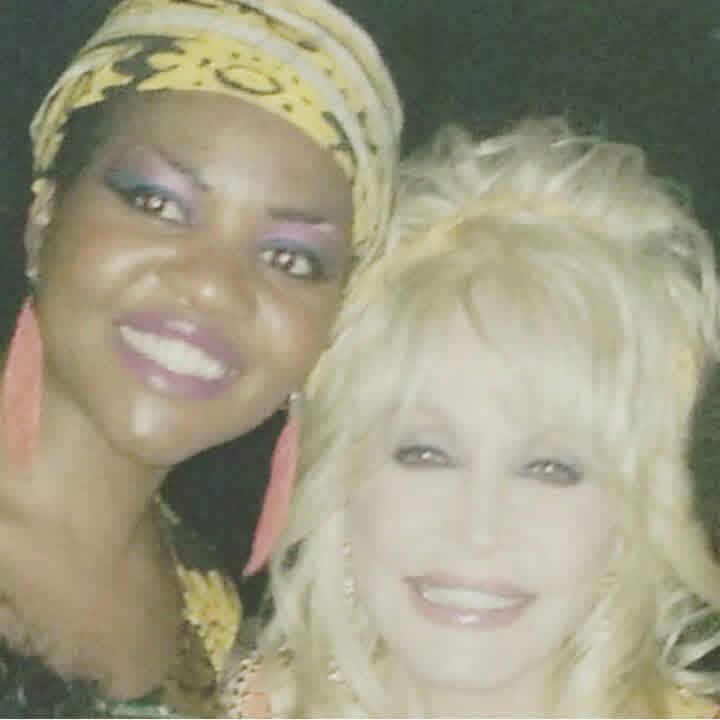
The Zimbabwean singer had the rare opportunity to meet the country music legend in 2013 while performing with the internationally acclaimed Mother Africa Circus at Parton’s ‘Dollywood’ theme park in Tennessee, United States.
What began as an ordinary performance day turned into an unforgettable meeting when Parton watched the show, went backstage to meet the performers and then surprised everyone by joining them on stage.
“Dolly Parton’s passing is truly heart-breaking. Meeting her in 2013 at Dollywood while I was performing with Mother Africa Circus is a moment I will never forget. She watched our show, came backstage, and then, to our surprise and excitement, joined us on stage,” Nkwali told this publication.
“I remember her warmth and humility so clearly. She even told me, ‘You have a lovely voice.’ Those words stayed with me and meant so much coming from someone I had admired for years.”
For an artiste like Nkwali, who has carved her own path in the international music scene, receiving such personal encouragement from an icon of Parton’s stature was more than a fleeting compliment.
It became a treasured memory and a reminder of the influence that established artistes can have on emerging musicians through simple gestures of acknowledgement and encouragement.
Nkwali said Parton represented much more than her extraordinary catalogue of music and decades-long career.
“For me, Dolly represented more than just an incredible musician and entertainer. She was an example of what it means to remain humble, generous and encouraging even after achieving such incredible success. I feel very blessed that our paths crossed. That memory will always be a special part of my journey as an artiste. She will be deeply missed,” she added.
Parton’s remarkable career spanned generations, with the singer-songwriter becoming one of the most recognisable figures in country music while also successfully crossing into pop, film, television, business and philanthropy.
When she was in her element, Parton produced enduring songs such as “Coat of Many Colors”, “There was Jesus” and “I Will Always Love You”, compositions that helped establish her as one of the most accomplished songwriters of her generation.
The latter became an even bigger global hit when it was famously recorded by the late Whitney Houston for the soundtrack to The Bodyguard, introducing Parton’s songwriting to a new generation and an even wider international audience.
Parton’s appeal also extended well beyond the United States and country music circles.
Her willingness to collaborate across musical and cultural boundaries saw her work with South African acappella giants Ladysmith Black Mambazo, including on songs such as “Peace Train” and “Knockin’ on Heaven’s Door”.
Such collaborations reflected the breadth of Parton’s musical curiosity and her ability to connect with artistes and audiences from different cultural backgrounds.
For African artistes such as Nkwali, who herself has built a career around sharing Zimbabwean music and culture with international audiences, Parton’s legacy is therefore particularly resonant.
The meeting at Dollywood also represented a fascinating intersection between two musical worlds: a Zimbabwean performer participating in an African circus production and an American country music institution whose songs had travelled far beyond the genre’s traditional borders.
The fact that Parton did not simply watch the Mother Africa Circus performance but subsequently went backstage and joined the performers on stage made the encounter all the more memorable.
It was a moment in which the superstar and the emerging artistes briefly occupied the same creative space, united by performance and music.
For Nkwali, however, it was Parton’s personal warmth that appears to have left the deepest impression.
In an entertainment industry often defined by celebrity, status and hierarchy, Parton’s decision to engage with performers and encourage them demonstrated the human side of a global superstar.
Her words to Nkwali – “You have a lovely voice” – may have been brief, but they carried extraordinary weight for an artiste meeting someone she had admired for years.
More than a decade later, those words remain part of Nkwali’s artistic journey.
Tributes continue to reflect on Parton’s extraordinary contribution to music and popular culture, Nkwali’s recollection offers a more intimate perspective on the woman behind the global icon.
It is the story of a young Zimbabwean artiste who encountered one of the world’s most celebrated performers and received, in a brief but unforgettable exchange, the kind of encouragement that can stay with an artiste for a lifetime.
While Parton’s recordings will continue to introduce her voice and song-writing to new generations, memories such as Nkwali’s also add a deeply personal dimension to her legacy.
For Nkwali, the Dollywood encounter was not simply a meeting with a famous musician. It was a once-in-a-lifetime moment that affirmed the power of encouragement, humility and human connection – and one she will carry with her long after the final notes of Parton’s songs have faded.
Follow on X @MbuleloMpofu