Online Reporter
Tendai Gukutikwa
Post Reporter
THE City of Mutare has defended its demolition of illegal structures, saying affected property owners are repeatedly warned and given opportunities to halt construction long before any demolition is carried out.
The local authority was responding to growing criticism from residents who question why some people are allowed to build houses and other structures over several years, only for them to be demolished later.
Speaking during a panel discussion at the recently held Public Service Retirement Conference, Mutare Town Clerk, Mr Blessing Chafesuka, said council follows a lengthy legal process before any demolition takes place and does not arbitrarily destroy people’s property.
He said council issues prohibition orders and engages developers immediately after detecting illegal settlements or unauthorised developments.
“As the City of Mutare, we give notices and warnings. We issue prohibition orders whenever we notice that there is an illegal settlement or development taking place within the city. We engage the people concerned, but in the majority of cases, these people appear to have sources of power from elsewhere and defy our orders and other lawful instructions. At the end of the day, we have to take legal action through the court and eventually obtain demolition orders,” said Mr Chafesuka.
He explained that the perception that council allows illegal developments to proceed unchecked is largely created by protracted court battles initiated by the developers themselves.
According to Mr Chafesuka, some cases remain before the courts for between five and 10 years, during which time those served with prohibition orders continue building despite being aware that their developments are illegal.
“Usually, when you take the matter to court, the same culprits challenge the matter and the case then drags on for five or 10 years. Meanwhile, the culprit will continue with illegal development, and by the time the demolition order is finally authorised by the court, the property would have been developed extensively,” he said.
Mr Chafesuka said once a competent court grants a demolition order, council has a legal obligation to enforce it regardless of the amount of money invested in the property.
“That order is issued by a competent court of law. By then, you may have invested substantial funds, but at the end of the day, we will demolish,” he said.
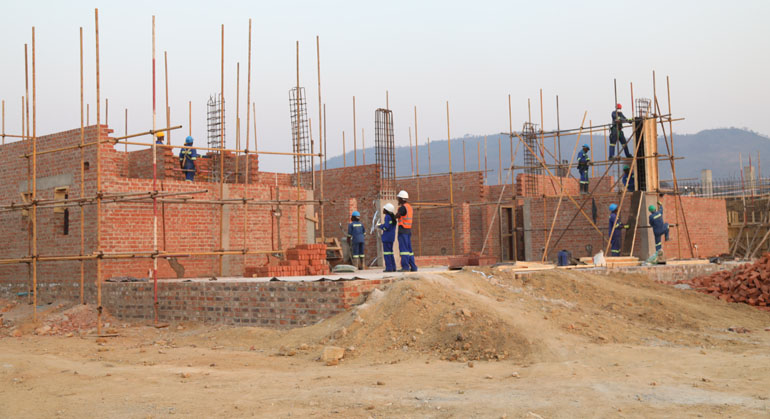
His remarks come amid increasing concern over the demolition of houses and other structures built on land that was illegally acquired, improperly allocated or reserved for other purposes.
Many residents have argued that local authorities should intervene at the earliest stages of construction to prevent people from pouring significant resources into developments that may ultimately be destroyed.
City of Mutare’s Director of Housing and Community Services, Ms Emma Mandiziba, said preventing demolitions is a shared responsibility, with prospective property buyers required to conduct thorough due diligence before purchasing land.
“The obligation is not really on the council to make sure you are protected from demolitions. The responsibility also lies with you to conduct due diligence before acquiring any property,” she said.
Ms Mandiziba warned that rapid urban expansion has fuelled the activities of land barons and fraudsters who prey on desperate home seekers.
“Due diligence is very important when you want to acquire property. Establish ownership and know who owns the land you are about to buy,” she said.
She noted that illegal developments are increasingly emerging on the outskirts of urban centres, where some people speculate that informal settlements will eventually be absorbed into municipal boundaries.
“We have seen a proliferation of urban development, and with it has come a lot of fraudsters. People are building at the boundaries of cities, hoping that at some point those settlements will be incorporated into the city,” said Ms Mandiziba.
She added that the high demand for residential stands has left many buyers vulnerable to scams, with some failing to verify whether sellers have the legal authority to dispose of the land.
For land being sold by private developers, Ms Mandiziba urged buyers to confirm that all necessary approvals have been obtained from the local authority before committing their money.
She stressed that council cannot ignore illegal developments once they have been identified, particularly where construction has taken place without approval or on land reserved for public infrastructure and community services.
Ms Mandiziba urged residents to exercise caution and carry out comprehensive checks before purchasing property, warning that desperation should never override due diligence when making one of the biggest financial investments of their lives.