

 admin
admin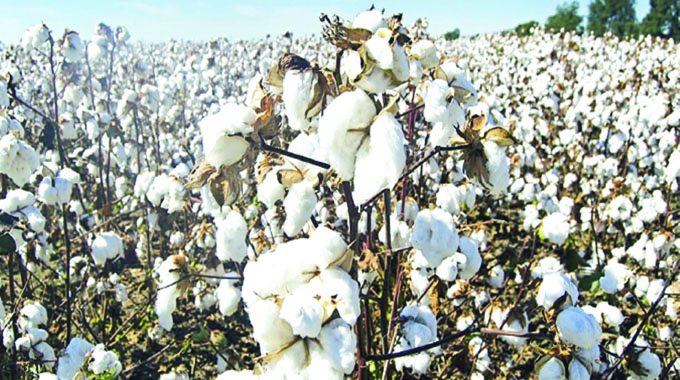
Obert Chifamba
Agri-Insight
DEVELOPMENTS on the ground show that some cotton farmers situated in hot districts like Checheche, Gokwe Nembudziya, Makonde, Muzarabani, Chiredzi, Dande Valley, Mount Darwin and Rushinga have started picking their seed cotton, which they planted at the start of the 2022/23 cropping season.
There are even indications that at least 300 bales have already been delivered to one buying point to wait for the selling season to start.
While these farmers are seized with picking and preparing their crop for the market, the dates for the beginning of the selling season have not yet been announced.
This may mean that the delivered bales might have to wait a little longer before they are sold, while the farmers might also be drooling at the prospects of using their earnings like what their tobacco producing counterparts are doing.
Tobacco farmers are already enjoying the fruits of their toil and soon those with the rest of the other crops will be following suit.
The cotton farmers, most of whom produced the crop under contract, obviously need to take care of a couple or so of obligations that were awaiting the sale of the crop.
The Government has set the pre-season cotton grade differential prices at US$0,40 for grade D, US$0, 41 for grade C, US$0,43 for grade B and US$0,46 per kilogrammes for grade A in a move meant to encourage production of a high quality crop.
Besides motivating farmers to improve the quality of produce, the move also has the potential to excite them to increase hectarages and consequently production in future, which will generate more foreign currency for the country while improving the farmers’ livelihoods too.
Last season’s cotton payments were partially paid in foreign currency at US$0,30 per kilogramme and $32,50 for local currency.
Grade differential prices were not included in last season’s pricing package, which obviously did not improve the farmers’ earnings much.
It is, nevertheless, exciting to note that this season the farmers will be getting the grade differential prices after receiving the initial payment, which does not take into account the grade the lint would have fetched.
The grade differential price is arrived at upon completion of the re-grading process that is done after merchants would have paid farmers for their produce using grade D prices.
If the Agricultural Marketing Authority’s (AMA) directive that merchants have to pay growers grade differential prices for seed cotton after re-grading it by November 30 every season in line with the requirements of Statutory Instrument 188 of 2022, Section 10(f) is anything to go by, then it means farmers will this season receive what they used to think was just a generous bonus from the then Cotton Marketing Board (CMB) in the past.
Ignorant to the fact that the first payments they received after selling their cotton were from grade D rating with the actual grading following later, most farmers used to think the second payment was all thanks to the generosity of CMB, yet it was deservedly theirs and were even entitled to claim it if the buyers pretended not to know about it.
Of course, what farmers will get for the price differential will not be uniform, but will depend on the discretion of the contractor, as well as the quality of their produce. It does not require rocket science to establish that the grade differential price literally has the power to unlock the value of the farmers’ produce given that most of them are now paying close attention to quality requirements after getting low earnings blamed on poor product quality in recent seasons.
This will also motivate farmers to observe the quality requirements for the crop that they had started to overlook in recent seasons with most of them disappointed that no one seemed interested in rewarding them for a good job.
It is, however, the delayed opening of the marketing season for the white gold that stakeholders should be worried about at the moment given that if the cotton is ready in some areas, then it has to be harvested and prepared for sale.
The biggest risk the farmers have to contend with is that of having the crop damaged or spoiled during storage or at the buying points waiting for the marketing season to start.
Storage losses are very common with most crops yet farmers would have scored yields high enough to see them making decent earnings.
If the quality of the crop is ruined during storage at the farm or buying point, the matter will come back to haunt the farmer given that most of them would have produced it under contract and would be expecting to pay for the input packages upon selling the eventual product.
Contract farming requires them to produce competitively so that they remain with a decent portion of the revenue after repaying their loans. If this does not happen, then the logic behind contract arrangements is defeated.
On the one hand, if the official merchants do not give farmers the true value of their cotton, this will create openings for perpetrators of side marketing to step in and offer something higher than what merchants will be offering.
The reality on the ground is that farmers will be pressed to meet their obligations both as parents in most cases and employers on the other end, which leaves them in need of urgent cash and prone to manipulation by unscrupulous buyers.
This does not, however, mean that they can take the side marketing route basing their actions on this excuse even though pressing issues may not leave them with much choice in most cases.
Essentially, merchants and contractors can always help the situation by processing farmers’ payments with the urgency that they deserve.
If it was possible, contractors should declare their financial capacity to buy the crop well ahead of the marketing season so that farmers develop confidence and trust in them.
This also enables them to choose the best contractors and not randomly fall into contract arrangements with sponsors that do not have the capacity to meet their obligations without hassle.
There should also be mechanisms in place to ensure farmers’ payments are done within particular time periods to allow them to finance new seasons or meet their socio-economic obligations.
It is also crucial for contractors to advise the farmers of the monetary value of their sponsorship packages ahead of the season so that farmers know what they would be getting themselves into.
It does not make sense for them to receive rude shocks come the marketing season when they discover that they would have spent a whole season toiling just to repay the debt and walk away empty-handed.
Farmers need to know how much they will be owing given that they are repaying loans using the United States dollar that is not prone to inflationary challenges.
This will inform them on whether they might need to add a portion of self-financed cotton to the contracted lot or not.



 Online Reporter