Online Reporter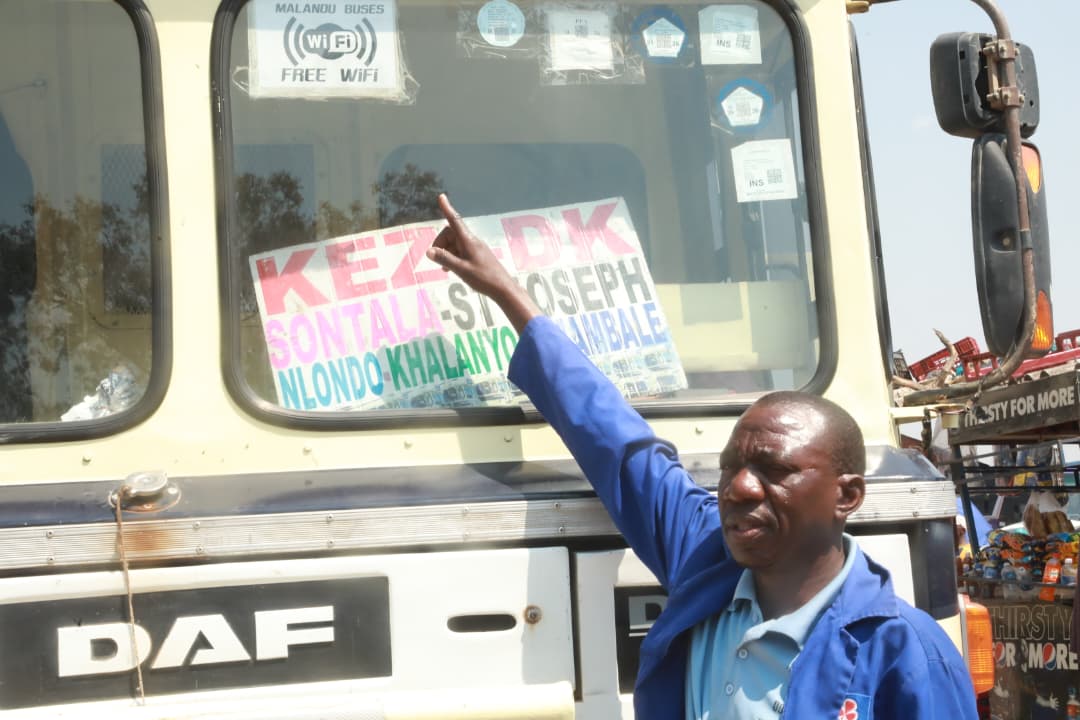
Raymond Jaravaza [email protected]
FOR Gogo Siniwe Nkiwane, the journey from Bulawayo to her rural home in Gwelutshela, Nkayi, is no longer just about getting from one place to another — it is also an opportunity to remain connected with the family she left behind.
The elderly grandmother had spent time with her grandchildren in Bulawayo, but as she prepared to make the long journey home on a Thursday morning, she knew she could still chat with them, exchange messages and remain part of the family’s daily conversations long after the bus had left Renkini Bus Terminus.
Her unlikely companion on the journey is an old but still efficient AVM model, which has become more than just a means of transport for passengers travelling to some of the remotest parts of Matabeleland North.
For Gogo Nkiwane, who does not consider herself technology savvy, the ability to stay connected online during the journey has become an important part of her travel experience.
While internet connectivity remains a challenge in some rural communities, passengers travelling on certain long-distance buses are finding that they do not necessarily have to go offline once they leave the city.
“I don’t know a lot about the internet and other spaces where you young people spend your time reading and typing on your phones but I can read and write messages on WhatsApp. From this bus
I can communicate with my grandchildren and tell them where I am along the journey from Bulawayo to Gwelutshela.
“My eldest grandchild who always drives me from Gwabalanda to Renkini everytime I visit Bulawayo, is the one who insisted that I use it whenever I travel back home because I will be able to send them voice notes to tell them how far along the journey I have travelled,” said Gogo Nkiwane.
By her own admission, network connectivity is almost not existent in parts of Bubi, where the bus travels for longer periods enroute to Nkayi, and in Gwelutshena.
“I am able to tell my grandchildren that I have reached Nkayi Centre and also let them know before I get off the bus at the Gwelutshela Business Centre. My homestead is just 3km from the centre.
So, once I get to Gwelutshela, they will know I am almost safely home.
Travelling in a bus to Nkayi has never been this easy in terms of communicating with our families on WhatsApp,” she said.
Malandu Bus Services driver, Mr Thembelani Gumbo, who plies the Bulawayo-Kezi route and drives deeper into villages into Matabeleland South Province says they do not charge extra for the
Internet services accessed through a Starlink kit, a satellite internet network operated by SpaceX that provides high-speed broadband to remote and underserved areas around the world.
“The bus fares to the different villages of Kezi that we service had remained the same and we don’t charge extra for the free WiFi. The majority of buses here at Renkini have been installed with free
WiFi and our passengers can enjoy good internet connectivity even in the most remote areas,” he said.
“When a passenger uses our bus for the first time, we connect them to our free WiFi. The next time they use the bus again, the connectivity is automatic. Our bus also offers mobile phone charging points so that passengers can stay connected to free WiFi for longer until they get to their final destination,” said Mr Gumbo.
Free WiFi connectivity is not limited to the older buses that operate from Bulawayo to the remote areas in the Matabeleland region where connectivity is weak or non-existent.
At the corner of Eveline High School along Samuel Parirenyatwa, long distance bus drivers that ply the Bulawayo-Chiredzi and Bulawayo-Mutare routes have also seen a surge in younger passengers using their buses.
“The youth select a bus to board based on whether it offers free WiFi or not. For buses that offer free internet services, we have seen a surge in the number of youths who now support our business.
“These youths are always on their phones and they want to stay connected on the internet at all times,” said Mr Ignatious Mawa, a bus driver.
According to a recent ICT Access by Households and Use by Individuals Survey, jointly conducted by the Zimbabwe National Statistics Agency (ZimStat) and the Postal and Telecommunications
Regulatory Authority of Zimbabwe (POTRAZ), Zimbabwe has recorded a 96 percent mobile access but high costs stifle rural internet growth.
The country has also recorded a significant milestone in digital connectivity with mobile phone ownership breaking records.
The survey, the fourth of its kind after similar assessments in 2010, 2014 and 2020, provides a key benchmark for measuring progress under the National Development Strategy 2 (NDS2) and for tracking Zimbabwe’s performance on Sustainable Development Goal (SDG) ICT indicators.
About 96,4 percent of households now have access to a mobile cellular phone, with ownership exceeding 90 percent across all provinces.
Smartphone penetration has also improved significantly, with 75,1 percent of households owning smartphones, although a sharp urban-rural divide remains, with ownership standing at 87,4 percent in urban areas compared to 65,9 percent in rural communities.
Internet connectivity has also expanded, with 75,5 percent of households reporting internet access at home, while 92,5 percent of households now have mobile network coverage on their premises.