Online Reporter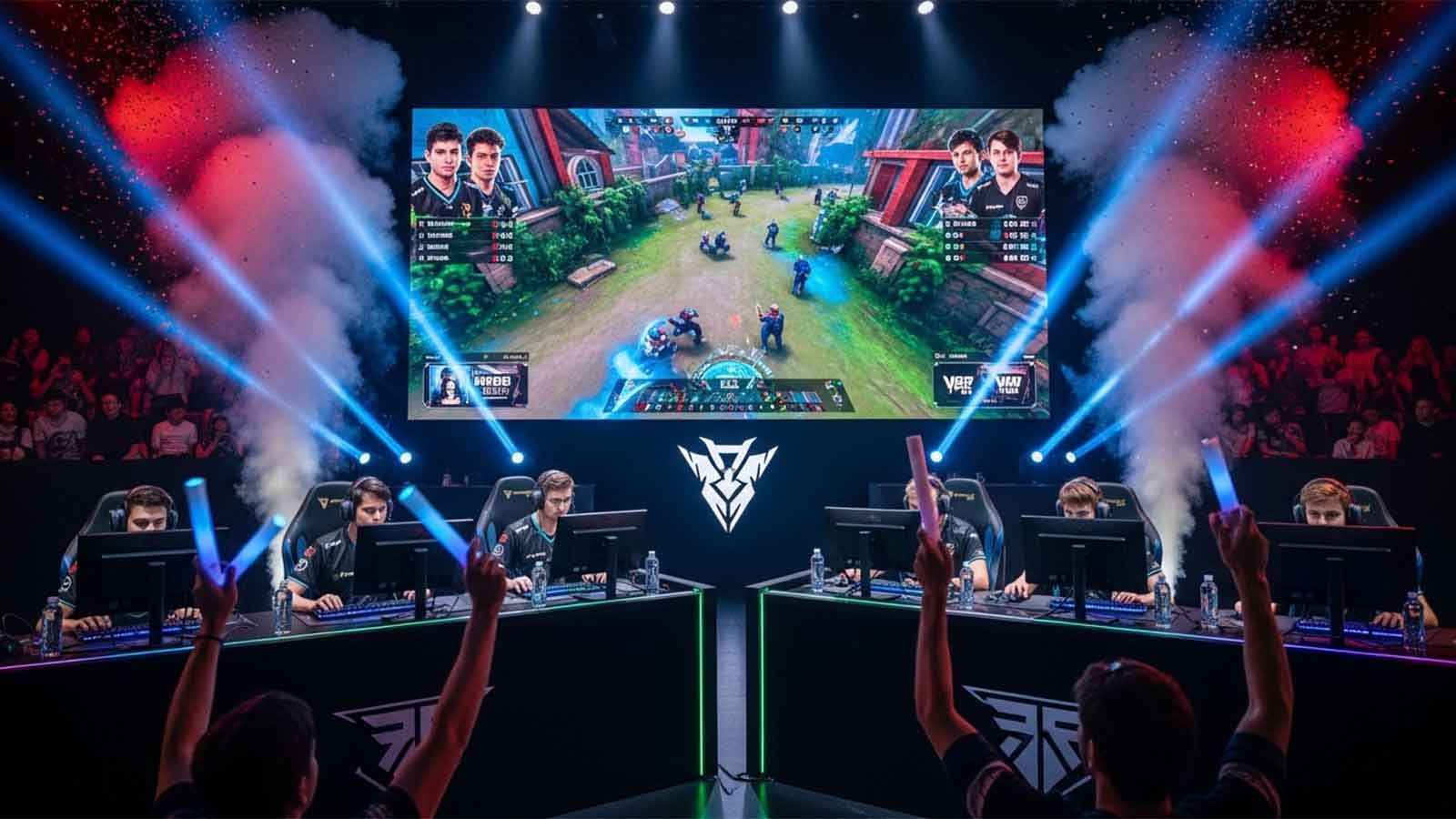
Dr Brian Tawanda Marwenze
We do not need to dig another mine to unlock $500 million, or even to borrow another dollar to create 50 000 jobs. The goldmine is already in our pockets, it is called eSports.
Under Vision 2030, eSports can transform our youth from data consumers into job creators, exporters, and the next generation of global leaders.
Your Excellency, Captains of Industry, Deans and Vice Chancellors, while nations compete for lithium, for data, and for talent, a $200 billion industry is being built on screens called eSports and Zimbabwe has everything required to own it.
In Riyadh, $38 billion has been committed to make eSports central to Saudi Vision 2030.
In Kigali, the State is constructing a national arena and teaching game design in technical colleges.
In Brussels, the European Parliament has resolved that eSports is a driver of digital skills and employment. In Harare, five young men in Mbare are preparing for a continental final using data purchased with money meant for groceries, that scene is not evidence of idleness, it is evidence of an economy waiting to be formalised.
The world has moved, so as the United Nations and SADC is moving. The question before Zimbabwe in 2026 is whether we will lead this transformation, or be reduced to importing the products, the talent, and the revenue that we could have produced at home.
This matters directly to the Presidency and to Vision 2030 because our national blueprint demands new industries, new exports, and new opportunities for the youth and eSports delivers all three without requiring a single new mine.
It is an electronic industry that runs on the same infrastructure we are already building for Vision 2030: data centres, 5G, digital payments, and creative services. Global eSports revenue will exceed $2,5 billion in 2026, and the broader games economy is already above $200 billion.
If Zimbabwe captures just one quarter of one percent of that market through tournaments, broadcasting, game development, and services, we are looking at $500 million in new foreign currency by 2030. Beyond revenue, this is an industry that absorbs graduates. It creates work for lawyers, accountants, broadcasters, data analysts, physiotherapists, marketers, and event producers. It does not replace mining or agriculture. It adds a high-margin, low-capital array to our economy, in the same way that Kenya added business process outsourcing and Rwanda added drone logistics.
The United Nations no longer treats this as mere gaming, through UNESCO’s Fit for Life and the UNDP Digital Transformation agenda, eSports is now understood as development infrastructure. It advances SDG 4 by teaching STEM, strategy, probability, and teamwork. It advances SDG 8 by formalising decent work in media, technology, and the creative economy.
It advances SDG 3 by providing structured environments where young people learn discipline, emotional regulation, and resilience.
In 2022 the UN Office of Counter-Terrorism partnered with publishers to use competitive gaming for inclusion and youth deradicalisation, if the UN views eSports as a tool for human development, then Zimbabwe must view it as a tool for national development.
Across SADC the regional race has already started. South Africa recognised eSports under SASCOC in 2016 and now fields national teams at IESF World Championships, Botswana hosted the 2023 IESF Africa Qualifiers and Rwanda has signed an MoU with the Global eSports Federation to build talent pipelines. The Sadc Industrialisation Strategy 2015-2063 calls explicitly for diversification into the digital and creative economy and eSports sits at the center of that call because it fuses software, hardware, data, media, and tourism into one value chain.
Without immediate policy, Zimbabwean players will continue to compete under foreign flags, Zimbabwean revenue will continue to leave our borders, and SADC integration will proceed without us.
To our academic community, this is also an education imperative and the competencies demanded by the 21st Century are already being practiced in bedrooms and community halls across the country. Team leadership, data analysis, performance under pressure, brand building, and cross-cultural communication are learned every night in a ranked match. South Korea embedded eSports in schools in 2000 and today exports coaches and curricula. Zimbabwe can do the same and do it better by rooting it in our culture and our Vision 2030.
Imagine O-Level Digital Performance, A-Level eSports Management, and university degrees in Game Design, Sports Psychology for Digital Athletes, and Live Event Production. This aligns with UNESCO’s Digital Competencies Framework and gives our graduates a passport to employment in Harare, Johannesburg, Dubai, and London, while keeping their talent and taxes at home.
To our business leaders and investors, this is a new asset class. The opportunity falls into three arrays. The first is hardware and connectivity, through data centers, 5G rollout, and the local assembly of PCs and peripherals for the SADC market. The second is content and services, through Zimbabwean studios, casters, and tournament companies that can export to the region.
The third is human capital, through a national system that trains, insures, and contracts coaches, analysts, referees, and players. The delivery vehicle should be “Digital Nhanga Hubs” in all ten provinces, these would be public-private spaces that combine training, production studios, and wellness support. Government provides policy and space, the private sector provides capital, mentorship, and market access and the return is jobs, increased data consumption, and tourism from hosting SADC and continental qualifiers.
This cannot wait for another planning cycle, I therefore call on the Office of the President and Cabinet to convene a National eSports Taskforce under Vision 2030 within 90 days.
The Ministry of ICT, Postal and Courier Services must designate eSports as a priority ICT sector and work with POTRAZ to create affordable training data bundles.
The Ministry of Youth, Sport, Arts and Recreation together with the Sports and Recreation Commission must grant immediate recognition to a national federation and enforce standard player contracts with NSSA coverage.
The Ministry of Primary and Secondary Education, working with ZIMSEC and HEXCO, must pilot eSports and Digital Performance as an examinable subject by 2027. The Ministry of Higher and Tertiary Education must accredit diploma and degree programs in the same period.
The Ministry of Health and Child Care must mandate wellness standards in line with the WHO Mental Health Action Plan and our National Mental Health Strategy. ZIDA must list eSports as a priority sector for incentives, and ZIMRA must clarify taxation of prize money and sponsorships so that the industry can formalise and scale.
For years Zimbabwe has been a consumer of global games and Vision 2030 demands that we become a producer of global champions, global intellectual property, and global revenue by aligning eSports with the United Nations Sustainable Development Goals, with SADC digital policy, and with our own national vision, we do more than create an industry, we create a profession with rights, we create a subject with a syllabus, we create a therapy with structure and we create an electronic export with dignity.
Riyadh is building, Kigali is building and Johannesburg aswell, so Mr President, under your vision, let Zimbabwe build too and let us build first.