Chronicle Editor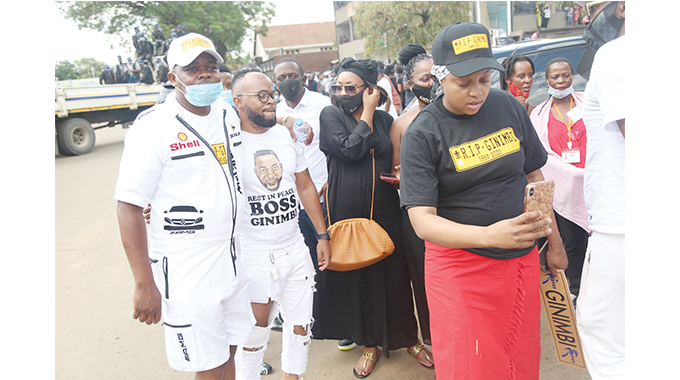
Bongani Ndlovu/Mthabisi Tshuma, Showbiz Correspondents
It has become the norm in Zimbabwe to take pictures of dead or injured people at accident scenes or the sick in hospital and quickly post them on social media.
When Ginimbi crashed his Rolls Royce Wraith early last Sunday morning, within minutes, someone had taken a picture of his lifeless body and the snap was all over the internet. As if that was not enough, another had taken a video clip of the vehicle burning with a helpless lady screaming for help.
The news spread like wildfire, because of the man Ginimbi was, a socialite, whose fame was premised on social media, snaps and videos, which even after his horrific death followed him.

What is worrying is that there seems to be a trend in Zimbabwe where people want to be the first to send out the news that something horrific has happened through sharing it on social media.
Some have questioned this logic as this means the first thing someone thinks about when they get to a scene of a horrific incident is to take pictures and videos instead of helping the injured.
Those few seconds that one takes to be the first to post could be the precious time someone needed to get help.
And another sticky issue comes to light, the relatives of the deceased are now hearing about their untimely death from social media. They hear about this sad and heart-wrenching news from groups and pictures from friends.
Imagine the initial shock and disbelief they get that their relative could be dead before they receive the news from an official channel, be it a relative or authorities. How do they grieve, as with social media, the pictures will keep reappearing in groups time and time again, even after years the person will have died.

This week, the death of Ginimbi made people realise that a certain line needs to be drawn. The dead need to be respected. What benefit does one get in taking pictures of a dead body and sharing it on social media? Whether it is Ginimbi or any other person, the trend has grown exponentially over the past years. Perhaps some people pride themselves in telling their peers that they were the first on the scene and they were the ones who took the pictures.
Perhaps they boast that the pictures they took found their way to almost all Zimbabweans phones. This is the logic perhaps that people are using to take these gory pictures of dead people.
Even at hospital, when someone is gravely ill, on the brink of death, there are some people who find gratification in taking pictures of them or with them.

It has been happening for some time now and one thinks of Buhera legislator Joseph Chinotimba when he took a video of Cde Chinx in hospital in his frail and sickly state some three years ago.
The now late Cde Chinx was in his last days on this earth and Cde Chinotimba thought it best to take a video of the singer on his death bed. He then posted the video on social media and this caused a furore; the whole of Zimbabwe condemned him. Although he tried to explain his actions, the jury was out, and the verdict was Cde Chinotimba had displayed a lack of ubuntu/hunhu/humanity towards the dying Cde Chinx.
The same happened this week when personalities Madam Boss, Bhutisi and Lorraine Guyo posed for a picture with a frail looking Gringo. To make matters worse, they were clad in branded T-shirts of a borehole drilling company making it seem as if they were on a marketing drive. People took offence and blasted the trio.
Saturday Leisure caught up with Tarisai Bere, a clinical psychologist and global mental health specialist on the consequences of such inhumane actions.
“The videos and pictures can be a source of entertainment and gossip for some people not close to those who die, but can cause post-traumatic stress disorder (PTSD) to people who are related to them and love them. Witnesses of the accident can potentially develop PTSD too,” said Bere.
Of course, people want to know the state of health of their favourite celebrities or evidence of how they met their demise, but taking pictures and circulating them is disrespectful. There should be a semblance of respect that is afforded to the deceased.
Surely, those who are taking pictures of the dead in that state will not want the same happening to their relatives.
They would not want to find out that their loved ones have died through pictures and videos on Facebook, Twitter and WhatsApp. Or the grisly the pictures circulating on social media.
It is inhumane and it must stop!


 Online Reporter