Mukudzei Chingwere, Senior Reporter
BUSINESSES flouting regulations reserving 17 economic sectors for Zimbabweans risk having their operating licences suspended or revoked, following nationwide inspections that exposed widespread non-compliance among foreign-owned entities.
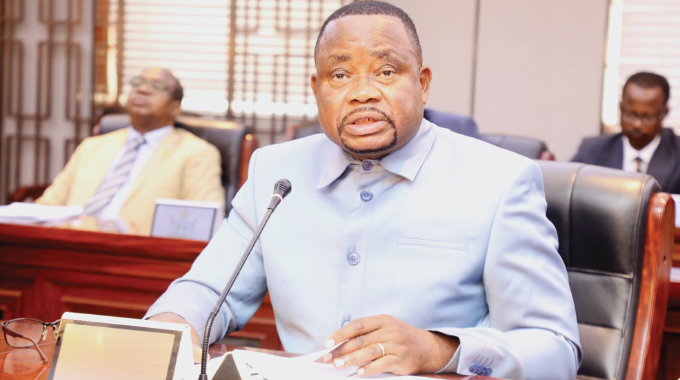
The enforcement action follows inspections of more than 3 000 companies across all 10 provinces, with Cabinet expressing concern that most foreign operators had failed to regularise their businesses despite awareness campaigns and notices of non-compliance.
Speaking after yesterday’s Cabinet meeting, acting Minister of Information, Publicity and
Broadcasting Services Professor Paul Mavima said the Ministry of Industry and Commerce would now enforce the regulations through stiffer penalties.
“The Ministry of Industry and Commerce will suspend or revoke the operating licences of all non-compliant businesses operating in the reserved sectors as per regulations,” he said.
Statutory Instrument 215 of 2025, gazetted in December last year, reserves 17 economic sectors for
Zimbabweans as part of efforts to protect local business opportunities.
Of these, 13 are exclusively reserved for citizens, including borehole drilling, clearing and customs, tobacco grading, estate agencies and artisanal mining.
Foreign participation may be permitted through exemptions in retail and wholesale, haulage and logistics, grain milling, and shipping and forwarding.
Prof Mavima said Cabinet had received an implementation update from Industry and Commerce Minister Mangaliso Ndlovu, showing that 693 formal applications for compliance had been received under the framework.
Of these, 269 foreign operators had applied for regularisation through plans requiring the transfer of 75 percent equity to Zimbabweans, while 144 entities sought confirmation of their local status through exemption or verification processes.
“Sixty-three entities qualified for statutory exemption on the basis that they met the prescribed investment or qualified as recognised international brands,” said Prof Mavima.
The exemptions provide for qualifying foreign investors and recognised international brands, while other operators must meet the applicable ownership and regularisation requirements.
However, Cabinet noted that compliance remained inadequate despite extensive awareness campaigns and the issuance of notices to affected businesses.
“Cabinet noted that despite extensive national campaigns and issuance of non-compliance notices, the majority of foreign-owned entities have not yet regularised as required,” said Prof Mavima.
Foreign operators continued to maintain a significant presence in reserved sectors, including retail and brick moulding, prompting authorities to move from awareness campaigns to enforcement.
The latest measures are intended to ensure that businesses operating in reserved sectors comply with the regulations, with non-compliant firms facing suspension or revocation of their licences.