admin
adminIn many countries the normal retirement age is 65, although some states are considering raising it to 70. Sixty-five is also the normal retirement age in many companies and institutions in Zimbabwe.
However, in respect of the National Pension and Other Benefits Scheme administered by NSSA, commonly referred to as the National Pension Scheme, the normal retirement age is 60.
The normal retirement age in different countries is not only the age at which most people can be expected to retire from working but the minimum age at which a retired person can claim a pension.
As people live longer than they used to in what are sometimes referred to as developed countries, the average period for which old age pensions are being paid has increased with a consequent strain on the resources of state pension or social security pension schemes.
That is one of the main reasons why some of these countries are raising or planning to raise the normal retirement age. In some, they are doing this in stages, with the retirement age being increased gradually with each year or two until 70 becomes the standard age at which people will be expected to retire and become eligible for retirement benefit.
In Zimbabwe contributors to the national pension scheme can retire and claim their retirement benefit, which will be a pension if they have contributed to the scheme for at least 120 months, at the age of 60.
Should they retire after having contributed for less than 10 years, a retirement grant may be paid.
Contributors who have turned 60 and have retired can claim their retirement pension or grant. However, they must have retired, which means they must no longer be working, to be eligible for a pension or grant.
If they are still working, then they must wait until they do retire or until they turn 65. Once they turn 65 their contributions to the national pension scheme should stop. At 65 they become entitled to their retirement benefit whether or not they are still working.
Retirement pensions are calculated on the basis of insurable income at retirement and the number of years for which contributions to the national pension fund have been made.
An employee’s contribution period will continue to grow for as long as he or she is in employment but only up to the age of 65. Once the contributor turns 65 not only are contributions no longer required but any contributions made after that age are considered as contributions made in error. They are refundable.
They are not taken into account as part of the contribution period when the person’s pension is calculated.
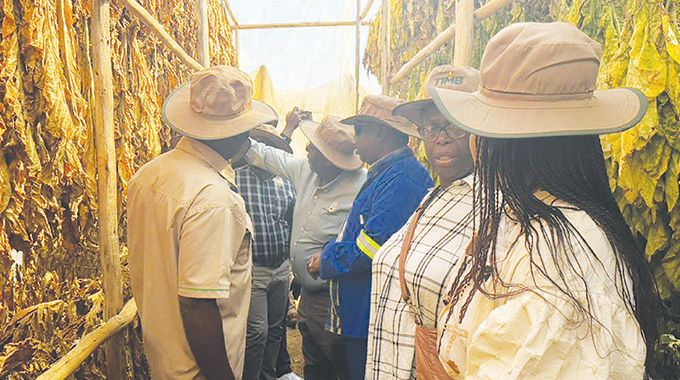
Although the standard minimum retirement age is 60 for national pension purposes, there is an early retirement age of 55 for those working in agriculture, heavy truck driving and quarrying and in certain forestry and mining jobs.
These jobs are considered arduous. To qualify for early retirement a contributor must not only be working in one of these arduous job categories but must have been working in such an arduous occupation for at least seven of the preceding 10 years.
It is not obligatory for those working in those jobs to claim their retirement pension or grant at 55. They can, if they wish and their employer agrees, continue in their job and extend their contribution period by continuing with their monthly contributions to the national pension fund, thereby improving their chances of a better benefit.
However, because the jobs are arduous and may take their toll on them, they can, if they wish, retire at 55 and claim their retirement pension or grant.
Retirement pensions are determined by the pensioner’s contribution period and insurable earnings at retirement. Insurable earnings are the earnings on which the contribution is based.
For instance, at present the contribution rate is 3,5 percent of insurable earnings. Because there is in place a maximum insurable earnings limit of $700 a month, those earning $700 and below pay a monthly contribution of 3,5 percent of their actual basic earnings, while those earning above $700 pay a contribution of 3,5 percent of $700.
That means that the insurable earnings of those earning $700 and below are their actual basic wage, while the insurable earnings of those earning above $700 are $700.
Once the pension has been determined on the basis of the insurable earnings at retirement and the contribution period, it remains fixed at that amount for the rest of the pensioner’s life, unless NSSA makes a cost of living adjustment or declares a minimum pension that is higher than the pension amount.
If the minimum pension is higher than the originally determined pension, then the pension is increased to the minimum pension amount.
Talking Social Security is published weekly by the National Social Security Authority as a public service. There is also a weekly radio programme, PaMhepo neNSSA/Emoyeni leNSSA, discussing social security issues which tonight is a live programme beginning at 6.30pm on Radio Zimbabwe. There is another social security programme on Star FM on Wednesdays at 5.30PM. Readers can e mail issues they would like dealt with in this column to [email protected] or text them to 0772 307913. Those with individual queries should contact their local NSSA office or telephone NSSA on (04) 706517-8 or 706523 5.



 Online Reporter