admin
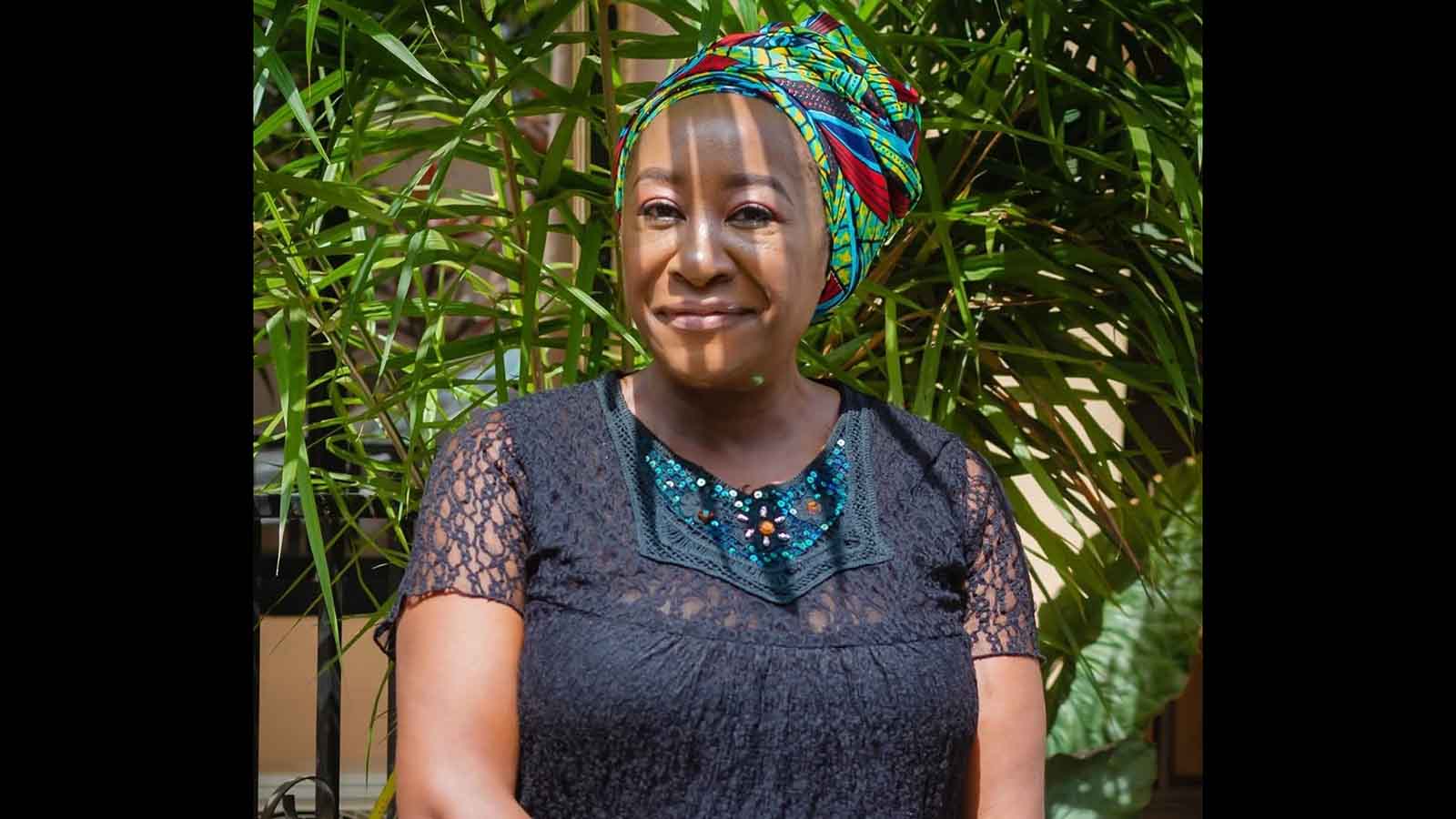
adminSharon Hofisi Legal Letters
This article examines the way Zimbabweans in 2017 and 2018 used peace as a uniting tool, their reasons for doing so, and the hope to continue blowing the sirens of peace before, during and after the elections.
The background is the 2013 elections which largely went peacefully; ended the Government of National Unity (GNU) and ushered in the ZANU-PF Government led by then president Robert Mugabe, who resigned on November 21, 2017. The resignation saw ZANU-PF nominating Emmerson Mnangagwa to be the President of the Republic.
Politically, Mnangagwa was inaugurated on November 24, 2018 and has been preaching the need for peace, love, unity and forgiveness.
He has also taken his crusade to religious institutions and, just like other political party leaders, to the rallies under the auspices of his party, ZANU-PF.
Essentially, from the perspective of all Zimbabweans, the background of any peaceful elections is Zimbabwe’s motherland status as well as its relationship with the international community. This Zimbabwe, our beloved country, is our home, christened the “Jewel of Africa”, and adopted its name from our proud heritage site – the Great Zimbabwe monuments.
The regional or sub-regional impact of the Southern African Development Community (SADC) Electoral Guidelines on Zimbabwe and the GNU partners’ interaction with their support bases, in terms of both democratic aspirations and party expectations, created a sense of unity between the politician and his power constituency in 2013.
The GNU period showed us the tangible benefits of the politics of tolerance. The holding of elections, of course after the legal challenge in the case of Mawarire v President Mugabe and Others – never mind the appropriateness of the timing or otherwise – helped to show that there was need to hand over the Government mandate to one party which would continue to preach peace.
Why was peace considered to be one of the deliverables of the GNU? The answer comes from the concerns over the violence during the Presidential run-off elections in June 2008. Other concerns related to the manner in which we had to deal with issues of transitional justice, on the one hand, and transformational constitutionalism, on the other.
We demonstrated our commitment to national peace through the establishment of the Organ on National Healing, Reconciliation and Integration (ONHRI), although it had challenges in establishing an effective transitional justice framework. We still know its jingle on “peace begins with me, peace begins with you, peace begins with all of us”. Although Zimbabwe’s peace and healing models have been described as adopting an armistice approach than real transitional justice mechanisms, the choices we have decided to make from 2009 to date can be best explained by the people’s own behaviours in their apolitical offices (if they ever exist), political parties or home constituencies.
Further, it is also explained by the normative and international democratic contexts that we collectively chose to adopt as a sovereign Republic during that period.
Evidence for the conclusion made in this article is drawn primarily from the historical epochs of violence during the Entumbane uprisings, the Gukurahundi, the land question in early 2000, the clean-up campaign code-named “Operation Murambatsvina”, and the 2008 run-off violence.
As a nation, we significantly moved forward to end institutional failures after those sad chapters.
Chiefly, we adopted a progressive Constitution which has been a reference point of the need to commit to both horizontal and vertical accountability for human rights violations. We used it to assert human security during Operation Restore Legacy.
Human security is an emerging security form which is a bit different from traditional forms of state security. It works hand in glove with human rights and State security.
For the sake of peace in Zimbabwe, citizens must seek to enjoy their political rights in a manner that does not threaten State security and the human rights of others.
This is clearly stated in our Constitution that human rights are enjoyed together with a consideration of the existence of the rights of others. This is basically known as the presumption of the existence of other rights.
Equally, State functionaries must commit to vertical accountability and respect fundamental human rights which cannot be wantonly derogated from such as the right to life, right to human dignity, right not to be tortured or subjected to cruel, inhuman or degrading treatment or punishment; right to a fair trial and right to be brought in person to impartial courts, covered in our Constitution under the legal lingo of habeas corpus.
In quick note form, we have also seen of late that the work of political parties towards peace is being taken seriously basing on the assurances of party leaders in this regard. For horizontal and vertical accountability, we established five commissions to support our democracy.
The most visible of the five have been the Zimbabwe Human Rights Commission and the Zimbabwe Electoral Commission (ZEC). While the former must constantly update the citizen on political rights, the latter has done a lot in terms of ensuring that the electorate verifies its metadata before the election.
We have also witnessed approval ratings of politicians from international surveys, albeit in limited fashion.
We have seen the threats to peace that stem from fake news on political players. We have received prompt responses from political parties on statements allegedly made by their senior functionaries on matters of public concern such as right to health and peaceful transition of power in the event of an electoral defeat for ZANU-PF.
The work of churches, such as the ecumenical election message from the Zimbabwe Council of Churches, sold under the banner of “I Pray, I Vote” is important.
Religion remains the cement of every society. I will not go into details of the relationship between church and politics here, but I can emphatically state that every citizen’s voice counts in this election, especially under the current dispensation’s “Vox populi vox Dei”, or “the voice of the people is the voice of God”.
Civics such as Election Resource Centre have also been quite instrumental in ensuring that they effectively collaborate with platforms for dialogue such as Capitalk.
The Zimbabwe Election Support Network (ZESN) has also used radio platforms to add voices on the right to vote.
We heard about “I Engage, I Vote” and “I Inspect, I Vote”, all showing the beauty of diversity in governance and decision-making.
We have also witnessed partnerships between civics and the academia. The recent symposium at the University of Zimbabwe led to wide reportage on institutional responses that bear on peaceful elections.
We heard voices from Parliament, the Presidium and institutions supporting democracy such as ZEC.
They touched on important issues such as why retired military personnel are employed at ZEC, inspection of the voters’ roll, the need to establish a code of conduct for political parties and so forth.
The aftermath of the partnership generated interest on radio and social media platforms on several issues which may influence policy making on human and State security.
Indeed, 2018 presents Zimbabwe with an opportunity to hold peaceful elections – minus of course the challenges posed by intra-party violence during the primary elections in ZANU-PF and MDC-T, two of the dominant parties under our multi-party democracy.
How significant is this challenge?
Well, Zimbabwe needs peaceful elections so that she becomes a beacon of constitutional democracy. Our model of democracy was built upon the sovereignty of the people as well as progressive politics led by the parties to the GNU which agreed to embark a constitution-making process.
In 2017, the generality of Zimbabweans associated with the military assisted transition that culminated in the resignation of then president Robert Mugabe. Crossing the boundary fences of political party, academic orientation, race relations, and other societal group definitions, Zimbabweans peacefully marched for a transition. This must be the landmark event that binds us with the codes of love, peace and unity.
What do we expect as a people? We don’t want violence. Our ubuntu must inform our human factor approach to asserting our political rights.
We are not a mature democracy yet but we are moving to consolidate the gains of our constitutional democracy. Progressively we can all decolonise our mental faculties from the shackles of violence.
How do we come to shun violence in all its forms? We must understand that violence is a human choice. We must abhor human-but-animal behaviour.
We choose gun violence, physical violence, emotional or psychological violence. We decide negative or positive peace.
We can choose to abandon peace and wilfully engage in hate or repressive politics.
We may choose to engage in intermittent but destructive politics of “Otherness”, where the male treats the female as irrelevant and vice versa.
But our departure from the historic date – November 18, 2017 – which united individual sovereigns must keep peace prospects open at all material times.
What do I think must be done for transitional justice now? I hope the five institutions will work together in creating a fertile ground for transitional justice. ZEC must empower the citizen by ensuring that the electoral process is credible and the party to emerge as the winner gets the legitimacy of the people. The Zimbabwe Gender Commission must ensure that gender-based violence is shunned and the electorate makes free political choices.
The Zimbabwe Media Commission must ensure that good practices and ethics are practised, particularly those relating to fake news. The National Peace and Reconciliation Commission must use this environment to develop procedures to facilitate dialogue among political parties, communities, organisations to prevent conflicts and disputes arising in the future.
This way we will promote human security and State security. This relatively broad focus on peace will make it possible for the citizen, oversight institutions, independent institutions and State institutions or agencies to consider in some detail the benefits of peaceful decision-making, and the political or societal steps developed under the aegis of peace.
Sharon Hofisi is a lecturer in Administrative Law. HE can be contacted at [email protected]


 Online Reporter