admin
admin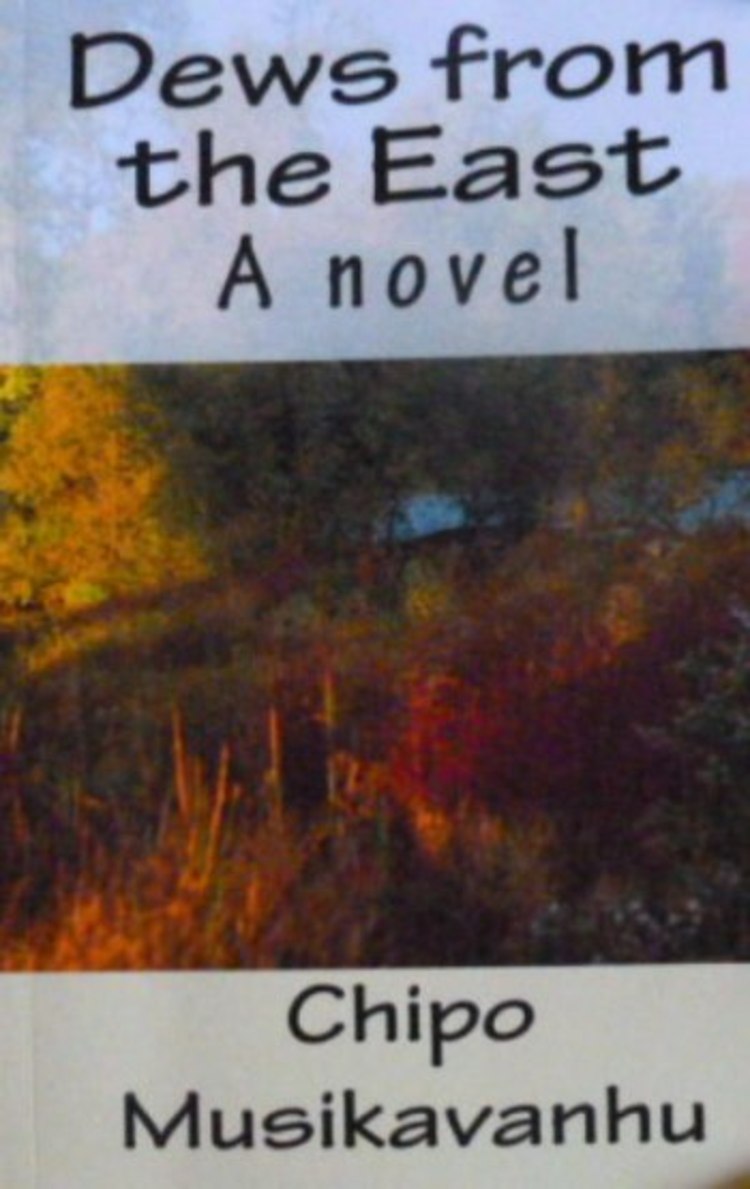
Own Correspondent
The story in Chipo Musikavanhu’s novel “Dews from the East” (2017, On-Demand Publishing) is set in 1560, almost three years before the colonisation of Zimbabwe by the British in 1890. How well the author vividly brings the past to the fore is a huge achievement of this book. She makes the reader feel how it was when Christianity was first introduced particularly to the Shona people.
History, culture and religion have never exactly been good friends from time immemorial as the “threesome” tends to paradoxically evolve in different directions.
The author’s intention is to have the novel received primarily as a Christian narrative based on the Biblical story of Esau (Jacob’s brother), yet it goes beyond merely adapting the story to an African setting. It exhumes the historical arrival of the Bible in an African kingdom known as Otongwe, “near the east coast of Africa”, questions both the integrity of the first missionaries and their views about African tradition particularly the Shona people of Otongwe.
The main character, Chamutsa, is modelled as Esau and Tashinga, his brother, as Jacob yet the story of the two African brothers, told with a touch of originality, is as convincing as the Biblical one. Chamutsa, treated as the first born, is known in the village for his hunting prowess but also for his “aggressive” behaviour. Tashinga portrays the humility of the younger brother until he learns he is the first born, a secret kept by his parents from him and Chamutsa.
Before the first Catholic preachers set foot in Otongwe, the kingdom is compact, its people bound together by a spirituality rooted in their culture.
The characters converse with an oral beauty and have cultural manners representative of the good old days. Proverbial sayings are accommodated in the daily dialogue; they uphold the sanctity of their oneness through songs and dances which are part of their lives.
Gurajena, a singer and friend of the two brothers, is the Chief’s best entertainer. “The chief enjoyed Gurajena’s singing and often called him to sing when he had guests.” (Page 37) The girls curtsy when greeting people, the boys also artfully clap hands as a show of respect. Polygamy is not something they take as “evil”.
Things fall apart when permission is granted to the white Catholic priests to establish Christian religion in Otongwe. The villagers’ reception of these priests and their “mysterious” book called Bible is sceptical, particularly when priest Jowawo tells them: “Men are to have one wife. Those with more than one wife need to let go of their other wives.” (Page 33) Moreover, the Chief’s traditional power as the rain-maker is denounced by the priests; in fact, seems every Shona way of life, including hairstyle, is “devilish”. Who then is this new God?
Some men dispose of their other wives, causing families to disintegrate. Others resist, deciding to adhere to their deep-seated traditional values. They call the priests wizards!
There is in Otongwe East yet another man of God known as Manuel or Manuwere as the Shona called him. As an Evangelical, he is against the gospel of the Catholic priests who are, among other things, making villagers pay a certain amount in order to go to heaven.
“Our Lord Jesus said there are many mansions in heaven but these are inherited by purity, not by money,” Manuel one day tells Gumi, a village elder, and his family.
It is Manuel’s teaching about Esau and Jacob that inspires Tashinga to look for the truth, having eavesdropped on his elders discussing the secret of him and Chamutsa being twins. Tashinga is the first born and Chamutsa, hitherto the bearer of first born rights, is actually the youngest twin. At birth, fearing the wrath of the “law” which prohibited twins, their parents had to make Chamutsa first born because he had strong physique than Tashinga. Manuel is supposedly the “dew from the east” – Otongwe East where he and his friend Pedro had settled for years, “trading in ivory with the Makaranga tribe of Otongwe”. His message raffle feathers in the village but it wins the passionate heart of Tashinga.
In the last chapters, the reader is gripped to the end by the climactic display of the two brothers’ different reactions when the truth is finally told to them. The crafting of this story is brilliant. Yet one question remains: can one pluralise “dew” as done in the title of the novel?
Chipo Musikavanhu holds a BA in English and Communication from Zimbabwe Open University. She lives in Harare.



 Online Reporter