admin
admin
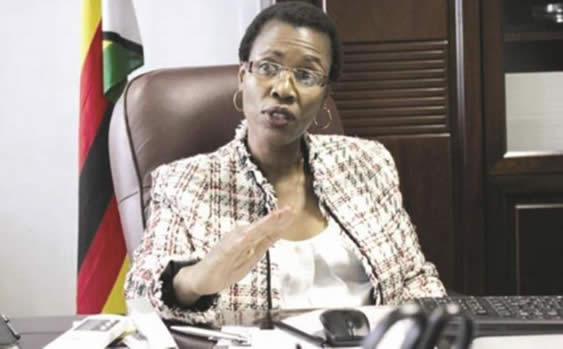
The Zimbabwe Energy Regulatory Authority (Zera) is making frantic efforts to improve power supply in the country, including licencing several private players to feed power into the national grid. Senior Reporter Lloyd Gumbo (LG) speaks to Zera chief executive officer Engineer Gloria Magombo (GM) on these and other issues. The following are excerpts of the interview.
LG: What is the status of the national energy efficiency audit?
GM: If you remember last year we actually went to tender on that project. The evaluation has been finalised and we have appointed a consultant. We have signed the contract. We have now a programme of which we are targeting March to have a preliminary report on work which will be done. We are covering all sectors of the economy right across the different consumers of energy. From agriculture, industry, households, transport, mining and commercial. It is about eight sectors that we have identified that needed to be covered under that project.
We hope that by April, at least we would have the preliminary baseline and proposals in terms of which way to go to improve the energy efficiency in the country. And also the proposal on the targets which the country should be looking at because we want to identify the potential and then come up with targets which we can use to manage the process going forward.
LG: How far have you gone with the supply study on tariffs?
GM: The cost of service study was done and completed last year by July. The reason we did a study was because at the time we looked at the first tariff in December 2012, a lot of things have changed on the ground and we needed an independent consultant to come in and look at what exactly is costing Zimbabwe to produce power at the moment. That study has actually given us what its costing and also identified areas of inefficiencies which are there in the current cost of service.
Our methodology is cost plus rate of return. So if you are looking at cost plus rate of return, the cost which we consider, should be prudently incurred cost. Part of the study’s objective was to identify whether the cost which were submitted by service providers as the cost of supply were actually prudently incurred and what were the opportunities to make them more efficient right from the processes themselves and procurement systems. We identified those as part of that.
Also, as a regulator, we used that study as a way of training our own economic regulation staff to improve on their skills and come up with a model of tariff determination which is what we are going to be using this year. It was meant to give us a benchmark in terms of where we are and then we use that to develop the programme in terms of where the tariffs should be going in the future.
LG: What are some of the critical points picked up against what the service providers are currently charging?
GM: One of the key issues which came up is that obviously the average cost of supplying was coming up to about 14 US cents (per kilowatt hour), which is way above the average 9,86 cents which we had given as a tariff. But having said that, the issue is that, we also looked at the processes themselves. We looked at the processes right from production and we realised that there is a lot of inefficiencies within the processes so much that if you look at the Power Station, the way they are converting their coal to energy there is a lot of losses that are being incurred at that level.
We also looked at their structures in terms of how they are related to the gigawatt hour cells per person if you look at that as a measure, and we found that they are still much lower than the international benchmarks. We have identified some of the key performance indicators which we are going to link to this year’s tariff which are then supposed to be improved.
Even issues to do with losses, we found that the losses at distribution level which are none technical losses are very high which means there is a lot of theft of energy and that energy if it’s not being sold as units then it becomes part of the cost. If they curb and work on some of those thefts of energy then they will reduce the cost of production. From this year on, we have now defined the key performance indicators. We will be signing off on those and they will be part of the new tariff to say these are the cost we will allow, anything beyond that then it’s to their account. They have to operate efficiently.
LG: So would you say the 14 cents cost is due to their inefficiency?
GM: Yes and if you put in efficient cost, you will come down to about 10 cents to 11 cents.
LG: But that still makes the cost higher than the tariff?
GM: Yes, remember the tariff was done before the cost of service study. The cost of service study then looked at an independent person to review and say what is it really costing because the utilities as you are aware have always said the tariff is below the cost? So now that we know what the tariff is what is important is then how do we get toward cost. As the regulator we are saying even if we are going to move toward cost reflectivity which is a position agreed to by energy ministers in the region, we have to come up with a framework in terms of how to get there. Obviously, we will look at other economic conditions in the country. It’s not something that we will jump to. It will be slow progression toward that cost reflectivity whilst allowing the utilities to improve on their efficiencies.
LG: So that means we are likely to have an upward review of the tariff this year?
GM: It’s unfair for me to talk about that now especially that we are going through a tariff review. I will be pre-empting a process that we are going through. Allow us to go through a tariff review and we will be announcing by the end of February what is the expected tariff after we have gone through proper review where we are going to consult all stakeholders including Government in terms of what are the costs and expectations? Our role as the regulator is to balance various interests of the different stakeholders-that of the service provider so that he is able to continue supplying the product. But also those of other consumers who also have to remain competitive if they consume that product.
And that of Government who also needs to ensure there is sufficient supply but at the same time allows them to meet some of their objectives to get more energy available at an affordable price especially for the farming community. So there is that delicate balancing that needs to be done when you do a tariff review and it can be very intense.
LG: And the fact that we have a monopoly in power supply, does is it not affect the tariff?
GM: I wouldn’t think so. The monopoly does not really affect tariff. I think the issue is how prudent is management to ensure that the costs that are incurred are in comparison with similar plants elsewhere. You cannot benchmark our costs and tariffs against the Zambian tariffs and say their tariff is six cents.
If you look at Zambia, their supply is mainly hydro and those are old hydro plants which have been in existence for years and they have been fully paid for. So they are now harvesting from old infrastructure that they have invested in over the years. Which is maybe the same lower tariff that which we can get with Kariba. But if you look at old thermals, they tend to give you higher tariffs because of the age they become less efficient.
The age of the infrastructure has a bearing on the costing of the product. We are just a referee who looks at things objectively and also considering the age of the infrastructure, that part of the inefficiency is not that people don’t want to fine tune the equipment but because it is so old that you can’t do much about it. It needs to be rehabilitated to get more efficient.
LG: The country has a huge deficit in power supply and a lot has been said about the need to close the gap. That we have new players in the industry. What has your authority done to achieve this?
GM: One of the critical issues is to license other players to come in the industry. We have licensed 18 projects of which, 15 are independent power producers and the other three are the large ones to be done by the Zimbabwe Power Company i.e. Gairezi, Kariba South Extension and Hwange Power Extension. Of those 15 projects, I think six are operational. We are looking at about three mini-hydros, which are running.
Then we have large projects that were licensed which are at different levels of development. We have to be aware that we had a few challenges as a nation for some years which affected especially the large projects because they require a lot of capital and the risk factor was quiet high. But that has changed with the new Government which has come in.
People are seeing a lot of stability coming up especially where there is already a clear path in terms of where Government wants to go. We have seen a lot of investors visiting us as the regulator and asking us what projects are there which they can invest in. We have linked them to some of the licensees now because one of the major problems for most of the licensees has been funding for the project.


 Online Reporter