Chronicle Editor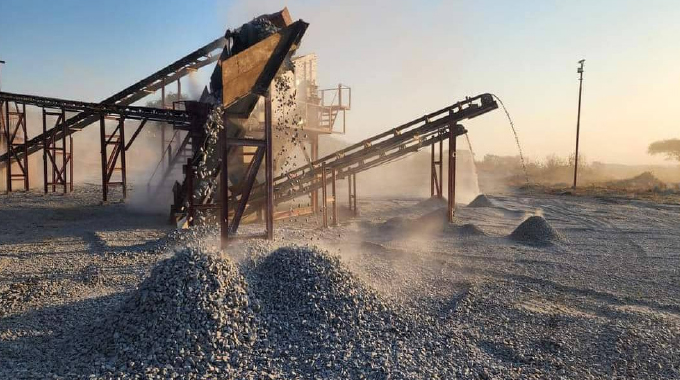
Rutendo Nyeve, Sunday News Reporter
THE recapitalisation and restructuring of the National Railways of Zimbabwe (NRZ) registered yet another significant milestone with the company investing more than US$600 000 in setting up a new ballast processing plant at Nalatale, in Shangani.
The plant that started operating in May and is awaiting commissioning is going to see NRZ saving millions of dollars as it will no longer be outsourcing the product while it has opened a gap for the redeployment of more than 60 employees who are now working there in the company’s ongoing restructuring.
The ballast processing plant is also expected to thrive as a business unit for the company by producing commercial products for housing, roads and other construction projects.
A Parliamentary Portfolio Committee on Transport and Infrastructural Development which completed its week-long tour of the NRZ facilities visited the plant on Wednesday to have an appreciation of the investment.
NRZ chief engineer in charge of infrastructure, Engineer Richard Gurure gave a detailed explanation to the parliamentarians about the investment saying it would go a long way in saving the company’s costs.
“As a company, we invested in a US$200 000 ballast processing plant. However, the whole investment total that we incurred is about US$600 000 including what we did as an organisation in terms of some of the fabrications.
“Our plant has three basic components which are the primary crusher, secondary crusher, the sieve and conveyor belts. There are two mountains which are the source of the product. After blasting our primary source, we load our boulders into the first crusher which then conveys them to the secondary crusher where we set the size of the stone we want. Our primary concern now as a company is the ballast stone which is basically in the range of 55 millimetres to 75 millimetres,” said Eng Gurure.
He said they were happy with the plant’s performance so far and have started supplying some of their projects since the commencement of operations in May. Monitoring of performance is being done together with a gradual increase in production to meet the plant’s capacity.
“The plant can produce up to 60 tonnes per day. However, since commencement, we have been constantly monitoring and running the plant twice a week. So far we are happy with the production,” said Eng Gurure.
Asked why the company was not utilising the plant to full capacity and commercialise some of the products to generate revenue, NRZ general manager Ms Respina Zinyanduko told the parliamentarians that the company’s primary concern was servicing their railway lines that were in dire need of the ballast before turning focus to the commercial venture which she said was in their plans in the long run.
“We have a huge backlog of supplying ballast to our lines as they have either been degraded or seen ballast being stolen. As such, for now, our primary concern is our railway lines and other expansion and rehabilitation projects.
“However, beyond that, the plant is set to be a small business unit where we will be doing other products for roads and housing construction. This investment is meant to save a lot of money.
“Already, we are saving up to US$3 million for the Chikwakwala line that we are commencing this month-end but the overall savings will be more than that,” said Ms Zinyanduko.
She said, the investment also benefitted more than 60 employees who were redeployed to the plant under the re-structuring exercise. @nyeve14
Ends



 derick.khumalo