


 Vusumuzi Dube
Bruce Ndlovu
Sunday News Reporter
THE National Railways of Zimbabwe (NRZ), the biggest real estate holder in the country, has earmarked some of its vast idle land in Bulawayo for an industrial hub, as it seeks to unlock value in one of its under-utilised assets.
The NRZ, whose real estate portfolio is geographically spaced across the country and is divided into three regions namely: Eastern, Midlands and Southern, possesses assets that include commercial land and farms, office accommodation, residential houses, warehouses and commercial developments at stations and sidings.
In February, the NRZ Pension Fund told a parliamentary committee on transportation management of the portfolio since 2021 has been allocated to regional managers who have since grown this portfolio from a monthly lease value equivalent to US$224 964,26 to current earnings of US$412 583,71 with the managers given stretch targets for the year 2023 to earn US$600 000 per month from the sector to support operations of the freight sector.
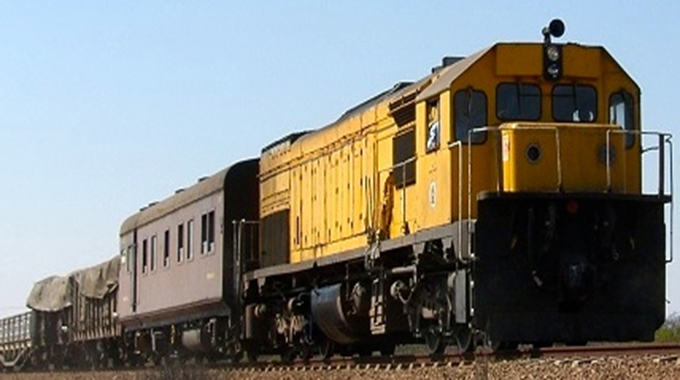
Despite this, however, vast tracts of land still lie vacant.
In an interview with Sunday News, NRZ public relations manager Mr Andrew Kunambura said the company was eager to unlock value in its property located in Bulawayo.
“Throughout Zimbabwe we are the biggest estate in terms of land. Our properties are divided into three parts, we have Southern area, Midlands and then Eastern. When we talk of the Southern area, we are talking of Somabhula coming to Bulawayo, we follow the track route going to Victoria Falls and from Bulawayo we go all the way to Plumtree. So, you’ll find that coming from Bulawayo, starting from the station, and passing through the Westgate area, you have about 26 hectares of land. This is vacant land so we are looking at doing industrial hubs with the trajectory towards Vision 2030,” he said.
Mr Kunambura said housing projects would also be in the offing at the industrial hub.
“From Siyephambili Drive to NRZ Material Yard, around Belmont Industrial Area, we have a big piece of land that is about 89 hectares so we are saying we are looking into an industrial hub. If you know the smart city concept, it can be incorporated into that and it can be housing, we can build our warehouses or high-rise buildings. These structures can be demarcated to accommodate the industrial processes in that area. We can have people working close by and going to work in that area. We are not just looking to unlocking value to our land but we looking at employment creation then with regards towards Vision 2030, we are saying what is our contribution to that vision,” he said.
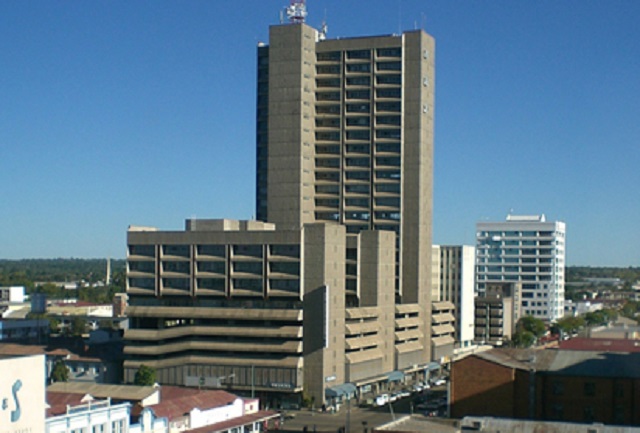
Mr Kunambura said the national railway operator was looking to get into partnership with prospective innovators, instead of selling off the land outright.
Proceeds from such partnerships would cascade down to passenger and freight movement business, hence lessening overall costs in the whole production value chain for all.
“The reason why we have come out is that we are saying our core business is passenger and freight movement and we want to provide a subsidised service is cheaper because transportation is one of the key areas that affects the end price in the production chains. So, whilst we are concentrating on that, we have idle land and this is where we now come in and say to the innovative person, while we are developing our industrial hub, come and look at our properties and we develop from there.
If we look at warehousing, we have existing structures that are not being used because we have been affected by first the economic crunch and then secondly Covid-19. There was downward spiraling of all economies worldwide and NRZ was not spared, and so was Zimbabwe as a well. So, we are saying where we have excess in terms of storage facilities, we are saying come and look at our warehouses.
Let’s find excess capacity and see what we can do for each other in terms of our leases. We do not sell land. If anything has to be sold, it is over and above governed by the Government of Zimbabwe through our Ministry.”

Mr Kunambura said the NRZ was courting prospective partners in fields such as real estate development, safari operations and farming in both urban and per-urban to rural areas.
“When we talk about global competitiveness, this is where we come in and we are saying innovation will need to be done on a drawing table. How do we do that? Unveil the land. We can’t just keep it and say no trespassers. We want to do away with that sign and we have people coming in and producing for human consumption and fodder,” he said.


 Bongani Ndlovu
 Online Reporter