Chronicle Editor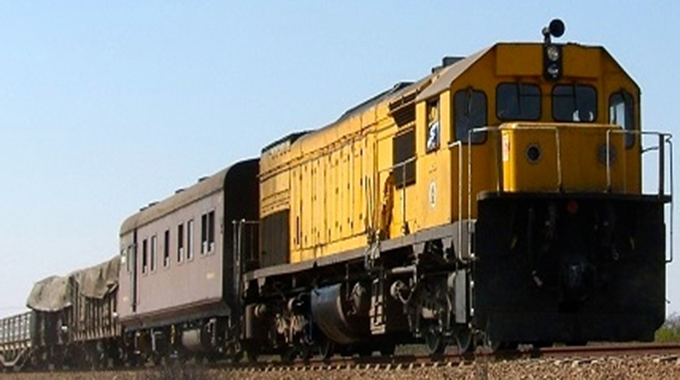
Raymond Jaravaza, [email protected]
IN its heyday, the National Railways of Zimbabwe (NRZ) was the lifeblood of the nation’s transport system, ferrying passengers across the country and transporting goods throughout and beyond Zimbabwe. The rhythmic chugging of trains was a familiar sound, as they traversed the extensive rail network, connecting cities and remote villages alike. NRZ was not just a mode of transport; it was a symbol of connectivity and economic vitality, linking landlocked countries like Botswana, Zambia, and the Democratic Republic of Congo to seaports in South Africa and Mozambique.
Today, NRZ is in a sorry state. It’s devoid of life and attempts to revive it have been abortive.
The NRZ’s Achilles heel in its endeavour to turn around the fortunes of the bulk load carrier is its failure to access loans from international lenders and financial institutions that fear the ramifications of dealing with a nation under illegal sanctions imposed by the West, Saturday Chronicle has been briefed.
Research and economic experts have voiced their concerns about how the illegal sanctions have hindered Zimbabwe’s access to external funding and potential investment, leading to weaker trade performance, low investment, and unfair participation in the global economy.
NRZ is a pivotal player in rail transportation within the Southern African region, with an extensive rail network stretching 2,760km across Zimbabwe. The NRZ provides a vital link between the landlocked countries of Botswana, Zambia, and the Democratic Republic of Congo, and seaports in South Africa and Mozambique.
In its heyday, the parastatal moved 18 million tonnes of freight annually and employed 20 000 workers. During that time, it was a major economic employer with 600 locomotives and 3 000 passenger carriages. However, from the year 2000, the rail transport operator took a downward turn, to the extent of reverting to steam engines and discontinuing some of its services along the way.
Viability challenges faced by the parastatal were exacerbated by the sanctions that the country has been reeling under for the last three decades. Earlier this year, NRZ announced that it was targeting to move 2,7 million tonnes of freight, up 17 percent compared to last year. This move was part of NRZ’s strategic drive to move significant bulk loads under the railway system despite a challenging business environment, largely owing to the illegal sanctions.
“The number is not from our market, but it’s from our capacity. We are doing well and we are happy with the current performance of the company, but there is room for improvement so we can do much more. We say we are targeting to move about three million this year, but if we improve the capacity, there is enough in the market for us to move up to five million,” NRZ spokesman Andrew Kunambura said earlier this year.
Fast forward a couple of months later, NRZ, an economic enabler playing a major role in the energy, mining, agriculture, and fuel sectors, finds itself in a catch-22 situation.
“The biggest impact of the sanctions has been that the NRZ finds it hard to replenish rolling stock and procure critical spares for our locomotives and wagons. We need new locomotives, wagons, and track equipment, and it’s difficult to purchase them when the country is under sanctions imposed by the West. NRZ needs a capacity boost through the acquisition of modern and efficient locomotives and wagons. Currently, we are running on our own self-generated funds,” Kunambura told Saturday Chronicle.
Capital is important for companies and parastatals such as NRZ to pay for the ongoing production of goods and services in order to make a profit, a luxury that NRZ does not enjoy given the strict lending conditions imposed by financial institutions as a result of the sanctions.

“The impact of sanctions is huge since it prohibits the NRZ from accessing lines of credit from key institutions to modernise our equipment,” he said.
The country’s road system is under strain from carrying bulk loads such as coal, platinum, and maize, which typically would be ferried by NRZ.
“If we were to become fully recapitalised and get increased capacity, it means much of the bulk cargo will be moved by rail and this will spare our roads. This means the railways will give cheaper and more efficient transport plans to its customers and it will increase its market share,” he said.
A revitalised railway line would enhance regional connectivity, linking Zimbabwe with neighbouring countries such as Zambia, DRC, Mozambique, and South Africa. In 2018, the NRZ signed a deal with a consortium of Zimbabweans in the diaspora who undertook to inject about US$400 million to revive the rail operator before the deal failed to take off.


 Online Reporter