Vusumuzi Dube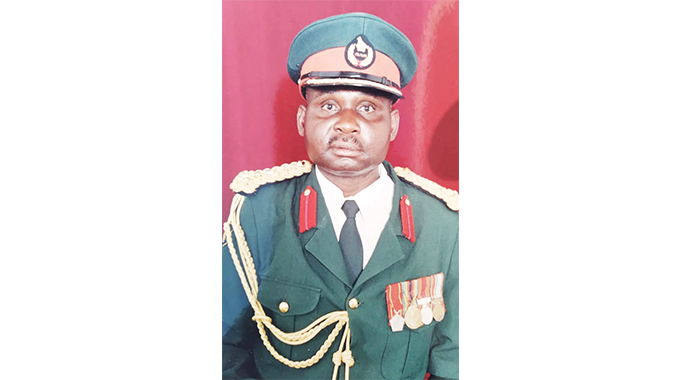
WE continue our interview with former freedom fighter, senior army officer and now Member of Parliament for Umzingwane Constituency in Matabeleland South Province, Brigadier General (Rtd) Levi Mayihlome pseudonym Cde Lizwe Ndebele. During the armed struggle, Brig-Gen (Rtd) Mayihlome worked as an intelligence operative and after independence was attested into the Zimbabwe National Army (ZNA) where he had a successful career and by the time he retired he was the Director of Army Finance.
After the liberation war Brig-Gen (Rtd) Mayihlome did not shy away from the books as he went back to the classroom and today is a proud holder of academic degrees. Today he tells our Assistant Editor Mkhululi Sibanda (MS) about his training in intelligence related Border Guards speciality in the then Soviet Union. Below are excerpts from the interview. Read on . . .
MS: You were still talking about a colleague who grabbed your books in a bid to see what you guys were doing in the Soviet Union. How did your hosts react to that?
Brig-Gen (Rtd) Mayihlome: They were quite upset. He was warned and cautioned but the relations between us didn’t improve. It was only after independence that things became normal because of the realisation that we were all pursuing the same goal of freeing our country.
MS: Then as for your training in the Soviet Union what did it involve?
Brig-Gen (Rtd) Mayihlome: It involved customs, immigration, border patrol, and military tactics in all phases of war, from the section level up to the brigade level. That was because in the Soviet Union and other countries that have (border) frontier forces such a force operates as a para-military force, but of course not like the RSF in Sudan. They are sort of like our own ZRP Support Unit, they have all the equipment and use military tactics save that they don’t work under the mainstream regular police or army, they have an autonomous command structure reporting to the national security department.
However, in the Soviet Union, and I presume in present Russia the border guards are a very strong force that regularly tended to respect if not revere more than the military police. This is because at the border you do all sorts of things as at times you have to use close-quarter combat. That is why in our training we covered many aspects of individual military and fitness skills, such as judo, karate, sabotage, and even dog handling.
While we did all that training we also had extensive training in leadership and command of artillery guns, tanks, signals, military engineering, infantry tactics and everything that these other guys in the mainstream military were doing. This was done so as to give us an understanding as how as border guards would co-ordinate with, or seek help from other combat arms in case of need. The duration for training in various other military specialities was generally six months but our training programme was over nine months. So when the ZPRA trainee groups we found at Simferopol left, our group became the senior group and procedurally I was appointed national group commander at Simferopol, at it became our duty to assist new arrivals to acclimatise.
Another ZPRA contingent joined us. To our surprise, the conflicts and suspicion did not end, with some of the new arrivals raising suspicions about what we were doing, of course, they had been influenced that there was a group that “wasn’t known”. So when they got to the Soviet Union they found out that I had been put in charge as the national group leader, they had no choice and I put the situation under control. That’s how we did our training and we finished in May 1979 and returned to Zambia.
MS: Then take us through what you did on your return to Zambia.
Brig-Gen (Rtd) Mayihlome: When we returned to Zambia we were deployed to the Northern Region of Zambia to the Security department under the NSO, charged with camp security and conducting conversion or specialised training in frontier forces, which also covered immigration and customs. I was appointed head of security. We had to rewrite all the scripts on frontier forces training, using the information that we had learnt in the Soviet Union as we had not been allowed to take our specialist note books as the information was deemed classified. Some of the guys who were tasked to re-write was William Mhlaba who is late now, he had risen to become an Assistant Commissioner in the Zimbabwe Republic Police (ZRP) and Nigeon Majahana Moyo aka Cde Foreman Mbambo, who also rose to become Assistant Commissioner in the ZRP by the time he retired.
MS: So some of your guys became police officers after independence?
Brig-Gen (Rtd) Mayihlome: On our return some of our guys joined the ZRP, but in my case remember I had left for the war when I had a Form Two, a ZJC certificate, so in the police force then if you had ZJC or anything below 5 O-levels you could only be attested as a Constable. Many of my colleagues joined ZRP as constables, except those with O-levels, but I together with four or so other comrades opted out and returned to Assembly Points hoping to get better options in the Zimbabwe National Army, which luckily we did, and upon integration we became officers, initially selected through aptitude tests which we found fairly easy given our advanced training in the Soviet Union.
MS: So you went back to which Assembly Point?
Brig-Gen (Rtd) Mayihlome: Initially arriving from Zambia we had gone to Papa Assembly Point in Mashonaland West where the camp commander was national hero, Cde Rodwell Nyika (now late Brig-Gen Collin Moyo). Before I get there, in 1979 before independence we had been deployed to Solwezi in Zambia where I was responsible for all security groups. There was the police, yes, ZPRA had a police department trained in Zambia at Lilayi, Police Militia which had within its ranks cadres such as Cde Simms Ncube and groups trained in then Yugoslavia as customs and immigration officers. So I was appointed the overall commander responsible for all ZPRA Police, border guards, immigration and customs officer cadres in north-west Zambia.
In fact on our return from the Soviet Union one of us, Saxton Mahlangu was given the responsibility to lead a group of fresh cadres to Yugoslavia where they were trained in immigration and customs. Besides security responsibility we were all tasked to do conversion training of cadres who had just been transferred to the security departments under the National Security and Order (NSO). Among the departments there was the close security which was responsible for the physical security of dignitaries that is where comrades like the current Member of Parliament for Beitbridge East, Cde Albert Nguluvhe served as he worked as part of security details that were embedded into Dr Joshua Mqabuko Nkomo’s office, which was under national hero Albert Nxele.
We were under physical security initially under Cde Nephat Madlela, then later under Cde Swazini Ndlovu. We also provided area security to the JZ Camp for the male youngsters and female cadres who had been moved to Solwezi after the Mkushi bombings. Late in 1979 I was moved over to Lusaka for the repatriation exercise where I was during the Lancaster House Talks and soon after. While repatriating the people, we started off with those who were critical. I was working with Sam Madondo, we also monitored the movement of the equipment that is our military hardware, from a security stand point. So we were responsible for that.
MS: When you eventually left Zambia where did you go?
Brig-Gen (Rtd) Mayihlome: We eventually crossed to Zimbabwe and moved to Papa Assembly Point. There we met many other security operatives including the now Professor Victor Ngoni Muzvidziwa, the Midlands State University Vice-Chancellor. Muzvidziwa worked under the Military Intelligence Department. I should also pay tribute to other comrades whom we lost when the NSO Headquarters were bombed in Lusaka on 26 June 1979. Our headquarters were located in a suburb called Roma. A majority of those we lost there we had trained together at Mwembeshi. May their dear souls rest in eternal peace.
MS: Then there is this issue of NSO versus the Military Intelligence Department, some are claiming that the NSO was playing some dirty tricks even on fellow colleagues particularly those in the mainstream army, ZPRA. What is your comment on that?
Brig-Gen (Rtd) Mayihlome: Let me give a background first. When the NSO was initially put together, it brought together those who had been in the military intelligence and newly recruited cadres, some of whom, like ourselves had not been in military intelligence. As is usual with changes to status quo in many organisations, when some people feel like their authority is being curtailed or diluted, there is bound to be friction. So yes, there was friction, but with time I think most of us found each other and started working harmoniously.

But those comrades who were transferred out of the security establishment took long to accept the changes, some are still complaining to this day. I think the other fundamental source of initial frictions was to do with the background training before being transferred to NSO. NSO training in my view was a bit broader unlike military intelligence training which was more specialised and purpose tailored. It is like comparing someone who has been trained as a national security operative and one who is trained in the military intelligence or police intelligence only. The former is more likely to be trained to deal with broader national issues. Then if you compared the NSO and MID in ZPRA you will find out that NSO was now recruiting some with high academic qualifications, including some who had been to university, to match the broader roles.
In any case, that is consistent with operations of national intelligence units throughout the world to pick the best brains available. In our case, during the armed struggle NSO also recruited from a pool of those with certain levels of qualifications to meet certain skills training. But this was not peculiar to NSO, for instance in Engineering, Signals or Communications and Artillery they also were particular in selecting certain cadres with certain levels of academic education or potential.
MS: Then MID was disbanded and became a department in the NSO. Why do you think that happened?
Brig-Gen(Rtd) Mayihlome: I think the leadership wanted to put a stop to the conflicts and friction within the entire organisation, Zapu and bring unitary command of all intelligence agencies for easier co-ordination, control and effectiveness. That’s my personal opinion, there could be other reasons that given my rank at the time I could not have been privy to. That’s my own conclusion using the hindsight. Remember there was an attempt on the life of ZPRA commander, Cde Nikita Mangena at the Freedom Camp (FC) and as such crucial information had not been picked beforehand or culprits picked afterwards.
Then we saw senior MID officers being redeployed elsewhere. Furthermore, after the appointment of new commanders there is bound to be changes in certain departments and perhaps it was found necessary to restructure intelligence and other departments of the military wing. Also during the life of MID in ZPRA, the other intelligence organs were sort of competing with MID reporting to the ZPRA command element who would then relay the information to the Party leadership while Cde Dumiso Dabengwa’s NSO was reporting to the Party leadership as well. Before amalgamation under NSO, there was MID and a security organ called Public Relations Organisation (PRO.) Under such conditions you would find that the information could be different opening room for tensions and suspicions. So, it must have been in the wisdom of the Party leadership to fuse MID into NSO.
But that did not see the immediate end of tensions as even now decades after some still have very different opinions about the formation and effectiveness of the NSO. But as said earlier, as operatives we soon found each other and worked harmoniously since we had the same cause, and one enemy. We had to concentrate on the job at hand.
MS: But wasn’t NSO as an intelligence unit responsible?
Brig-Gen (Rtd) Mayihlome: No, I don’t think so. In my view all the changes were done in utmost good faith with sincerity. Admittedly, the comrades who were in the original MID had experience but they were not perfect. Some perhaps didn’t want that as they wanted to retain that seniority, authority and protect their turfs, that’s natural with human beings.
MS: Now you came back home, let’s take it from there.
Brig-Gen (Rtd) Mayihlome: Earlier on I wanted to say the head of our police was a guy called Cde Makoni, I am not sure whether he is still alive. He was based in Lusaka. He was deputised by Zenzo Ncube who was USSR trained in Police Militia and they were based in Lusaka. They were operating as Zapu policemen.
MS: What were their duties?
Brig-Gen (Rtd) Mayihlome: They were charged with maintaining orderly behaviour in the organisation. Where you have hundreds of thousands of people misdemeanour’s are bound to arise. So these law and order officials would do the arrests, investigations and hand over to the Zambian police. They were practicing what they had specialised in. On the question of coming back home, when I came home initially I was supposed to join the police force since Zimbabwe did not have border guards and we still don’t have them now, so the alternative was to join ZRP.

We could not join the Support Unit because that is a specialised force, so we had to join the uniformed police where everyone starts from. Those of us who didn’t have O-levels and some of my colleagues were supposed to join as constables. Some of those who joined as constables even retired as constables after serving for 25 years. I didn’t like that because our colleagues who had joined the army qualified to be officers and there was a wide gap between constables and even junior military officers. I used to see the guys flashing their status and ranks. Among those were comrades that I believed I would match or even surpass their capabilities who were holding high ranks like company and battalion commanders. Initially, I had gone back to the Assembly Point from the NSO holding camp where we were in Harare along Seke Road.
MS: So NSO had its own camp?
Brig-Gen (Rtd) Mayihlome: Yes, after leaving Papa Assembly Point we went separate ways and moved to our intelligence and security holding camp to make it easier to co-ordinate our integration into intelligence and security related agencies. That is where I met one of my early political mentors, National Hero, Cde Misheck Velaphi Ncube, and it is only then that I discovered he was already a trained cadre when I assisted him at Mahomva Shopping Centre in Mpopoma. Remember I mentioned that I had worked with him in the Zapu structures in Bulawayo before I joined the armed struggle. The NSO camp was next to Simukai Farm where there is now Simukai Co-operative. From Coca-Cola it was about five kilometres towards Chitungwiza.
MS: This means all the intelligence officers were based there?
Brig-Gen (Rtd) Mayihlome: That is where most of us were and we were leaving for integration into security related departments from there. Then after deciding against joining the police force I went to Mashumbi Pools Assembly Point in Guruve where I was gladly welcomed, and appointed deputy camp security officer, deputising Cde Sipho then the now late Cde Partson Makhurane in the military police and later appointed the Head of military police until we moved to Gwaai River Mine upon closure of the Assembly Point as numbers became fewer and fewer as more of us either went for integration or demobilisation.
lTo be rounded up next week.


 Online Reporter