

 admin
admin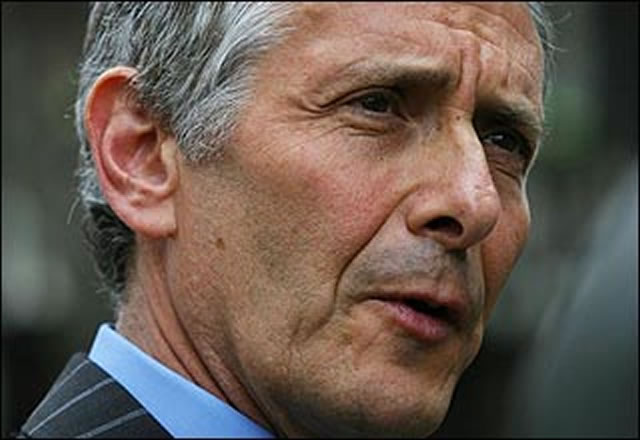
Business Reporter
THE National Social Security Authority blocked business tycoon, Mr Nicholas van Hoogstraten from acquiring Capital Bank’s 21 percent stake in First Mutual Life, a deal that would have made the businessman one of the major shareholders. Mr van Hoogstraten had proposed to buy Capital Bank’s 79 million shares at US20c per share, but on condition NSSA would dispose of an additional 12 percent stake in FML to him.
This would have given him about 35 percent stake in FML, including 3 percent he already owns, while NSSA’s shareholding would have been whittled down to 39 percent.
NSSA, the 86 percent shareholder in Capital Bank, formerly Renaissance Merchant Bank has 51 percent direct interest in FML and 21 percent through the bank.
NSSA is winding up Capital Bank’s operations and since it already enjoys a direct controlling interest in FML, the authority has already authorised the disposal of the shares. The proceeds will partly pay off depositors. Sources at Capital Bank said it was now considering bids from other potential investors.
“Although his proposal was attractive in monetary terms, the conditions attached to it were not favourable at all,” said one source who spoke on condition of anonymity.
No comment could be obtained from Mr van Hoogstraten by the time of going to print yesterday.
At US20c per share, Mr van Hoogstraten would have paid US$15,8 million for Capital Bank’s 21 percent stake in FML. This represents a 66 percent premium at yesterday’s price of US12c.
When NSSA resolved to invest in Capital Bank, it had high expectation of return on the investment.
Initially, the authority invested US$24 million.
In February this year, it converted its deposits in the bank to equity in a rights issue. As such, the total invested in the bank by way of equity amounted to US$30,2 million equivalent to 86 percent stake.
The revival of the bank did, however, not materialised as the debtors’ book did not perform as had been intimated by the curator.
The fresh capital injected was used to settle old depositors leaving little or no funds for new lending. Despite rebranding to attract depositors, non-performing old loans militated against the revival of the bank.
Even a fresh cash injection of US$6 million by NSSA in a rights issue did not help. Instead, the financial situation of the bank worsened with capital levels falling from US$20,1 million in March last year to about US$17,3 million by August 2013.
With the winding up of Capital Bank, NSSA said it may write off the US$30 million it invested. But it has accrued more benefits through FML and Peal Properties and RTG.
The investment in Capital Bank provided NSSA with an opportunity to end up in FML group as the major shareholder which was initially the main reason for NSSA to consider the investment.
The value contributed by FML group to NSSA’s balance sheet was US$176 million as at end 2012.



 Online Reporter