Online Reporter
Theseus Mauruki Shambare in VICTORIA FALLS
THE National Social Security Authority (NSSA) is on the verge of piloting a new social security scheme targeting workers in Zimbabwe’s informal economy, as the Tripartite Negotiating Forum (TNF) Global Summit enters its second day in Victoria Falls.
The proposed scheme is part of wider discussions at the summit on employment creation, social protection and building an inclusive global economy capable of responding to changing labour-market realities.
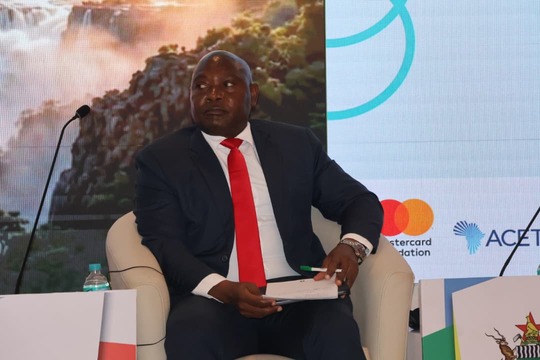
NSSA Director of Social Security and Benefits, Actuarial and Schemes Development, Mr Shepherd Muperi, said the authority had undertaken extensive research to develop a social security programme suited to the circumstances of informal economy workers.
The initiative is being developed with the International Labour Organisation (ILO), with stakeholder consultations having been conducted to determine the priorities of informal workers and ensure that the scheme is affordable and sustainable.
“As we speak, we are at the verge of almost implementing or piloting a specific, appropriate and suitable social security scheme for workers in the informal economy,” Mr Muperi said.
The proposed expansion comes against a backdrop of a labour market in which a significant proportion of workers operate outside conventional formal employment arrangements, limiting their access to social protection schemes traditionally based on employer-employee relationships.
Mr Muperi said existing schemes had largely been designed around formal employment, stable salaries and identifiable employers, making them less suited to informal workers and emerging forms of employment such as platform work.
“We appreciate that they may not be able to join the formal schemes that we have that are based on employer-employee relationships, because, traditionally, these social security schemes were designed for employment-based where there is employer and employee and stable salaries,” he said.
The proposed scheme will seek to incorporate incentives that respond to the practical challenges facing informal businesses and workers.
Mr Muperi said these could include access to decent workspaces and affordable funding to help informal businesses develop and grow.
“The challenge is that people want informal economy workers to contribute even towards taxes, but the focus should be more on: how are we supporting them to develop their business, to grow them?” he said.
He said informal workers had also been involved in the design process, helping NSSA identify the social risks and benefits they considered priorities.
“The design is coming from with them, and they have expressed their priority needs in terms of all the life risks to say: this is what we want covered,” Mr Muperi said.
The issue of extending social protection to workers outside the formal economy also featured prominently in the summit’s discussions on the future of decent work.
Director of the ILO Country Office for Zimbabwe and Namibia, Ms Philile Ntombikayise Masuku, said Zimbabwe should move towards implementing its recently endorsed formalisation strategy while progressively extending social protection to informal and platform workers.
“We need to commit to making sure that it is implemented and also commit to the gradual extension of social protection to informal workers and also the workers in the platform economy,” she said.
Mr Muperi said social security could also play a role in mobilising domestic resources for national development, with pooled funds potentially supporting infrastructure and productive investments.
He cited dams, roads, energy projects and industry as areas where social security funds could contribute to development while supporting economic activity and employment creation.
“Social security is acknowledged worldwide as a very important vehicle for mobilizing local resources for national development,” he said.
As the TNF Global Summit continues, the proposed NSSA scheme adds a practical dimension to the broader call for social protection to reach workers across Zimbabwe’s changing labour market, including those outside traditional formal employment.