
Gibson Mhaka [email protected]
INVESTMENT in specialist nursing education is critical to strengthening Zimbabwe’s healthcare system and achieving the country’s Vision 2030 ambitions, Health and Child Care Minister Dr Douglas Mombeshora has said.
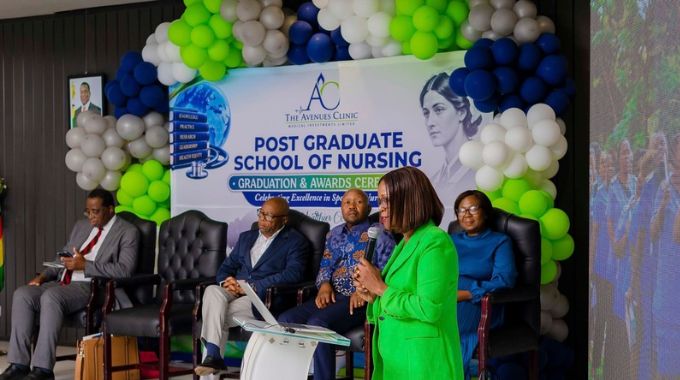
Speaking at The Avenues Clinic School of Nursing’s 23rd graduation ceremony at Celebration Centre in Harare on Friday, Dr Mombeshora described nurses and midwives as the backbone of healthcare delivery, emphasising the need to equip them with specialised skills to meet the country’s evolving healthcare demands.
“Nurses and midwives are the backbone of healthcare delivery. Their contribution spans the entire continuum of care, from health promotion and disease prevention to treatment, rehabilitation and palliative care. We must therefore invest deliberately in their training, professional development and specialisation,” he said.
Dr Mombeshora said strengthening the nursing workforce was central to President Mnangagwa’s Vision 2030 and the National Development Strategy 2, adding that the country needed a competent and adaptable health workforce capable of responding to emerging medical challenges.
“Our Health Workforce Strategy provides the framework for building the human resource capacity necessary to achieve these ambitions. We must also pay particular attention to specialist competencies in areas such as critical care, oncology, emergency medicine, neonatal care and other emerging fields,” he said.
The ceremony saw 38 nurses drawn from central, district, private and mission hospitals across the country graduate with diplomas in Intensive and Coronary Care Nursing and Operating Theatre Nursing.
The graduates comprised 19 intensive care nurses and 19 operating theatre nurses.
Dr Mombeshora said the Government’s vision for nursing education went beyond increasing the number of trained professionals, stressing the importance of producing practitioners who uphold high standards of competence, ethics and patient-centred care.
“We must develop a competent, ethical, adaptable and patient-centred workforce, equipped to respond to the changing health needs of our population.
“This requires us to expand training opportunities, strengthen training institutions, embrace innovation and ensure that our graduates possess the skills required by a modern health system,” he said.
He said the Government remained committed to strengthening the health workforce through expanded training opportunities and partnerships with institutions across the public and private sectors.
“Government cannot achieve this alone. We need the active participation of public, private and faith-based institutions. We must harness the expertise, infrastructure and investment capacity available across the entire sector,” he said.
The minister commended private healthcare institutions, particularly The Avenues Clinic, for their contribution to specialist healthcare delivery, nursing education, infrastructure development and investment.
He said the clinic had played a significant role in developing specialist nursing skills over the years.
“Let me acknowledge the longstanding contribution of The Avenues Clinic to specialist nursing education in Zimbabwe. Since introducing Intensive Care Nursing in 1978 and Operating Theatre Nursing in 1979, the institution has trained 347 specialist nurses in these two disciplines,” Dr Mombeshora said.
He also welcomed the clinic’s introduction of Oncology and Palliative Care Nursing, as well as its collaboration with the University of Zimbabwe in providing clinical attachment opportunities.
Dr Mombeshora further encouraged the institution to sustain its investment in specialist training and expand its contribution to the country’s health sector.
He said the clinic’s interest in introducing General Nursing at diploma level was welcome, noting that the Government was considering broader private sector participation in nurse training.
“The Ministry’s intention is to progressively open up private sector participation in nurse training beyond the current pilot project being undertaken at the Dr Auxillia Mnangagwa School of Nursing in Kadoma.
“However, this expansion must be properly structured and informed by evidence. The necessary reviews and evaluations of the pilot will guide us on how and when to expand participation, as well as which institutions and partners are suitably positioned to come on board,” he said.
Meanwhile, The Avenues Clinic managing director Mrs Sibusisiwe Ndhlovu said the institution remained committed to developing specialist healthcare professionals capable of responding to changing patient needs and improving healthcare delivery in Zimbabwe and beyond.
She said the clinic invested approximately US$200 000 annually in postgraduate nursing education, alongside spending on medical equipment and infrastructure to improve the quality of healthcare services.
“Through The Avenues Clinic School of Nursing, we are committed to expanding our specialist nurse training. As we expand our specialist nurse training effort, this year we added Oncology and Palliative Care post-basic specialist nurse training.
“We acknowledge the support that we have received from the Ministry of Health and Nursing Council of Zimbabwe,” she said.
Mrs Ndhlovu said the clinic had maintained a longstanding commitment to specialist nursing education through its training programmes and partnerships with other healthcare institutions.
She highlighted its collaboration with Parirenyatwa Group of Hospitals, particularly in supporting open-heart surgery services and providing clinical exposure for trainee nurses.
She said the institution’s training programmes had, to date, produced 185 intensive care nurses and 162 operating theatre nurses, bringing the total number of specialist nurses trained to 347.
Mrs Ndhlovu attributed the achievements to the dedication of the clinic’s tutors, clinical instructors, nursing leadership and healthcare professionals, whose expertise ensured that students received both sound academic grounding and practical clinical experience.
“Today, therefore, it is about much more than giving a certificate. It is a celebration of our continued investment in healthcare, the advancement of specialist nursing practice, and our collective responsibility to build a stronger healthcare system for Zimbabwe,” she said.
She urged the graduates to remain committed to continuous professional development, keeping pace with advances in medical knowledge and technology while upholding the highest standards of professional conduct.
“Never stop learning. Healthcare continues to evolve, and so must we. Remain curious, embrace new knowledge and technology, uphold the highest professional and ethical standards, and always be willing to share your knowledge with those who come after you,” she said.
She encouraged the graduates to approach their careers with confidence, integrity and compassion, reminding them of the responsibility that comes with caring for patients.