admin
admin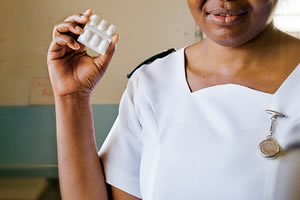
reserved for doctors.
This follows a change in the nurses’ scope of work introduced recently by the Nurses’ Council of Zimbabwe.
The nurses’ scope of work spells out the duties expected of them and previously they were only allowed to
administer what a doctor would have prescribed for the patient.
Addressing journalists during a National Aids Council organised media tour of HIV and Aids activities in
Mashonaland Central last week, Government medical officer at St Albert’s Mission Hospital, Dr Neele Naha, said all nurses from 12 clinics in Muzarabani district were now putting patients on ARVs.
“All our registered general nurses in the district have been trained to initiate ART and they are now putting people on treatment,” Dr Naha said.
“This development will help us reduce waiting periods before one accesses treatment and probably clear our back- log.”
Previously, HIV positive people would have to wait for a doctor to visit their health institutions for them to undergo further tests before being put on ART.
In rural settings, there would be only one doctor for the various clinics and the district hospital.
Depending on the number of clinics in a district, a doctor’s visit can be twice a month and a patient could wait for two weeks before an appointment with the doctor to assess readiness for ART.
Proponents of nurse-led ART initiation noted that the previous set up resulted in patients being tested for HIV late and put on treatment when they are in dire need of ARVs.
In the absence of treatment, HIV progression is faster and results in death.
About 2 770 people living with HIV and Aids from Muzarabani district are on ARVs, with over 1 000 others on the waiting list.
District Aids Co-ordinator for Muzarabani Mr Richard Chasimba said providing nurse-led ARV management in primary health care clinics in addition to hospitals will increase people’s access to treatment.
He said St Albert’s Mission was the only centre in the district initiating ARVs.
“There are no partners supporting the provision of ARVs in the district. So far it’s only St Albert’s Mission providing ARVs to people tested HIV positive,” he said.
Mr Chasimba said nurse-led ART initiation has also seen procurement of point of care machines in four clinics in the districts, which will enable the nurses to do CD4 Count testing from the clinics.
He said the district was making use of care givers to make follow ups with clients in an effort to reduce treatment defaulters.
HIV and Aids remains the largest killer in Zimbabwe, although recent statistics show that prevalence rate is on a downward trend.
The HIV prevalence rate is at 15 percent, with nearly half a million people living with HIV and Aids.


 Online Reporter