Online Reporter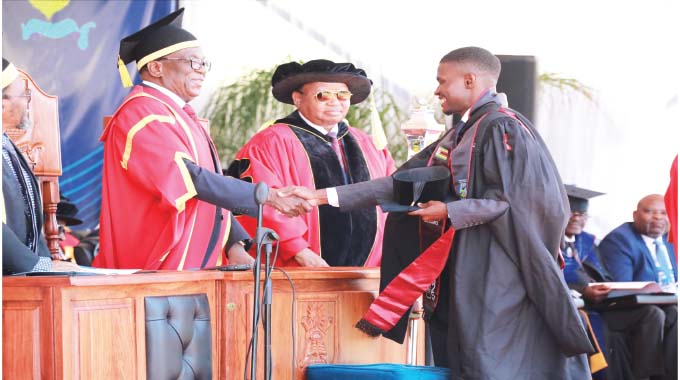
Peter Matika, [email protected]
THE National University of Science and Technology (Nust) has acquired state-of-the-art medical equipment from China for the first phase of transforming the Joshua Mqabuko Nkomo Ekusileni Medical Centre, capitalising on President Mnangagwa’s engagement and re-engagement policy, which has deepened bilateral relations between Harare and Beijing.
The strategic move reinforces the country’s commitment to fostering international partnerships and attracting investment opportunities, aligning with President Mnangagwa’s mantra: “Zimbabwe is open for business”.
Ekusileni was officially handed over to Nust by the National Social Security Authority (Nssa) in February 2025 under a long-term lease, with the facility aiming to provide world-class medical training, conduct premier research and specialised teaching hospital leading to improved healthcare delivery in Zimbabwe in line with global best practice.
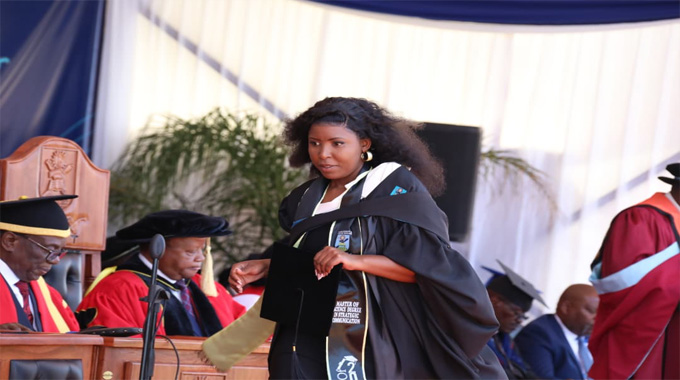
Speaking before President Mnangagwa who is also the Nust Chancellor capped 2 504 students at the university’s 31st graduation ceremony in Bulawayo yesterday, Vice Chancellor Professor Mqhele Dlodlo said collaboration has unlocked wider opportunities for the transformation of the university through shared innovation, efficient resource mobilisation and collective solutions to complex challenges.
“We are making significant progress in operationalising the Joshua Mqabuko Nkomo Ekusileni Hospital as a specialist teaching and research facility, in line with your Cabinet directive,” said Prof Dlodlo.
“Our vision is to transform the 200-bed hospital into a Quinary-Level centre of excellence — offering advanced medical services, fostering research and promoting medical tourism.”
Prof Dlodlo said Nust was also part of a USD$15 million research initiative titled “Locally-led Indigenous Nature-based Solutions for Climate Change”.
“This three-year project, running until 2026, is a partnership with Canadian Mennonite University, Bindura University of Science Education and the Ministry of Environment, Climate and Wildlife.
“It aims to strengthen climate resilience among vulnerable groups and enhance biodiversity in Gwanda, Mwenezi and Binga, fully aligned with Zimbabwe’s climate adaptation priorities,” he said.
This year Nust’s graduation ceremony was held under the theme: “Think Beyond Limits: Ignite Innovation, Power Industrialisation”, which resonates deeply with Zimbabwe’s national development aspirations.
It aligns seamlessly with Vision 2030, which envisions the country to be a prosperous upper-middle-income economy driven by knowledge, innovation and a revitalised manufacturing sector.
“This theme is not merely aspirational, it’s a call to action. It challenges our graduands to transcend self-imposed and societal limitations, to imagine boldly and to pursue possibilities beyond current realities,” said Prof Dlodlo.
“It’s a mindset of continuous growth, of questioning norms, stepping beyond comfort zones and daring to act in the face of uncertainty to achieve extraordinary outcomes.”

The Vice Chancellor said Nust stands firmly aligned with the National Development Strategy 1 (NDS1),and was already preparing for the roadmap toward NDS2.
Prof Dlodlo said these strategies rightly place Science, Technology, Innovation, and Human Capital Development at the heart of Zimbabwe’s economic transformation.
“As a STEM-focused institution, Nust is proud to be a catalyst for industrial and socio-economic progress,” he said.
Prof Dlodlo said the Professor Phinias Mogorosi Makhurane Technovation Centre, which was commissioned by President Mnangagwa during last year’s graduation ceremony, is now fully functional.
“Far from lying idle, it has become a vibrant hub of creativity, nurturing young innovators and forging partnerships with industry and business, both locally and internationally,” he said.
“In just one year, the centre is incubating five major start-up projects, each poised to impact key economic sectors including agriculture, energy, transportation, manufacturing, and rural industrialisation.”
Prof Dlodlo also highlighted the institution’s next milestone in infrastructural development, which is the completion of the Library and IT Resource Centre, whose construction stopped in 2013 when the building was 30 percent complete.
He said the completion of the building is critical in the roadmap towards NDS 2, as Information and Communication Technologies (ICTs) are crucial for economic development and modernising the economy.
In response to President Mnangagwa’s call for universities to lead in rural industrialisation, Prof Dlodlo said Nust has embraced this challenge with conviction.
“We believe rural industrialisation is a cornerstone of inclusive economic growth, creating jobs, reducing poverty, stimulating local economies and bridging the rural-urban divide,” he said.
“One such initiative is the Tomato Powder start-up, developed by one of our students and housed at the Prof Phinias Mogorosi Makhurane Technovation Centre. This start-up addresses the significant post-harvest losses in Zimbabwe’s tomato sector, estimated at over 50 percent across the value chain.
“By converting surplus tomatoes into a shelf-stable powder, we are not only reducing waste but also creating employment and offering a practical solution for households, restaurants and hotels,” Prof Dlodlo said.
With support from the National Venture Capital Company of Zimbabwe, production has already started on campus.
“Our long-term vision is to establish tomato powder production centres in all 10 provinces of the country, bringing jobs and value-addition to rural communities.

“Moreover, we are positioning this product for export, tapping into a global market projected to reach billions of dollars by 2030, driven by demand for natural, versatile food ingredients,” said Prof Dlodlo.
He noted that another promising venture is the Bio-fertiliser project, developed in collaboration with the Lilongwe University of Agriculture and Natural Resources in Malawi and supported by the Research Council of Zimbabwe.
“This eco-friendly alternative to chemical fertilisers addresses soil degradation, biodiversity loss and greenhouse gas emissions, offering a sustainable path forward for agriculture in Africa,” said Prof Dlodlo.
“We have successfully developed four types of bio-fertilisers, and a start-up company, EBS Biofert, has been formed to commercialise them.
“These products will enhance crop productivity, improve food security, and contribute to climate resilience in Zimbabwe and beyond,” said Prof Dlodlo.
He said the innovations are not just academic exercises but tangible contributions to national development.
Prof Dlodlo said these also reflect the ingenuity, commitment and transformative potential of Zimbabwe’s young minds.
“As we celebrate our graduands today, we reaffirm Nust’s pledge to be a beacon of innovation, a driver of industrialisation, and a partner in building the Zimbabwe we all envision,” said Prof Dlodlo.
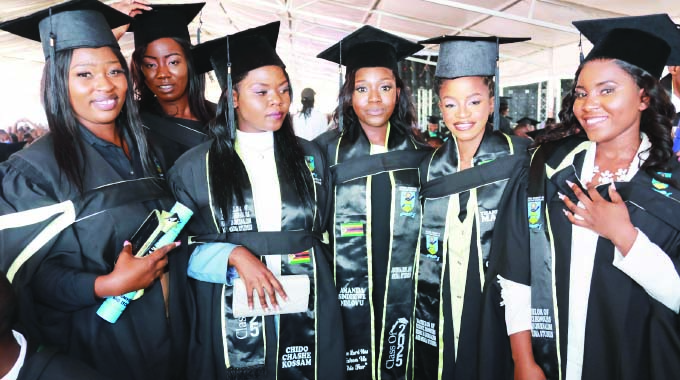
Thousands of people who included Government ministers, business leaders, parents and relatives of graduates, witnessed yesterday’s colourful graduation ceremony.
Ends CKD NT