Judith Phiri [email protected]
BULAWAYO Minister of State for Provincial Affairs and Devolution Judith Ncube has called on the National University of Science and Technology to transform research and innovation into practical solutions that support industrialisation, improve livelihoods, create employment and promote sustainable development.

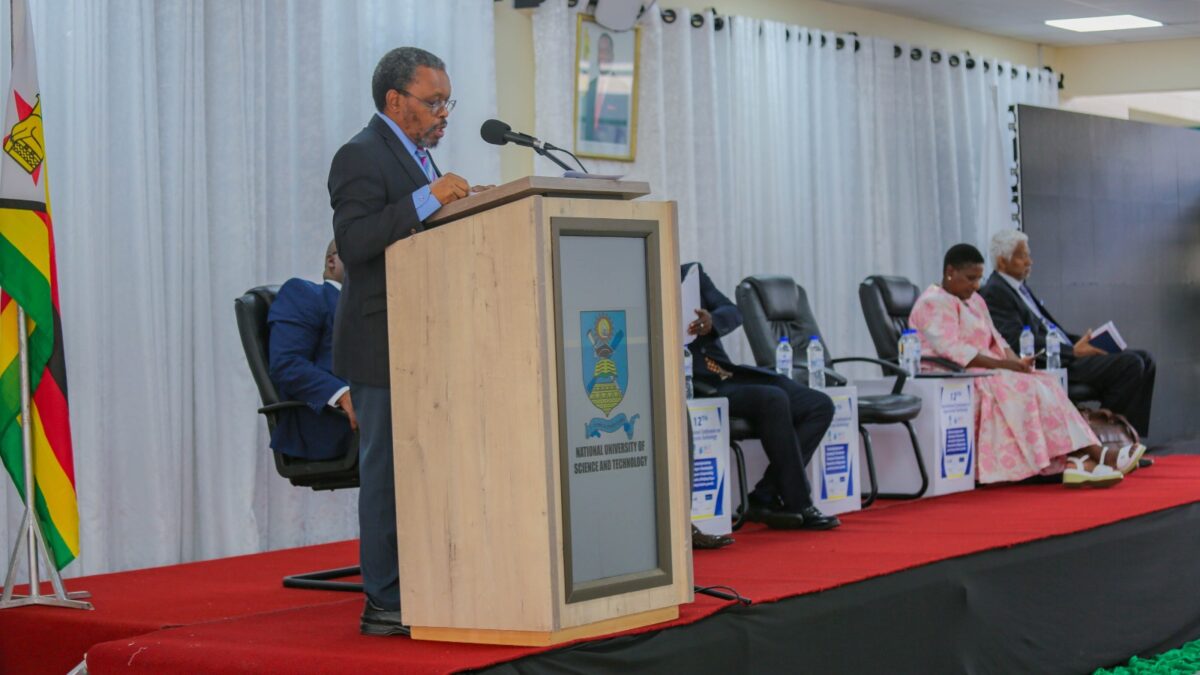
In a speech read on behalf of the Minister by Bulawayo Provincial Director of Administration Mr Julius Gwatiwa at the 12th International Conference on Appropriate Technology (ICAT) in Bulawayo on Wednesday, she said as Zimbabwe continues to pursue its development aspirations, institutions such as NUST have an important role to play.
“They plan an important role to play in transforming research and innovation into practical solutions that support industrialisation, improve livelihoods, create employment and promote sustainable development.
“I am particularly encouraged by the opportunity this conference provides for collaboration between universities, government, industry and communities. Through such partnerships, we can bridge the gap between research and application, strengthen local innovation and ensure that technology responds to the realities and needs of our people,” she said.
She said the theme of the conference: “Harnessing Appropriate Technologies for Sustainable Development: Empowering Communities, Bridging Gaps and Driving Inclusive Growth” speaks directly to the needs of societies.

Minister Ncube said technology must not simply be advanced, it must be relevant, accessible, affordable and capable of improving people’s lives, while its true value lies not in its sophistication, but in the impact it makes on communities.
NUST Vice Chancellor, Professor Engineer Mqhele Dlodlo said the challenges confronting humanity today do not recognise national boundaries, and neither should the search for their solutions.
“NUST has a special relationship with the International Conference on Appropriate Technologies (ICAT). We have previously had the privilege of hosting the first, second and seventh editions of this conference.
Since then, ICAT has travelled across institutions and countries, continually expanding its reach, influence and impact. Each host has contributed new perspectives and enriched the global conversation on technology and development,” he said.
“As we gather for the 12th edition, we are pleased to welcome the conference back to Bulawayo. We do not regard this as a nostalgic return to the past. Rather, we see it as an opportunity to strengthen existing collaborations, forge new partnerships and build together a future in which technology responds more effectively to the needs of society.”
He said this year’s theme challenges them to reflect on a fundamental question, are they developing technologies simply because they can, or because societies genuinely need them?
Prof Dlodlo said they live in an age of extraordinary technological advancement.
“Artificial intelligence, robotics, biotechnology, the Internet of Things, advanced manufacturing, digital platforms and renewable energy technologies are transforming how we produce food, deliver healthcare, educate our citizens and organise our economies.
“Yet we also live in a world confronted by significant challenges. Across many communities there remain persistent concerns related to food security, water availability, healthcare access, climate resilience, environmental sustainability, youth unemployment and unequal digital access,” he added.
“These realities remind us that innovation cannot be measured solely by technical sophistication. Its true value lies in its ability to improve lives. To harness technology is therefore not merely to acquire it. It is to choose wisely.”
He said appropriate technology was not necessarily the cheapest technology, nor is it always the most advanced, it was technology that is relevant, accessible, affordable, sustainable and responsive to the people it is intended to serve.
Prof Dlodlo said a sophisticated irrigation system may be technically impressive, but it has limited value to a smallholder farmer if it cannot be afforded, maintained or repaired locally.
“A digital healthcare platform may offer remarkable capabilities, yet its impact is constrained where electricity supply and internet connectivity remain unreliable. In many situations, carefully designed and locally maintainable solutions create greater and more enduring value than highly complex alternatives.”
He said this understanding resonates strongly with Zimbabwe’s national development aspirations.
Prof Dlodlo said through the Education 5.0 philosophy, universities are expected not only to teach and conduct research, but also to engage communities, drive innovation and contribute to industrialisation.
“For NUST, this is not an additional responsibility. It is central to our institutional mission. We believe that research must create impact. A research project is not complete when it is published. It is complete when it solves a problem,” he said.
“That conviction continues to shape our investments in research infrastructure, innovation ecosystems and entrepreneurship development. We are strengthening laboratories, supporting innovation hubs, expanding incubation programmes and creating more opportunities for young researchers to test solutions in real-world environments.”