Joshua Muswere Zimpapers Writer
BANKS could soon be able to detect suspicious activity before criminals strike, following the development of a machine-learning system by researchers at the National University of Science and Technology (NUST) to improve security surveillance.
The system, developed by Vusumuzi Maphosa and Siduduzile Ncube, analyses surveillance footage to identify suspicious activities such as unauthorised entry, ATM tampering, theft and unusual behaviour, alerting security personnel in real time.
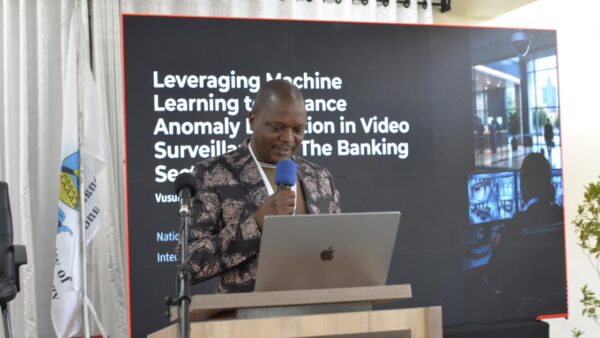
Presenting the research findings, NUST Director of Information and Communications Services Vusumuzi Maphosa said traditional CCTV systems, which depend largely on security personnel monitoring screens, were no longer adequate to deal with increasingly sophisticated criminal activity.
“The financial services sector faces rising threats related to unauthorised access, theft of assets and sensitive data, and eroding trust,” he said.
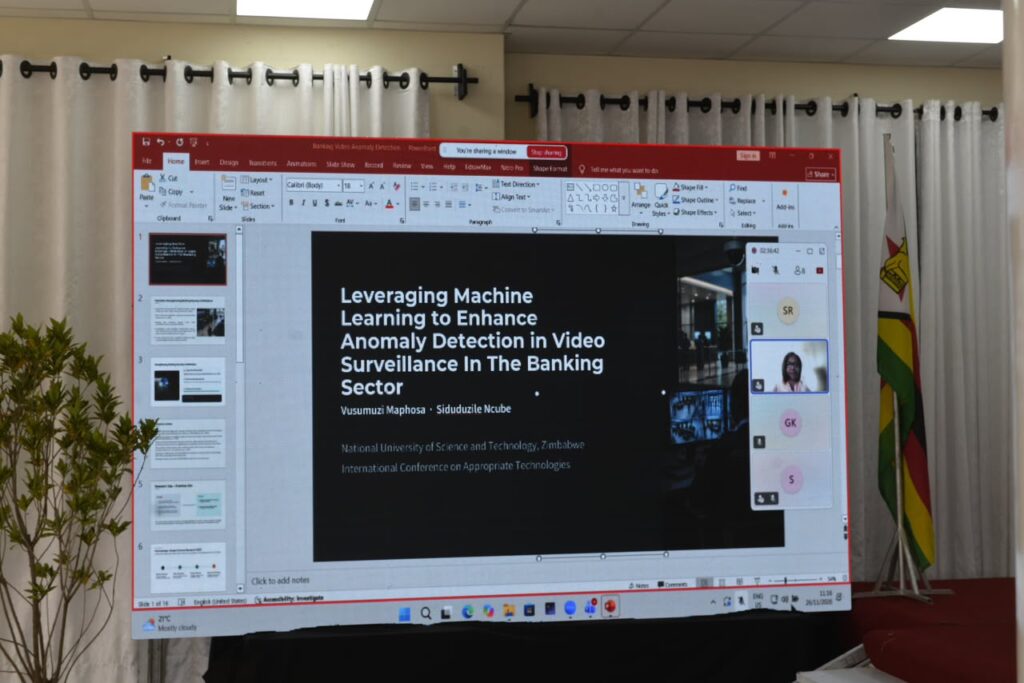
The research, titled Leveraging Machine Learning to Enhance Anomaly Detection in Video Surveillance in the Banking Sector, explores how artificial intelligence can help banks identify threats more quickly and improve their response to security breaches.
Maphosa said conventional surveillance systems had limitations, particularly when large volumes of footage had to be monitored by security personnel for long periods.
This often resulted in suspicious activities going unnoticed, while some systems generated false alarms that made it difficult to distinguish genuine threats from normal activity.
“The large volumes of footage these devices produce require rapid, precise analysis to detect potential dangers and anomalies,” he said.
The researchers developed a prototype using machine-learning models trained to identify different forms of suspicious activity.
These include intrusions, movement of objects, ATM tampering, loitering near restricted areas, suspicious gestures and unusual crowd behaviour.
The system was tested using surveillance footage collected from a banking environment and achieved a precision score of 0.91 and recall of 0.91, with the researchers also reporting an F1 score of 0.82.
Maphosa said the LightGBM and XGBoost classifiers performed better than the other models tested.
“The trained model exhibited high efficiency and accuracy in detecting suspicious activities from video surveillance data,” he said.
Once suspicious activity is detected, the system can alert security personnel, allowing them to respond without having to wait for someone monitoring CCTV screens to notice a problem.
The footage can also be used as evidence during investigations and assist banks in meeting security and regulatory requirements.
Maphosa said the research was informed by security challenges facing the banking sector, including armed robberies, cash-in-transit heists, ATM attacks and fraud involving employees working with criminals.
He cited a major bank heist in Zimbabwe in which more than US$4 million was reportedly lost, arguing that weaknesses in surveillance systems highlighted the need for better security technology.
The researchers believe the technology could also be used beyond the banking sector, particularly in institutions where security cameras generate large volumes of footage.
Schools, hospitals, border posts, retail outlets and public transport facilities are among the areas where similar systems could help identify suspicious activity.
However, Maphosa said introducing the technology in Zimbabwe would require investment, as some institutions still rely on ageing surveillance infrastructure.
“The computational resources required to process and train advanced machine learning models were substantial,” he said.
He said integrating the system into existing surveillance infrastructure also required extensive customisation and testing to ensure compatibility and real-time performance.
Reliable electricity, internet connectivity, high-performance computers and access to quality video footage for training the models remain some of the challenges that could affect implementation.
The researchers also highlighted the need to address privacy, ethical and data protection concerns before the technology is widely adopted.
Their study recommends that banks integrate machine-learning systems into existing surveillance infrastructure to improve the detection of threats and response times.
It also calls for policymakers to promote data-sharing practices and standardised methods of identifying suspicious activities, while financial regulators should consider how machine-learning systems can be incorporated into security compliance frameworks.
Future research will focus on testing the technology using larger datasets from different institutions, developing less resource-intensive models and assessing its performance over longer periods in operational banking environments.
Maphosa said the technology could help institutions strengthen their security systems and respond more effectively to emerging threats.
“The techniques and frameworks developed through this research can also be adapted and applied to enhance video analytics capabilities in other security-critical domains,” he said.