Chronicle Editor
Judith Phiri, Business Reporter
THE National University of Science and Technology (Nust) in Bulawayo has introduced new faculties and departments in response to the demands of the industry and in keeping up with global trends and developments.
Addressing delegates at the Computer Society of Zimbabwe (CSZ) winter school programme in Bulawayo on Thursday, Nust Vice-Chancellor Professor Mqhele Dlodlo said as a leader in human capital development and innovation, the university has expanded some departments.
“Zimbabwe’s new economic blueprint, the National Development Strategy (NDS1), is underpinned by human capital development and innovation as one of the national priorities for the next five years. Nust, a leader in human capital development and innovation, has expanded the Computer Science Department leading to the formation of a second new Department of Informatics and Analytics in response to industry demands and in keeping with global trends and developments,” said Prof Dlodlo.
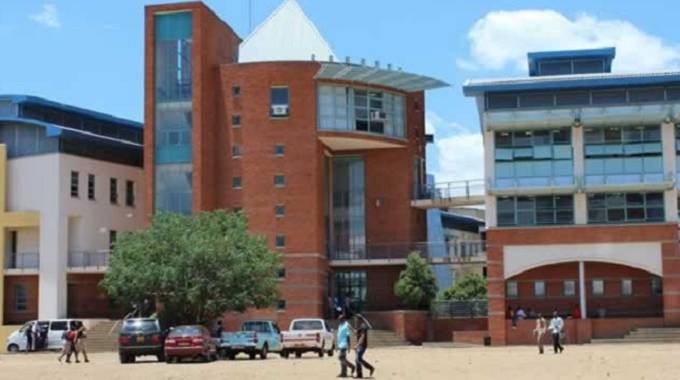
He said the Department of Computer Science will continue to offer the Bachelor of Science (BSc) and Master of Science (MSc) programmes in Computer Science while the new Department of Informatics and Analytics in addition to the already existing BSc Honours Degree in Informatics, will offer two MSc programmes, one in Information Systems and another in Big Data Science.
Prof Dlodlo commended CSZ for organising the winter school which comes in the context of the new Cyber Security and Data Protection Bill.
“The CSZ programme on capacity building on Cyber Security, Digital Forensics, and Robotic Process Automation is timely as it comes in the context of the new Cyber Security and Data Protection Bill, which many are still in the process of mastering. The new Bill seeks to punish those who abuse the social media, internet and communication networks and make the growing financial digital systems and e-commerce more efficient and better protected. I, therefore, applaud CSZ for organising such an important and timely programme to empower ICT practitioners with skills to navigate the digital world in a secure manner.”
Prof Dlodlo said the Covid-19 pandemic accentuated the drive towards digitalisation by forcing institutions to go online for their very survival. He said the pandemic has highlighted the undeniable growing significance of the digital economy.

“We had to rethink and redesign our operations leading to the birth of blended lectures, blended graduations and hybrid libraries, just to mention a few examples. However, digitalisation comes with an assortment of risks hence the significance of learning ‘how to navigate the digital world in a secure manner’.”
He said cyber crime was on the increase as criminals and con-artists exploit loopholes to commit a litany of offences including identity theft and fraud, making the CSZ winter school programme critical.
Prof Dlodlo said Nust was inviting industry, organisations and individual computer experts to partner with them in several possible ways to come up with innovative solutions for socio-economic development.
“Under the Industry Liaison Committee, the Computer Science Department offers an open door to partners that want to connect with the Department and the University. The committee serves as a resource to provide organisations or companies with the information they need to work with the Computer Science Department by responding to general requests and inviting feedback from industry and organisations.
“For example, our Computer Science Department partnered with Plan International to empower the youth with digital skills through application development, web development and graphics. A total of 200 youths from Bulawayo are taking part in the programme that started in February 2022 and ends in August 2022.”

CSZ president Mr Allen Saruchera said as CSZ they were cognisant of passing the baton to the future generation, hence the deliberate establishment of student chapters from higher tertiary institutions of learning.
“Development and innovation work hand in glove, thus for us to develop as a society we recommit to partnering with institutions. Most recently we partnered with a company in the Silicon Valley for an Appathon wherein our student chapter teams participated in with great success. This resulted in some of the team’s work now heading for product launching and some of the innovators have been given global opportunities,” he said.
Meanwhile, Nust Faculty of Applied Science Dean, Professor Philimon Nyamugure, said on top of the new department in the Faculty of Applied Science, Department of Informatics and Analytics, the institution had also introduced the Faculty of Environmental Science. He said it has four departments namely Department of Environmental Health, Department of Environmental Science, Department of Forest Resources and Wildlife Management and Department of Geospatial Sciences.



 Online Reporter