Online Reporter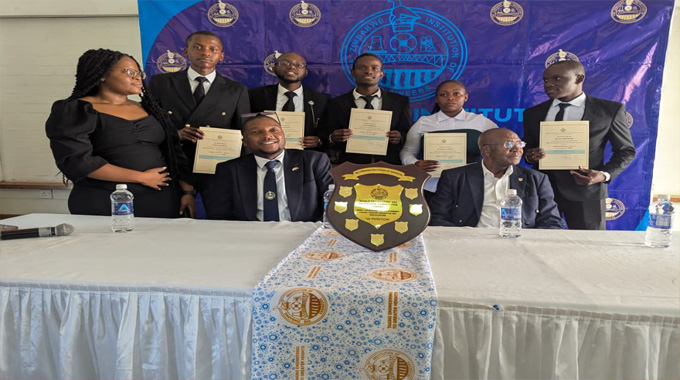
Judith Phiri, [email protected]
THE Faculty of Engineering at the National University of Science and Technology (Nust) has once again demonstrated its dominance, emerging as the Overall Champion at the 2026 Zimbabwe Institute of Engineers (ZIE) World Engineering Day Hackathon.
In a highly competitive field featuring 12 university teams from across the country, Nust secured both first and second place, underscoring its reputation as a leader in engineering innovation.
Nust communication and marketing director, Mr Thabani Mpofu, said the victory reaffirmed the faculty’s commitment to delivering world-class industrial and environmental solutions.
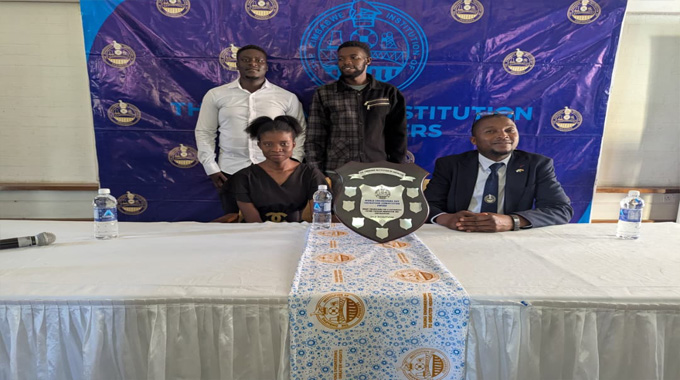
“These victories highlight the Nust Faculty of Engineering as a leader in pioneering sustainable technology. We wish our winning team the best as they ‘Think in Other Terms’ in Indonesia,” he said.
“As national winners, the team will represent Nust and Zimbabwe on the global stage at the World Federation of Engineering Organizations (WFEO) Global Hackathon on March 4, 2026.”
Mr Mpofu said the first-placed project, developed by the Department of Civil and Water Engineering, tackled Sustainable Development Goals (SDGs) 14 and 15 — Life Below Water and Life on Land.
He said the team designed a revolutionary constructed wetland system.
“Using an ingenious approach to circular engineering, the team repurposed Platinum Granulated Furnace Slag and Alum Sludge to create a reactive substrate. This system is designed to reverse heavy metal contamination and eutrophication in the Umguza River,” said Mr Mpofu.
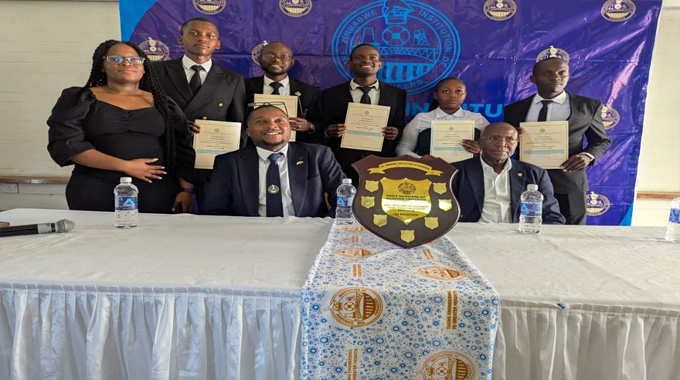
He said the second-placed innovation, developed by the Department of Electronic Engineering, addressed SDG 12 on Responsible Consumption and Production.
Mr Mpofu said the AURORO Nexus project, which finished as runner-up, developed “an advanced digital twin platform designed to optimise energy efficiency and sustainability in commercial and residential infrastructure, paving the way for a smarter, greener Zimbabwe.”
Meanwhile, in the broader 2026 National ZIE Hackathon results, Midlands State University (MSU) placed second, Bindura University of Science Education (BUSE) came third, Zimbabwe National Defence University (ZNDU) fourth, Fossil fifth, DW Software and Robotics sixth and Tin Computer Labs seventh.