Online Reporter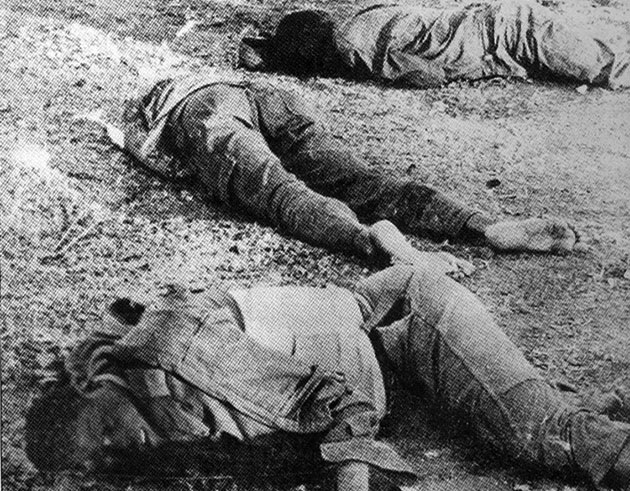
Lloyd Tendai Makonya
Correspondent
HISTORY often remembers places for the tragedies that unfolded there.
Yet long before Nyadzonia became synonymous with one of the darkest chapters of Zimbabwe’s liberation struggle, it was a place built on hope.
Roughly 100km from Machipanda Border Post in Mozambique’s Manica Province, Nyadzonia began as a sanctuary.
From the latter half of 1975, determined Zimbabweans crossed into newly independent Mozambique carrying nothing, but an unshakeable belief that one day they would return home to a free country.
Some were young men and women determined to join the armed struggle. Others were mothers carrying infants, elderly villagers escaping the violence of war, students who had abandoned their classrooms and families seeking refuge from an increasingly brutal conflict.
Few could have imagined that within a year, this quiet settlement would become one of the most enduring symbols of Zimbabwe’s liberation.
To understand why Nyadzonia occupies such a sacred place in Zimbabwe’s national memory, one must look beyond the events of August 9, 1976.
The story of Nyadzonia did not begin with gunfire. It began with the changing political landscape of Southern Africa and the hopes of a people determined to reclaim their freedom.
The year 1975 marked a turning point in the liberation struggle.
Following Portugal’s Carnation Revolution, Mozambique attained independence on June 25 under the leadership of the Front for the Liberation of Mozambique (FRELIMO).
For Zimbabwe’s liberation movement, this transformed the strategic geography of the war. For the first time, ZANLA could operate from a friendly neighbouring state that shared a long eastern border stretch of about 1 200km with Rhodesia.
At almost the same moment, ZANU was emerging from one of the most difficult periods in its history. The assassination of its national chairman, Advocate Herbert Chitepo, in Lusaka on March 18, 1975 had plunged the movement into uncertainty.
Internal divisions, arrests of senior leaders by the Zambian authorities and the temporary disruption of military operations forced the movement to reorganise. Mozambique’s independence offered, not only a new operational base, but also a fresh beginning.
It was against this backdrop that camps such as Nyadzonia, Chimoio, Doroi and Tembwe emerged.
While each played a different role, Nyadzonia became one of the first reception centres for Zimbabweans arriving in Mozambique. It was here that thousands of refugees were received, registered and cared for before many of the younger arrivals proceeded to military training centres.
Others remained at the camp because they were too young, too old or simply seeking refuge from a war that had reached their homes.
This dual character would later become the centre of fierce historical debate. To some, Nyadzonia was primarily a refugee camp sheltering civilians displaced by war. To the Rhodesian Security Forces, it had evolved into a strategic assembly point for ZANLA recruits awaiting military training and deployment into Rhodesia.
The reality was more complex than either description alone.
Like many liberation camps across Southern Africa, Nyadzonia reflected the blurred boundaries between civilian life and armed resistance. Families lived alongside political instructors, prospective recruits shared space with seasoned cadres and humanitarian need coexisted with the demands of a growing liberation movement.
Daily life at Nyadzonia was defined as much by ordinary routines as by extraordinary circumstances. Women prepared meals over open fires. Children played between rows of temporary shelters. Political education classes introduced new arrivals to the ideals of the liberation struggle. Young recruits waited anxiously for news of when they would proceed to training camps deeper inside Mozambique. For many, the camp represented the first place where the dream of an independent Zimbabwe seemed attainable.
Yet Nyadzonia’s growth did not go unnoticed. From across the border, Rhodesian military planners watched the expansion of liberation movement infrastructure in Mozambique with growing concern.
The independence of Mozambique had opened an entirely new eastern front, bringing guerrilla infiltration routes much closer to the eastern districts of Rhodesia, particularly Manicaland.
Intelligence gathered through aerial reconnaissance, captured documents and defectors increasingly portrayed Nyadzonia as an important node within ZANLA’s organisational network.
Among those whose knowledge proved decisive was a former ZANLA cadre, Morrison Nyathi, who defected to the Rhodesian Security Forces.
Familiar with the camp’s layout, routines and procedures, he became part of the planning for what would become one of the most audacious cross-border operations of the war.
On the morning of August 9, 1976, a convoy of Rhodesian forces disguised as FRELIMO troops crossed into Mozambique. Using captured vehicles, uniforms and deception, they entered Nyadzonia largely unchallenged. Moments later, the camp erupted into chaos.
What happened that morning remains one of the most contested episodes of Zimbabwe’s liberation history. Rhodesian authorities maintained that the operation had struck a legitimate military target populated by guerrilla recruits. Zimbabwean nationalist accounts, survivor testimonies and many international observers have consistently described the attack as a massacre in which large numbers of unarmed refugees and civilians lost their lives. The debate over casualty figures and the precise composition of the camp has continued for decades, reflecting the complexities of liberation war itself.
What is beyond dispute is that Nyadzonia changed the course of the conflict.
For ZANLA, the attack exposed the vulnerability of concentrating large numbers of people in camps close to the border. Surviving recruits were dispersed, security procedures were strengthened and greater emphasis was placed on counter-intelligence.
New operational approaches emerged as the liberation movement adapted to the realities of cross-border warfare.
The attack also reverberated far beyond the battlefield. International condemnation intensified. Mozambique reaffirmed its support for Zimbabwe’s liberation movement despite the risks of hosting refugee and guerrilla camps. Across Zimbabwe, stories of Nyadzonia spread rapidly, strengthening rather than weakening the resolve of many young people who continued to cross the border to join the struggle.
In the years that followed, other names would enter the national consciousness—Chimoio, Tembwe, Freedom Camp and Mkushi—each carrying its own story of sacrifice. Yet Nyadzonia remained unique. It was the place where the humanitarian crisis created by war collided most dramatically with the military realities of liberation.
Today, nearly five decades later, Nyadzonia is no longer simply a place on a map. It has become part of Zimbabwe’s collective memory.
For survivors, it is a place of profound personal loss.
For families, it is where loved ones never returned.
For historians, it represents one of the defining moments of the Second Chimurenga.
For younger generations, it stands as a reminder that the freedoms enjoyed today were secured through immense sacrifice by ordinary men and women whose names may never appear in history books.
As the lead up to Heroes Day commemorations gather momentum, Nyadzonia invites us to remember, not only those who died, but also the ideals that drew thousands of young Zimbabweans across the border in search of a nation they believed was worth fighting for.
Its story is of resilience, of hope tested by tragedy and of a refugee camp that became a lasting symbol of Zimbabwe’s journey to independence.