Judith Phiri [email protected]
FOR years, livestock deaths during drought seasons were a painful reality for villagers in Nyozani, Ward 18 in Insiza District, but the community’s commitment to protecting grazing lands and wetlands is now restoring hope for farmers and their animals.
The community has embraced regenerative grazing techniques and sustainable rangeland management practices that are improving pasture quality, restoring biodiversity and strengthening climate resilience in the area.
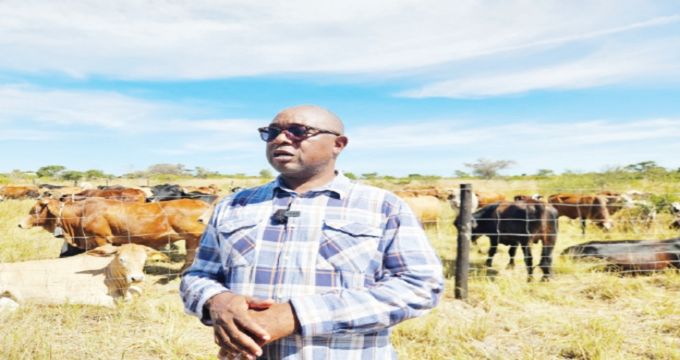
A farmer, Mr Jabulani Masuku (66), said the well-managed grazing land had brought numerous benefits to villagers who depend on livestock for survival.
“We have witnessed a number of benefits ranging from economic savings on feed to improving soil health and increasing biodiversity. Regenerative grazing techniques, such as rotational grazing, have improved land quality and promoted plant diversity,” he said.
Mr Masuku said despite suffering cattle losses to January Disease (Theileriosis) last year, the preserved grazing lands had become a source of hope for the remaining livestock.
Nyozani Agricultural Pastoral Field School chairperson, Mr Mthulisi Ndlovu, said the community group comprising 27 women and 13 men was working to restore degraded grasslands and improve soil health to boost livestock productivity.
“As a community we value sustainable rangeland management through holistic planned grazing and reseeding. This process boosts livestock productivity and strengthens climate resilience for our community,” he said.
Mr Ndlovu said the community had also managed to preserve wetlands by integrating traditional knowledge and recognising them as critical water sources and cultural heritage sites.
The efforts by the community have earned recognition from Government, with plans now underway to establish a Village Business Unit (VBU) that will benefit three villages in the area.
A VBU is a community-based commercial agricultural venture under the Presidential Rural Development Programme designed to fight poverty and industrialise rural areas. Each unit typically features a solar-powered borehole, nutritional garden and fish ponds aimed at empowering rural communities.
Agriculture, Mechanisation and Water Resources Development Deputy Minister, Davis Marapira, announced the development after touring the Nyozani rangeland regeneration site on Thursday.
He commended the Nyozani Agricultural Pastoral Field School for complementing Government efforts in promoting sustainable grazing systems and wetland protection.
“The previous drought like the 2023/24 season, we had serious challenges with grazing land where we lost a lot of cattle due to poverty deaths, where animals fail to get grass and water and end up dying,” said Deputy Minister Marapira.
“As a ministry we have devised a system where we now have to look at growing grass. We have a lot of grasses which can suit different regions, some drought tolerant and others suitable for areas with good rains.”
He said the area would soon host one of the country’s best demonstration plots for grass production.
Deputy Minister Marapira said the proposed VBU would include nutritional gardens producing tomatoes, onions, rape and cabbages, poultry projects, two solarised boreholes and two fish ponds.
“We are doing this because I am very happy with the way they have managed to secure and protect the wetlands and the grazing land,” he said.
He also praised the community’s land-use model, where homesteads, crop fields and grazing areas are clearly separated to minimise disturbance to wetlands.
In a speech read on behalf of Matabeleland South Provincial Affairs and Devolution Secretary Mrs Latiso Dlamini-Maseko by Deputy Director Business Development Mr Tichaona Mudzviti, Government said pastoralists and rangelands play a key role in food security, biodiversity conservation, climate resilience and sustainable economic growth.
Mrs Dlamini-Maseko said the theme for this year’s commemorations — “Regenerating Shared Landscapes – Integrating Emergent Outcomes from Pastoralist Lifestyles for Prosperity, Food Integrity and Resilience” — highlighted the importance of protecting landscapes while uplifting communities that depend on them.
She said Matabeleland South remained richly endowed with livestock production systems, resilient communities and valuable natural heritage.
The field day was held as Zimbabwe joined the global community in commemorating the International Year of Rangelands and Pastoralists (IYRP 2026) under the theme: “Regenerating shared landscapes – integrating emergent outcomes from pastoralist lifestyles for prosperity, sovereignty and resilience.”
The event was jointly organised by Grazing Concepts, Shangani Holistic, the Food and Agriculture Organisation (FAO-Zimbabwe Office), in partnership with the Government of Zimbabwe and the National University of Science and Technology (Nust) through the Faculty of Agricultural Science and Technology.