

 daniel chigunwe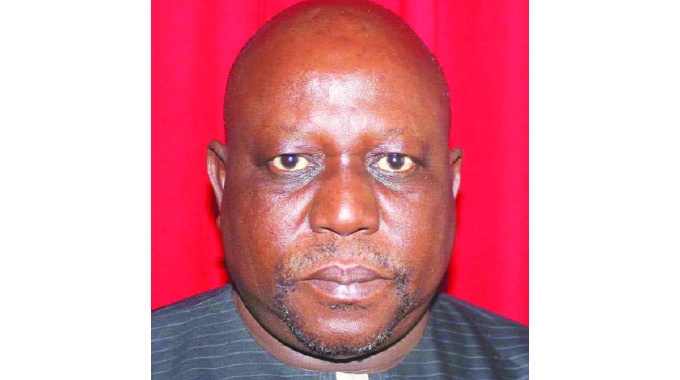
Pesenai Tauya
Mid-morning on April 16, 2024, another gallant son of the soil, Comrade Nyasha Nash Dzimiri, whose nom de guerre was Tambaoga Nash Mwanangu, breathed his last.
The country was robbed of an accomplished commander of the liberation struggle, diplomat, an intelligence guru, successful farmer, businessman and miner.
Born in Shurugwi, Cde Dzimiri’s illustrious career started during the liberation struggle when he joined the Zimbabwe National Liberation Army (ZANLA) in 1975. It was a journey in which he escaped death by whisker several times leaving his body riddled with shrapnel that needed more than ten surgical operations to remove.
After receiving elementary military training at the battlefront, Cde Dzimiri crossed into Mozambique and was to stay at Nyadzonia camp on the banks of Pungwe River for a few months.
He crossed into Mozambique at a very difficult time in the liberation struggle as there was little support for the war effort because of the Détente political arrangement between apartheid South Africa and the settler government of Rhodesia on one side and independent southern African states (Botswana, Zambia and Tanzania) that constituted the front-line states. Under détente arrangement, the front-line states withheld war materials from liberation movements and there was a lull in training.
Efforts to resuscitate the armed struggle under the Zimbabwe People’s Army (ZIPA) had been futile. Cde Tambaoga Nash Mwanangu was one of the thousands that were at Nyadzonia awaiting training. Life in the refugee camp was horrible because of a shortage of food, medicines, clothing and overcrowding. Everyone yearned to go military training.
Camp commanders kept them busy doing some physical training and political orientation. The political orientation mainly covered the national grievances, the nationalist leadership and the goals of the armed struggle.
This political orientation was to leave a lasting imprint in Cde Tambaoga Nash Mwanangu as the teachings became his moral compass for the next fifty years of his life. He exhibited the revolutionary ideological clarity throughout his life.
Nyadzonia camp celebrated ZANU Day on August 8, 1976 (ZANU was formed on 8 August 1963). During the celebrations some commanders promised the youths that anytime vehicles that were to take them to training camps would arrive. That raised morale of the refugees. On August 9, 1976, Cde Tambaoga Nash Mwanangu and others heard the sound of a number of military trucks of the Zehl type which were similar to the ones used by the Mozambican army.
There was excitement as the vehicles entered the camp and lined up facing the parade square. Cde Morrison Nyathi (real name Levison Mutasa), a known commander, disembarked from one of the trucks and spoke to the camp commander.
The emergency whistle was blown and in no time the refugees who were looking forward to going to training were assembled in the parade square. Nyathi said something to the camp commander and what Cde Tambaoga Nash Mwanangu and others experienced was horror.
From the trucks came out white Rhodesian soldiers smearing camouflage cream, who fired at the paraded refugees indiscriminately. In an interview on February 28, 2024, Cde Tambaoga Nash Mwanangu described the Nyadzonia experience as a miraculous survival after being put before firing squad. In the melee that followed the opening of fire by the Rhodesian Selous Scouts, a wounded Cde Tambaoga Nash Mwanangu, managed to crawl into the bush and the wooded river bank where he disappeared from the line of fire.
After the Nyadzonia attack, that left hundreds of his colleagues buried in mass graves, Cde Tambaoga Nash Mwanangu was selected to go for security and intelligence training at the famous Nanking Military Academy in China.
This is where the likes of President ED Mnangagwa and the late ZANLA Commander General Josiah Magama Tongogara were trained. Here he was initiated into the world of intelligence and his squad mates included the late National Hero Cde Kenny Ridzai Mabuya, who was to become the ZANLA deputy Chief of Intelligence.
He graduated from the Nanking Military Academy with a Diploma in Military Intelligence and Guerrilla Warfare Prosecution.
Upon his return from China in 1977, Cde Tambaoga Nash Mwanangu was appointed an intelligence instructor at Chaminuka Security and Intelligence Training camp in Chimoio.
Commanded by Cde Norman Bethuni (Colonel (retired Mupaso), Chimoio was a large garrison with 13 camps of which Chaminuka Security and Intelligence Training camp was one of them.
Chimoio was not heavily fortified in terms of its defence as, unlike Nyadzonia, it was deep inside Mozambique and no-one expected the Rhodesia to be that daring as to launch a ground attack on the camp. Besides, the Mozambican government undertook to take care of the security of its borders and encouraged ZANLA to focus on incursions into Rhodesia.
The attack in November 1977 achieved surprise. Cde Tambaoga Nash Mwanangu was fortunate as the first strikes targeted the headquarters, Takawira 1 and Takawira 2 camps that had more fighters.
It is estimated that more than 1 200 fighters were killed in the massive attack that the Rhodesians christened Operation Dingo.
After the Chimoio attack Cde Tambaoga Nash Mwanangu moved to Mudzingadzi camp where he got a new assignment. He was attached to the Protection Unit as a Senior Protection Officer of the ZANLA Chief of Defence, the late General Josiah Magama Tongogara.
Later, Cde Tambaoga Nash Mwanangu was appointed to be a member of the National Security Analysis group. It is during this assignment that he made several incursions into Rhodesia primarily on Security and Intelligence tasks.
The Security and Intelligence tasks included reconnaissance on Rhodesian camps and disciplining errant liberation fighters. They would arrest and extradite back to Mozambique rogue liberation war fighters.
This was a priceless task as discipline was of prime importance to the success of the war.
Towards the end of 1978, Cde Tambaoga Nash Mwanangu was sent to Yugoslavia for further training at the Higher Military Academy of the Yugoslav National Army where he graduated with a degree in Military Science.
At independence, he was attested into the Air Force of Zimbabwe as an officer before being transferred to the ZNA. He was one of the officers led by the Vice President Dr Constantino Chiwenga, assigned by the Joint High Command to take over command of 1 Brigade, in Bulawayo, from the Rhodesians.
Cde Tambaoga Nash Mwanangu decided to leave the ZNA in 1981 and worked for the Ministry of Social Services, the Reserve Bank of Zimbabwe before joining the Harare City Council.
One afternoon in 1983, while taking a walk in the Central Business District of Harare, he bumped into the current President of Zimbabwe who was then Minister of State Security, at a traffic intersection.
The Minister summoned Cde Dzimiri to his office the next day. At the office Minister Mnangagwa simply ordered Dzimiri to return to the national intelligence service. So in 1983, Cde Dzimiri joined the CIO as a junior intelligence officer.
From being a mere desk officer, Cde Dzimiri rose through the ranks to become a Director in the Central Intelligence Organisation, a position he held at the time of his death. A veteran operative, Cde Dzimiri accomplished many delicate tasks assigned to him by his superiors. Among the many special tasks that Cde Dzimiri was trusted to accomplish was the secondment to work with the British intelligence agency, MI6, in 1987. Here he worked in the office of the Secretary of State for Foreign and Commonwealth Affairs, Lord Geoffrey Howe. On his return he was appointed staff officer for Harare and Mashonaland. In 1988, Cde Dzimiri was transferred to the CIO Training School as a Basic Intelligence Course instructor. He trained hordes of South African and Namibian intelligence officers some of whom have rose to very senior positions in their respective countries.
In 1997, he joined the Counter Intelligence branch as a divisional intelligence officer in charge of operations.
In the year 2000, he was promoted to the rank of Provincial Intelligence Officer (PIO) and was assigned to head Mashonaland East province. Working with Retired Lieutenant General Martin Chedondo (who was a Brigadier General at the time) Cde Dzimiri clandestinely encouraged demonstrations on land by peasants led by Chief Svosve in 1998.
In 2005, he was transferred to the Counter Intelligence Branch as Assistant Director Operations. In 2007, he was posted to the Caribbean Peninsula head-quartered in Havana, Cuba as Minister Councillor Plenipotentiary. His collection sphere included the Commonwealth of the Bahamas, Haiti, Trinidad and Tobago, St and Vincent as well as Venezuela which he shared with the Liaison Officer in Brazil. After spending nearly 10 years in the Caribbean Peninsula, he returned home in 2015 and was appointed Assistant Director Operations, Internal Branch. In 2017, he was appointed the Director Counter Intelligence and then Director Investments in 2019.
He was Director Investments at the time of his death.
The author Pesenai Tauya is a Zimbabwe National Army Retired Major


 Online Reporter