admin
admin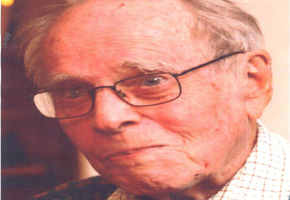
After a brief hospitalisation following some prolonged illness, Tore passed away on Ascension Day on Thursday 17 May 2012 and was laid to rest in his home town Uppsala, Sweden, on his birthday 30 May 2012.
Tore was born in 1925 at Mnene Mission in Mberengwa, the first born son of the Church of Sweden Mission missionaries Johannes and Tora Bergman. Johannes came from Sweden as a missionary agriculturalist, initially to Natal in South Africa before relocating to the then Rhodesia to develop the Mnene Mission Farm, in Mberengwa in the 1920’s. When Masase Mission grew into a boys’ school and Mnene into a girls’ boarding institution, Johannes moved to Masase to teach boys agriculture. Thus Tore grew up at Masase Mission and his mother Tora was his first teacher. He later went to St. Christopher’s school in Gwanda and completed his schooling at Milton High School in Bulawayo.
During the Second World War he was drafted into the British Army and received his full military training in the Middle East and in the United Kingdom. Fortunately the war ended before he went into active service. On demobilisation he enrolled into Grahamstown University in South Africa but after six months transferred to Uppsala University in Sweden where he completed his MA in 1949. In 1951 he completed a teachers’ diploma which included music and found a teaching job in one of the Swedish villages.
The watershed in Tore’s life came in 1952 when the Church of Sweden Mission invited him to come back to the then Southern Rhodesia in order to be involved in the development of post primary education in the Swedish Mission field. At first the focus was on teacher training. Already as early as 1936 African pastors in the Church of Sweden Mission were pushing hard for development of teacher training in the Mission. By 1940 a majority of missionaries had come round to agreeing with the Africans on the need for teacher training, leading to the opening of Mnene’s first training school. The project received government financial support, Tore joined the teacher training school when it moved to Musume Mission in 1952. In 1953 he was joined by his financee Elisabet, who when they got married in 1954 at Mnene Church became his firm and loyal lifelong partner both domestically and in his professional work. It was indeed a happy family life blessed with four children, Astrid, Monika, Stefan and Ingrid and later with grandchildren as well.
When Tore joined the Church of Sweden Mission in Zimbabwe, the church was facing a simmering crisis. For instance, by 1948 the church had 110 lower primary schools going up to Standard 2 or 3 with about 7 850 pupils. Most of these pupils had nowhere to go as there were only four boarding schools offering upper primary education at Mnene, Musume and Masase in Mberengwa and Manama in Gwanda District and the quality of their education was also poor for lack of trained teachers.
Moreover, even those pupils who managed to be admitted and go through the bottleneck of the upper primary schools had no further outlet within the CSM education system except to go to the already over-subscribed secondary schools of the Church of Christ Dadaya Mission in Zvishavane and to the Dutch Reformed Church Zimuto Mission in Masvingo.
It was indeed this bottleneck crisis, the availability of Tore Bergman as a qualified teacher and the readiness of the colonial government and the mission authorities in Sweden to assist financially, which persuaded the majority of the missionaries to support the inauguration of secondary education in south-western Zimbabwe in 1954. Indeed Tore became the genius and motive power behind the whole project, when he opened a Form 1 class and taught nearly all the subjects except Shona and Religious Knowledge. When I went to see him with my wife in Uppsala a few months before he died, he said that he fondly recalled his early days of launching secondary education in south-western Zimbabwe and said that he was able to teach all the subjects because he had done them at Milton High School.
It was soon apparent that the facilities at Musume were inadequate to be shared between the Primary Teachers’ Lower (PTL) training and Form 1 class. Meanwhile, the facilities left by the teachers’ training school at Mnene when it moved to Musume earlier on were still available. Thus in 1955 Forms 1 and 2 were both moved to Mnene. Tore was still responsible for most of the teaching and was assisted at Musme by Mr Solomon Gumbie, a local primary schoolteacher in the teaching of Shona and Music, while Rev M M Moyo, the local pastor, taught Religious Knowledge.
At Mnene, Mr Eliphas Chenyika Hove, one of the upper primary school teachers, taught Shona, Rev. Phaswana taught Religious Knowledge and Miss Monika Linge, a former Upper Primary teacher, taught History. Tore was further fortunate to be joined by African graduate Enoch Dumbuchena, whom he found to be highly polished and an excellent colleague and therefore a positive role model for students. Students were a mixed bag; some came from Standard VI while others had already trained as primary schoolteachers. The biggest boy was almost six feet while the smallest was half his height. Girls were far fewer than boys; four out of 20 in Form 1 were girls. Unfortunately the initial Church of Sweden Mission’s effort at secondary school education seemed doomed. The boys went on strike and they left the school following unsuccessful efforts to resolve the crisis. Two positive things were the outcome of the strike at Mnene.
The first on, according to Professor Phineas Mogorosi Makhurane, a Form 1 student then and later distinguished and illustrious physics scholar and founding Vice Chancellor of the National University of Science and Technology in Bulawayo, was the welcome change in the curriculum pursued at Mnene. The initial arrangement was for the students to study for the Union Junior Certificate (UJC) of South Africa. The subjects offered in that syllabus were limited and tailored along the apartheid Bantu Education system of South Africa.
When the school re-opened at Mnene in January 1956 the syllabus had changed to the Rhodesian Junior Certificate (RJC) which covered the first two years of the Cambridge School Certificate and was liberal in disciplinary offerings. Moreover, the new syllabus launched the good students en route to a British university education system in both the sciences and the humanities. Tore Bergman welcomed this development as he saw RJC as an academic qualification for the Primary Teachers’ Higher (PTH) training for teachers to teach in upper primary schools and as an entrance to other professional training.
Apart from leading to dropping the UJC, the strike provided Tore Bergman with some space to try and draw some lessons from his and his colleagues’ management mistakes. Although the strike was ostensibly about the quality of food, the deeper underlying cause was the failure of the school authorities to create an environment which took account of the senior status of the secondary students. Instead, the authorities lumped together upper primary boys with male secondary students and treated them alike. When Tore later established Chegato Secondary School, he came up with school rules, diet and exposures such as films and student tours, all of which recognised the level of educational attainment and senior status of secondary students. When we later moved from Mnene Upper Primary Boarding School to Chegato Secondary School we felt we were not only moving up the ladder academically but that we were gaining so much respect even socially because our principal, Tore Bergman, treated us in like manner. Meanwhile, Elisabet Bergman ensured that we had a healthy and consistently balanced diet. The negative side of the strike, however, was the loss of the African graduate teacher, Dumbuchena, as he resigned from his post when the students left.
From these humble and faltering beginnings Tore Bergman emerged as the most able and inspiring pioneering principal of Chegato Secondary School from 1957. Tore moved from Mnene with his two classes of Forms I and II and settled on the new site in Chief Mposi area, built with an initial grant of £7 500 from the Rhodesian government. Tore now had two teachers, Julius Makasi Shava, a graduate of Fort Hare, and Ms Monica Linge, a long-standing missionary teacher who had taught our mothers at Mnene girls’ boarding school since the 1930’s.
Personally I only got admitted to Chegato in 1960 and graduated from there in 1961 with an RJC. Tore was simply an inspiring teacher and highly motivating as well as charismatic principal, who used no physical force nor raised his voice but simply relied on his solid and dignified personality to enforce discipline among his students.
He taught us Algebra, Geometry and General Science. He explained difficult and new concepts in all these subjects in the simplest, lucid and memorable ways so much that I enjoyed learning and had no difficulty in coming on top of my class regularly. In 1961 Tore made Chegato simply a paradise of learning when he recruited two more members of the teaching staff — Mr Zephania Matchaba Hove, a graduate of the University of South Africa from Roma’s Pius XII College in Lesotho and Mr Jeffias Ngwenya, a teacher’s diploma graduate of Tshakuma College, Venda, South Africa. They served to relieve Tore from a lot of teaching so that he could concentrate on the administration and development of the school.
The quality and efficiency of teaching were so enhanced that in the 1961 RJC examinations one of the Chegato’s students had the best examination results in the whole country. The name of the student was not supplied by the Ministry of Education, but most likely it was either Miss Tiyiwe Khumalo or myself as we always competed for the first position in the school with me, of course, tending to enjoy the pride of place more frequently. Tore Bergman held this achievement as one of his pride and joy throughout his life.
One of the most memorable events in the school that took place when I was at Chegato was a visit by six inspectors, who stayed at the school for a whole week. Tore recalled the occasion as something which caused him and the rest of the staff some nervousness. As it turned out it was one of the most exciting, enjoyable and memorable academic events. The group of inspectors included A P Knottenbelt and Herbet Stephen Winter, both of whom were to become principals at Fletcher High School when I later went there. Knottenbelt, especially, was an exhilarating speaker, made even the more compelling by his engagingly rasping voice. Each of the six inspectors delivered a talk, so that every evening for the whole week we had a lecture. Knottenbelt spoke about his tour of Nigeria and how even as early as that there seemed to be an over-supply of lawyers in that country.
The upshot of the inspectors’ visit to Chegato was, according to Tore Bergman, a laudatory report on the school and an opening for a number of students from Chegato to go to Fletcher High School and Goromonzi for Form III annually from 1962. Since 1958 the only outlet for those students who wanted to complete their O-Levels was Zimuto Secondary School, so that now Fletcher and Government High schools became our additional and welcome avenues. In short, Bergman had now managed to establish Chegato as one of the secondary schools which fed into the limited African secondary schools which produced entrants to the University College of Rhodesia as well as other universities elsewhere in the world and also to Gwelo Teachers College.
Tore was however not content to have Chegato as a mere feeder tributary for other schools. Moreover, in 1961 he had started doubling his Form I classes so that by 1962 he had two streams for both Forms I and II. He now had a large number of young men and women seeking places to complete their O-levels. He put through an application to the Ministry of Education for funds to set up buildings to accommodate Forms III and IV in 1962 but was turned down. The setback did not deter him in the least. When he went on holiday to Sweden in 1964 he spent most of his time touring and visiting various Church of Sweden congregations, appealing for donations for the expansion of his school.
When he returned in 1965 Tore was able to realise his dream when he admitted his first 20 students to what he called “our much longed-for Form III”. The Swedish International Development Agency (SIDA) provided a grant for the construction of additional facilities to accommodate the O-Level classes, including Science laboratories and a library, all of which were completed in 1966. That was also the first year when Chegato Secondary School presented its first candidates for the O-Level school certificate examinations. And Tore rightly felt elevated close to the apogee of his well nigh lifelong ambition, providing the Evangelical Lutheran Church of Zimbabwe with a sound and complete secondary education. 1966 was also the year Tore Bergman left as principal of Chegato Secondary School.
By that time he had assisted the starting of three other secondary schools — at Musume, Manama and Masase — and had initiated plans to open A-Level classes at Chegato. Tore Bergman clearly was the mastermind of secondary education in the Evangelical Lutheran Church in the whole region of Mberengwa-Gwanda-Beitbridge. His products accounted for the massive development of education in south-western Zimbabwe upper primary schools, in teacher training and secondary education itself.
Some of his products went on to occupy influential positions in the Evangelical Lutheran Church and in Zimbabwe as a whole. Mention has already been made of Prof Makhurane, who left an indelible imprint on the country’s higher education terrain.
One of Tore’s first students and school captain at Musume and Mnene, Jonasi Shiri, became the first African Bishop of the Evangelical Lutheran Church in Zimbabwe. Elleck Mashingaidze, another of Tore’s very bright students, held important positions in the Government of Zimbabwe. Stephen Mpofu became the editor of both The Sunday Mail and The Chronicle. The ZIPRA commander, Rogers Mangena, whose liberation war name was Alfred Nikita Mangena, was also Tore’s former pupil at Chegato before he was expelled by Mr Obediah Mulilo, the caretaker principal of Chegato when Tore was on holiday in Sweden in 1964. I have also been privileged to be the founding Vice Chancellor of Midlands State University. Many of his female products were among the first to be trained as State Registered Nurses at Mpilo Central Hospital in Bulawayo. Moreover, Tore was an accomplished musician and choir master. I was privileged to be in his choir throughout all the years I was at Chegato and our powerful choir led hymnal singing during Sunday services and during church festivals. Tore also translated a few songs into Shona from Swedish.
Leaving the principalship from 1966-1970 Tore Bergman became the Education Secretary for the Evangelical Lutheran Church, responsible for the co-ordination of all the primary, secondary and other educational institutions for the church. It was a large portfolio comprising 160 primiary schools, 700 teachers and 24 000 pupils. It was a position which Tore did not much enjoy, not at least as much as he delighted in the challenges of building the secondary education system in the region.
Between 1970 and 1984 Tore was appointed Africa Secretary of the Church of Sweden Mission Board, a position he held during the momentous years of the wars of liberation in Southern Africa. The Church of Sweden Mission had historically long and deep relationships with Zimbabwe and South Africa and needed a diplomatically astute and sensitively nimble person to handle the Mission’s complex web of relations with various fighting groups. In South Africa the Mission had planted itself in KwaZulu-Natal, the area contested by the apartheid regime, ANC and Chief Mongosutho Buthelezi’s Inkata.
Zimbabwe had the Rhodesia colonial regime pitted against Zanu-PF and PF-Zapu and later the ANC of Bishop Abel Muzorewa and Ndabaningi Sithole’s Zanu.
With regards to Zimbabw, Tore explored the least controversial ways of extending humanitarian support to Zanu-PF in Mozambique and PF-Zapu in Zambia. At first he initiated Church of Sweden Mission support through the Christian Council of Mozambique which administered assistance to Zanu-PF camps. When the Lutheran World Federation established an office in Maputo the Church of Sweden Mission channelled its assistance to Zanu-PF through it as well. The assistance was broadened after Tore met R G Mugabe’s delegation in Uppsala in 1977.
Indeed Tore was able to navigate between PF-Zapu and Zanu-PF precisely because many of his former students now held important and influential positions in those parties. For instance, Cde Rugare Gumbo, a former Chegato pupil, was part of R G Mugabe’s 1977 delegation to Uppsala.
With the abduction of Manama Secondary School students by Zipra in 1977 and their relocation from Botswana to Zambia, the CSM stepped its efforts to open more viable contacts with PF-Zapu. Tore first sent Tord Harlin, the former principal of Manama, on an exploratory tour to Zambia in 1977. Following Harlin’s report Tore Bergman himself first corresponded with the PF-Zapu office in Lusaka and then personally flew down there. After a meeting with John Nkomo, the PF-Zapu administrator, Tore was taken on a tour of the Victory Camp housing between 3 000 and 5 000 girls by the late Vice president, Cde Joshua Nkomo himself to try and identify the needs of the camp’s inmates. This opened funding for PF-Zapu From the Church of Sweden Aid through Lutheran World Federatrion.
Tore Bergman, meanwhile, maintained cool relationship with any other forces in Zimbabwe. He was very much aware that PF-Zapu and Zanu-PFrepresented the democratic aspirations of the Africans in Zimbabwe.
As Tore put it: “I think that (Bishop Muzorewa) was regarded by both Zapu and Zanu as something of an upstart and he could not be relied upon. When Muzorewa launched UANC it was not seen by liberation movements as an answer to the problems in Rhodesi.” Tore understood the political landscape of Zimbabwe and was therefore, the best person to direct the CSM relationships with the liberation movement.
Between 1984 and 1990 Tore Bergman worked as a hospital administrator in Zimbabwe before he retired to Sweden where he worked for Amnesty.
Among his monumental achievements during retirement was to type the entire voluminous handwritten collection of Shona proverbs by Taperesa Mutematema Samaita, which I have edited with Advice Viriri and published as Shona Proverbs. Tore Bergman lived a truly productive life and left a permanent mark on the educational landscape of this country. He passed on satisfied of his faithful service to mankind and God. As his dear wife Elisabet noted to me: “While (Tore) could speak he said he was grateful for the life God had given him. He knew his remaining days would be few and was full of confidence and trust in God.” A most fitting attitude of a man who lived the life of a victorious Christian soldier indeed.
* Prof Ngwabi Bhebe is a renowned historian, author and Vice Chancellor of Midlands State University.


 Online Reporter