

 admin
admin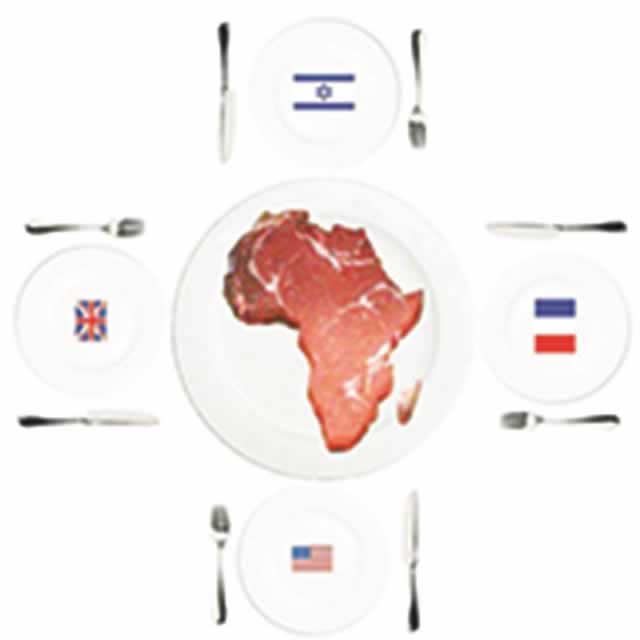
Stephen Williams NewAfrican
THE fractious relationship between the European Union and African nations was once again up for public scrutiny as African delegations arrived in Brussels, Belgium for the 4th EU-Africa Summit, a two-day event that brought much of the Belgian capital to a standstill.
As police motorcycle outriders and busloads of security personnel, blaring sirens and flashing blue lights, accompanied the limousines carrying the big men (and women) across the city, ordinary citizens fumed in the resulting traffic congestion, and the public were left to wonder just what the purpose of the summit could be. Overshadowing the event were the bitter arguments surrounding President Robert Mugabe’s invitation, and the lack of an invitation for Zimbabwe’s First Lady, Grace, to accompany him.
A boycott had been called to protest against this snub, but few national delegations responded to it. In fact, two of Mugabe’s closest allies in the sadc grouping, President Michael Sata of Zambia and Namibia’s PM Nahas Angula, led delegations to Belgium.
Perhaps the most notable absence was President Jacob Zuma’s, but also missing from the summit was Malawi’s President Joyce Banda. Some observers commented that Zuma’s absence might have more to do with his need to mount a rearguard defence against the charge he faces of personally benefiting from the $23m spent on his Nkandla residence — supposedly on security upgrades.
But Zuma did say: “I think that the time must pass wherein we are looked at as subjects, we are told who must come and who must not come. I thought the African Union and the European Union are equal organisations representing two continents, but there is not a single one of them who must decide for others.”
Another aspect was the timing of the summit with South Africa’s polls being held in less than a month, and Malawi’s Joyce Banda also with her hands full with critical elections looming.
But the controversy surrounding invitations also extended to countries further north. There were huge misgivings over the Egyptians being invited to Brussels, as that country’s unelected administration came to power through a military coup, in all but name. Yet no invitation went to Sudan’s President Omar Al Bashir.
The Saharawi Arab Democratic Republic (SADR), a full member of the African Union, failed to be invited, yet Morocco (which occupied the SADR), although not a member of the AU, was represented by Salaheddine Mezouar, Morocco’s Minister for Foreign Affairs.
So the EU’s attempt to meet an acceptable standard of diplomatic protocol, even before the start of the summit, misfired.
As one member of the Namibian delegation told New African: “It is difficult to know whether the EU’s actions were just ignorant blunders or calculated insults — but I certainly feel that the decision not to issue a visa for Grace demonstrated that the EU has no idea of African sensibilities. To invite an African husband and not his wife is simply vulgar and hugely offensive . . .”
Ironically, the EU-Africa publication Two Unions — One Vision commented: “Much remains to be done at the political and operational level in the run-up to the Africa-EU Summit in 2014, and both partners need to define the priorities of their cooperation in the years to come.”
They might have made a mess of the protocol, but there was no shortage of EU statements, carefully crafted by the bureaucrats, expressing the solidarity between Europe and Africa as “continents bound together by a shared history, culture, geography and by the close exchanges between our peoples . . . cooperation between the EU and Africa has reflected the rich and diverse nature of relations between the two continents.
“Since the adoption of the joint Africa-EU Strategy in Lisbon,” the EU noted, “both continents have undergone profound economic and political changes.” That is something of an understatement. The Lisbon EU-Africa Summit was the second summit after the 2000 inaugural meeting.
Lisbon took place in 2007, the year marking the start of the global economic crisis that saw the economies of the developed world nose-dive even as African economies continued to demonstrate, if not rude health, at least a remarkable stability.
While Europe struggled to emerge from this severe recession, followed by the Euro crisis — in effect a debt nightmare that seriously threatened the whole of Europe, and which some economists believe is still a potent threat — Africa continued to post an impressive economic transformation.
It averaged a 5.2 percent GDP growth rate each year between 2003 and 2011, and eight of the world’s 10 fastest growing economies were in sub-Saharan Africa during that era.
And with the economies of Europe demonstrating such lack-lustre and stagnant performance, international investors turned their attention to the emerging economies, particularly in Asia and Africa. The risk/reward ratio suddenly appeared acceptable.
For the EU, the importance of Africa’s economies became ever clearer. These were markets on their doorsteps — markets that represented the remarkable potential of a rapidly emerging middle class hungry for the consumer goods that the EU could supply. And Africa also represented economies that could supply the raw resources to keep their factories operating. The problem though was that increasingly, the emerging economies of China, India, Brazil and others were eating what was, historically, Europe’s lunch.
But the EU made little mention of this uncomfortable reality at the summit. Rather, the Europeans focussed on the assistance they have provided to sub-Saharan Africa. The EU stated, for example, that, thanks to their aid, 3.4 million Africans received education and training between 2007 and 2013. And 600 research projects in 46 African countries were financed, to the tune of €178m, in the fields of food security, climate change, health and energy.
The EU was anxious to reiterate that Europe remains Africa’s biggest development partner. The Europeans claim that from 2007 to 2013, the EU collectively, and its member states independently, provided more than €140 billion in aid to support Africa’s development. In 2012, despite adverse economic developments at home, EU member states committed over €18.5bn of ODA, representing 45 percent of global ODA to Africa.
And the EU insists, trade between the two continents continues to grow. Between 2007 and 2012, EU imports from Africa increased by 46 percent. In 2012, the EU imported African goods worth €187bn.
Nevertheless, if hydrocarbons are stripped out of the statistics, the picture looks a lot less positive, and as the EU itself admits, the $187bn figure is less than 10 percent of the total EU imports originating from outside the EU. Yet African imports from the EU amounted to more than €150bn in 2012, or 34 percent of Africa’s total imports. These facts undoubtedly underpin the EU’s interest in ensuring that Africa’s peace and stability is maintained. It would be unfair to suggest that the EU has no humanitarian concerns in this regard, but the fact remains that it is in their interest to safeguard their markets.
The EU (alongside the UN which was represented in Brussels by the Secretary-General Ban Ki-moon) has been supportive of Africa’s own efforts, at regional and continental levels, to develop its own capacity to manage, resolve and prevent crises.
Through the African Peace Facility (APF), the EU has contributed more than €1.2bn since 2004 to help finance many ongoing Africa-led Peace Support Operations — €575m has been committed to AMISOM in Somalia; €50m to MISCA in the Central African Republic (CAR); and €2m for the Regional Cooperation Initiative against the Lord’s Resistance Army. In addition, more than €440m was provided by the EU to six completed missions in Sudan, the Comoros, CAR and Mali.
Since being established in 2009, the APF’s Early Response Mechanism has allowed the EU to support 21 African-led actions in the area of conflict prevention such as first stages of mediation activities, fact-finding missions and planning of Peace Support Operations. Last year the EU was particularly busy in this regard. In 2013, the APF financed seven initiatives in the Sahel region, Sudan and South Sudan, DRCongo, Mali, CAR and Somalia, amounting to the expenditure of €6.7m.
With regard to the situation in the CAR, Major General Philippe Pontiès, the operation commander for the EU military in that country, gave a press briefing during the Brussels summit.
He acknowledged before the first EU troops arrived, many “question marks” remained. The EU is dispatching a mission of around 500 troops for six months to go to the CAR’s capital Bangui, and its surrounding areas including the airport. The idea is to secure several districts in and around Bangui, including the main roads in and out of those areas, allowing people to return home, and ensure the supply of humanitarian supplies. These “pilot districts” can then be replicated on a larger scale when the full UN force arrives in September. To achieve that, EU troops will need to be “highly visible,” Pontiès said.
Significantly, Chad’s President Idriss Déby, who was attending the EU-Africa event, chose the last day of the Brussels summit to announce that the 850 Chadian troops that were in CAR would be withdrawn. This followed allegations that they had fired indiscriminately on civilians in a Bangui market, killing at least 32.
Looking ahead, many are foreseeing more conflicts erupting and expanding as water and food insecurity afflicts Africa. That is certainly the opinion of the World Bank president Jim Yong Kim who, speaking in Washington DC, suggested that one way to counter global warming was to develop climate-smart agriculture.
He predicted that tension over resources would result from inaction over global warming. “Fights over water and food are going to be the most significant direct impacts of climate change in the next five to 10 years. There’s just no question about it,” he warned.
Given that the latest report from the UN’s Intergovernmental Panel on Climate Change (IPCC) was published less than a week before the Brussels summit drew a connection between climate change, food scarcity, and conflict, Africa is clearly at great risk as its ability to feed its people will be heavily compromised.
The EU Climate Action Commissioner, Connie Hedegaard, the President of the African Ministerial Conference on Environment (AMCEN), Binilith Mahenge, and the African Union Commissioner for Rural Economy and Agriculture Rhoda Tumusiime, had met the day before the Brussels summit.
They issued a statement that read: “We recognise the urgent need to adapt to the impacts of climate change for the African continent. One example is the Africa Adaptation Gap Report (2013), which estimates that Africa will have to face very significant costs: it cites up to $7-15 billion per year by 2020.
“The adaptation challenge could be more difficult if the emissions gap is not closed and mitigation beyond 2020 falls short of the objective to limit warming to well below 2°C. We welcome the ongoing work on the elaboration of a comprehensive Africa-wide Adaptation Programme to build the resilience of the continent around common climate risks shared by the majority of countries.
“Both sides declare their determination to strengthen the adaptation funding and mainstreaming as well as cooperate to increase funding from all sources.”
Whether or not the EU was reminded by their African counterparts, there appears to be a blind spot in EU thinking in as much as much of the green-house gases emissions that create climate warming emanate from the heavily industrialised north. Yet the EU continues to insist that Africa joins “hand-in-hand” with it to seek solutions. It could be suggested that the ball is very much in the EU’s court.
The IPCC report said climate change had already impacted the global food supply, and global crop yields were beginning to decline — especially for wheat — raising doubts as to whether production could keep up with population growth.
Christine Lagarde, the IMF chief warned in February that, ”some estimates suggest that 40 percent of the land now used to grow maize in sub-Saharan Africa will no longer be able to support that crop by the 2030s. This will have hugely disruptive implications for African livelihoods and lives.”
Lagarde also stated: “Make no mistake, it is the world’s most vulnerable people who will suffer most from the convulsions of climate,” and also noted, “we are subsidising the very behaviour that is destroying our planet, and on an enormous scale.”
The IMF chief might well have been talking about the EU’s €60bn in subsidies paid to Europe’s agricultural sector under the Common Agricultural Policy — the EU’s first fully integrated policy introduced in 1962.
Over the years the effects of the CAP policies have been to create a heavily skewed global market for agricultural commodities that effectively taxes Europeans to support the politically powerful European farming lobby.
African farmers are un-subsidised and find it virtually impossible to compete with their European counterparts. And, to add insult to injury, surplus foods from Europe are frequently dumped on African markets in order to support prices in home markets, severely jeopardising African farmers’ interests. A sobering fact is that industrialised countries waste 222m tons of food a year, just 10m tons short of the net food production of sub-Saharan Africa.
In a closing press briefing, the African Union Commission’s chairperson, Nkosazana Dlamini Zuma, made the point that 60 percent of global arable land is in Africa. It was an echo of the statement she made in Kuwait at the AU-Arab Summit late last year (see New African, February 2014 issue), and she again reiterated that she would welcome partnerships with international players in boosting Africa’s food production.
In effect, what Dlamini Zuma was suggesting is that Africa has the land and Europe the expertise in agro-processing to create mutually advantageous enterprises that would counter the risks associated with food insecurity — and the introduction of climate-smart agriculture would be hugely progressive.
So too would be a comprehensive reform of both Europe’s Common Agricultural Policy and EPAs to create a more level playing field for both African and European farmers. The time for platitudes and promises is over. There must be action, and the message from the Summit is that the EU can be assured that Africa will move forward “hand-in-hand”, lending their support to the EU in transforming the world’s largest trading bloc into a more equitable and sustainable body. — NewAfrican



 Online Reporter